

J-PAL J-PAL
The Abdul Latif Jameel Poverty Action Lab
  • About
    • Overview
    • People
      • Affiliated Professors
      • Invited Researchers
      • J-PAL Scholars
      • Board
      • Leadership
      • Staff
    • Strengthening Our Work
    • Code of Conduct
    • Initiatives
    • Events
    • Blog
    • News
    • Press Room
  • Offices
    • Overview
    • Global
    • Africa
    • Europe
    • Latin America and the Caribbean
      • Growing Futures
    • Middle East and North Africa
    • North America
    • South Asia
    • Southeast Asia
  • Sectors
    • Overview
    • Agriculture
    • Crime, Violence, and Conflict
    • Education
    • Environment, Energy, and Climate Change
    • Finance
    • Firms
    • Gender
    • Health
    • Labor Markets
    • Political Economy and Governance
    • Social Protection
  • Evaluations
  • Research Resources
    • About Us
    • Our Work
    • Join ASPIRE
    • Newsroom
  • Policy Insights
  • Evidence to Policy
    • Pathways and Case Studies
    • The Evidence Effect
  • Blog
  • Careers
  • Courses
  • For Affiliates
  • Support J-PAL

Utility menu

  • Blog
  • Careers
  • Courses
  • For Affiliates
  • Support J-PAL

Quick links

  • Evaluations
  • Research Resources
  • Policy Insights
  • Evidence to Policy
    • Pathways and Case Studies
    • The Evidence Effect
  • About

    The Abdul Latif Jameel Poverty Action Lab (J-PAL) is a global research center working to reduce poverty by ensuring that policy is informed by scientific evidence. Anchored by a network of more than 1,100 researchers at universities around the world, J-PAL conducts randomized impact evaluations to answer critical questions in the fight against poverty.

    • Overview

      The Abdul Latif Jameel Poverty Action Lab (J-PAL) is a global research center working to reduce poverty by ensuring that policy is informed by scientific evidence. Anchored by a network of more than 1,100 researchers at universities around the world, J-PAL conducts randomized impact evaluations to answer critical questions in the fight against poverty.

      • Affiliated Professors

        Our affiliated professors are based at over 130 universities and conduct randomized evaluations around the world to design, evaluate, and improve programs and policies aimed at reducing poverty. They set their own research agendas, raise funds to support their evaluations, and work with J-PAL staff on research, policy outreach, and training.

      • Invited Researchers
      • J-PAL Scholars
      • Board
        Our Board of Directors, which is composed of J-PAL affiliated professors and senior management, provides overall strategic guidance to J-PAL, our sector programs, and regional offices.
      • Leadership
      • Staff
    • Strengthening Our Work

      Our research, policy, and training work is fundamentally better when it is informed by a broad range of perspectives.

    • Code of Conduct
    • Initiatives
      J-PAL initiatives concentrate funding and other resources around priority topics for which rigorous policy-relevant research is urgently needed.
    • Events
      We host events around the world and online to share results and policy lessons from randomized evaluations, to build new partnerships between researchers and practitioners, and to train organizations on how to design and conduct randomized evaluations, and use evidence from impact evaluations.
    • Blog
      News, ideas, and analysis from J-PAL staff and affiliated professors.
    • News
      Browse news articles about J-PAL and our affiliated professors, read our press releases and monthly global and research newsletters, and connect with us for media inquiries.
    • Press Room
      Based at leading universities around the world, our experts are economists who use randomized evaluations to answer critical questions in the fight against poverty. Connect with us for all media inquiries and we'll help you find the right person to shed insight on your story.
  • Offices
    J-PAL is based at MIT in Cambridge, MA and has seven regional offices at leading universities in Africa, Europe, Latin America and the Caribbean, Middle East and North Africa, North America, South Asia, and Southeast Asia.
    • Overview
      J-PAL is based at MIT in Cambridge, MA and has seven regional offices at leading universities in Africa, Europe, Latin America and the Caribbean, Middle East and North Africa, North America, South Asia, and Southeast Asia.
    • Global
      Our global office is based at the Department of Economics at the Massachusetts Institute of Technology. It serves as the head office for our network of seven independent regional offices.
    • Africa
    • Europe
    • Latin America and the Caribbean
    • Middle East and North Africa
    • North America
    • South Asia
    • Southeast Asia
  • Sectors
    Led by affiliated professors, J-PAL sectors guide our research and policy work by conducting literature reviews; by managing research initiatives that promote the rigorous evaluation of innovative interventions by affiliates; and by summarizing findings and lessons from randomized evaluations and producing cost-effectiveness analyses to help inform relevant policy debates.
    • Overview
      Led by affiliated professors, J-PAL sectors guide our research and policy work by conducting literature reviews; by managing research initiatives that promote the rigorous evaluation of innovative interventions by affiliates; and by summarizing findings and lessons from randomized evaluations and producing cost-effectiveness analyses to help inform relevant policy debates.
    • Agriculture
      How can we encourage small farmers to adopt proven agricultural practices and improve their yields and profitability?
    • Crime, Violence, and Conflict
      What are the causes and consequences of crime, violence, and conflict and how can policy responses improve outcomes for those affected?
    • Education
      How can students receive high-quality schooling that will help them, their families, and their communities truly realize the promise of education?
    • Environment, Energy, and Climate Change
      How can we increase access to energy, reduce pollution, and mitigate and build resilience to climate change?
    • Finance
      How can financial products and services be more affordable, appropriate, and accessible to underserved households and businesses?
    • Firms
      How do policies affecting private sector firms impact productivity gaps between higher-income and lower-income countries? How do firms’ own policies impact economic growth and worker welfare?
    • Gender
      How can we reduce gender inequality and ensure that social programs are sensitive to existing gender dynamics?
    • Health
      How can we increase access to and delivery of quality health care services and effectively promote healthy behaviors?
    • Labor Markets
      How can we help people find and keep work, particularly young people entering the workforce?
    • Political Economy and Governance
      What are the causes and consequences of poor governance and how can policy improve public service delivery?
    • Social Protection
      How can we identify effective policies and programs in low- and middle-income countries that provide financial assistance to low-income families, insuring against shocks and breaking poverty traps?
Displaying 3931 - 3945 of 7156

A teenage girl types on a computer while a woman looks on and smiles.
Evaluation

Leveling the Playing Field for High School Choice: A Field Experiment of Informational Interventions in the United States

Researchers evaluated the impact of several informational interventions with different modes of delivery and customization levels on high school choice outcomes among middle school students in New York City. All interventions made students less likely to rank a low graduation rate high school as their first choice and less likely to apply to any low graduation rate schools

Man looks over resume during a job interview
Policy insight

Vocational and skills training programs to improve labor market outcomes

While vocational and skills training programs have had mixed results, those that included practical experience, soft-skills training, and job referrals often increased the likelihood of being employed and earnings of people who were targeted. Vocational training programs often helped trainees...
Person

Jeniffer de Souza

Person

Roselle Ortiz

Roselle Ortiz is the Administrative Manager of J-PAL Europe, where she coordinates with PSE - Paris School of Economics administrative activities such as human resources, internal procedures, logistics and budget monitoring.
Person

Vatsala Misra Sharma

Person

Manali Sethi

Resource
Basic page

Inscription à l'événement : Journée #1 : Les Compétences Socio-Émotionelles

Le premier séminaire aura lieu vendredi 14 octobre 2022 et portera sur la mesure des compétences socio-émotionnelles dans le cadre d’évaluations randomisées. Ne tardez pas à vous inscrire en remplissant le formulaire ci-dessous.
Evaluation

Providing Entrepreneurship Training and Cash Business Grants to Venezuelan Migrants in Peru

In Peru, researchers are delivering cash grants and business training to Venezuelan migrant entrepreneurs and assessing the impacts on the short- and long-term success of enterprises as well as migrants’ food security, health, and income.
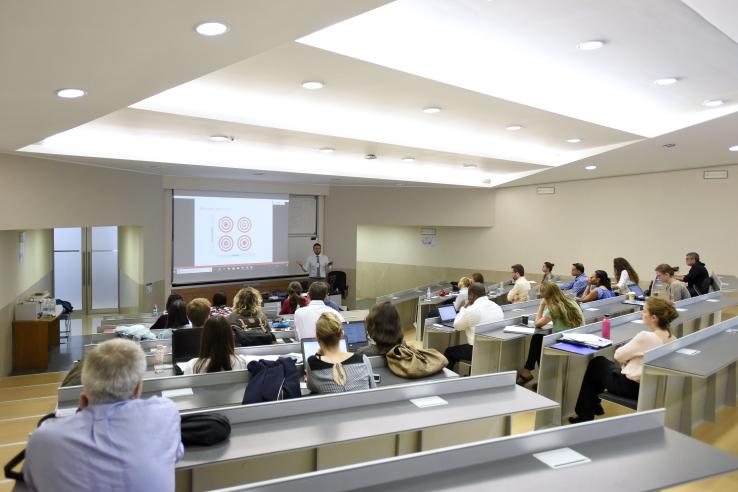
J-PAL’s European Social Inclusion Initiative (ESII) Seminar
Event

Séminaire de recherche IDEE, Journée #1 : Les Compétences Socio-Émotionelles

L’EquipEx Innovations, données et expérimentation en éducation (IDEE) lançons un séminaire de recherche pluridisciplinaire visant à réunir la communauté des chercheurs intéressés par les méthodes expérimentales et leurs enjeux, et à leur fournir un espace d’échange. Le premier séminaire portera sur...
Person

Alipio Ferreira

Alipio Ferreira is a Postdoctoral Research Fellow at J-PAL LAC in the King Climate Action Initiative, based in Rio de Janeiro.
Person

Lulu Qonita

Lulu is a Policy Associate working on policy projects and partnerships.
Person

Madeline Brancel

Madeline Brancel is a Policy Manager at J-PAL, where she manages the Education sector and works with governments, NGOs, and academics to build research partnerships and promote evidence-informed policymaking.

J-PAL Africa staff Palesa Thinta and Lloyd Belton reviewing MicroMasters material in Cape Town, South Africa.
Blog

Five years and counting: The DEDP MicroMasters program trains future leaders in the fight against global poverty

The past five years have been a remarkable journey indeed! The program, jointly led by J-PAL and MITx, has welcomed more than 50,000 learners from 214 countries and territories, with our courses amassing nearly half a million enrollments overall. We have awarded over 8,000 course certificates, and...

A woman wearing a red dress sits outdoors holding a laptop on her lap.
Blog

The future of the DEDP MicroMasters program

As we reflect on the five-year anniversary of the DEDP MicroMasters, we also look to the future. In the next five years, we will focus on diversity, equity, and inclusion in expanding our body of learners, supporting our existing learners so they have the right resources to have a successful journey...

A Bangladeshi bureaucrat uses the digital land record system
Evaluation

The Effect of Bureaucrat Performance Scorecards on Service Delivery and Bribes in Bangladesh

Researchers evaluated the impact of performance scorecards on the speed of delivery and the payment of bribes. Results show that the intervention increased on-time service delivery, but did not decrease bribe payments on average; bribes among high-performers increased.

Pagination

  • First page « First
  • Previous page ‹
  • …
  • Page 261
  • Page 262
  • Current page 263
  • Page 264
  • Page 265
  • …
  • Next page ›
  • Last page Last »
J-PAL

J-PAL

400 Main Street

E19-201

Cambridge, MA 02142

USA

Contact

+1 617 324 6566

[email protected]


Press Room

Stay Informed

Receive our newsletters

Subscribe


Privacy Policy

Accessibility

MIT