

J-PAL J-PAL
The Abdul Latif Jameel Poverty Action Lab
  • About
    • Overview
    • People
      • Affiliated Professors
      • Invited Researchers
      • J-PAL Scholars
      • Board
      • Leadership
      • Staff
    • Strengthening Our Work
    • Code of Conduct
    • Initiatives
    • Events
    • Blog
    • News
    • Press Room
  • Offices
    • Overview
    • Global
    • Africa
    • Europe
    • Latin America and the Caribbean
      • Growing Futures
    • Middle East and North Africa
    • North America
    • South Asia
    • Southeast Asia
  • Sectors
    • Overview
    • Agriculture
    • Crime, Violence, and Conflict
    • Education
    • Environment, Energy, and Climate Change
    • Finance
    • Firms
    • Gender
    • Health
    • Labor Markets
    • Political Economy and Governance
    • Social Protection
  • Evaluations
  • Research Resources
    • About Us
    • Our Work
    • Join ASPIRE
    • Newsroom
  • Policy Insights
  • Evidence to Policy
    • Pathways and Case Studies
    • The Evidence Effect
  • Blog
  • Careers
  • Courses
  • For Affiliates
  • Support J-PAL

Utility menu

  • Blog
  • Careers
  • Courses
  • For Affiliates
  • Support J-PAL

Quick links

  • Evaluations
  • Research Resources
  • Policy Insights
  • Evidence to Policy
    • Pathways and Case Studies
    • The Evidence Effect
  • About

    The Abdul Latif Jameel Poverty Action Lab (J-PAL) is a global research center working to reduce poverty by ensuring that policy is informed by scientific evidence. Anchored by a network of more than 1,100 researchers at universities around the world, J-PAL conducts randomized impact evaluations to answer critical questions in the fight against poverty.

    • Overview

      The Abdul Latif Jameel Poverty Action Lab (J-PAL) is a global research center working to reduce poverty by ensuring that policy is informed by scientific evidence. Anchored by a network of more than 1,100 researchers at universities around the world, J-PAL conducts randomized impact evaluations to answer critical questions in the fight against poverty.

      • Affiliated Professors

        Our affiliated professors are based at over 130 universities and conduct randomized evaluations around the world to design, evaluate, and improve programs and policies aimed at reducing poverty. They set their own research agendas, raise funds to support their evaluations, and work with J-PAL staff on research, policy outreach, and training.

      • Invited Researchers
      • J-PAL Scholars
      • Board
        Our Board of Directors, which is composed of J-PAL affiliated professors and senior management, provides overall strategic guidance to J-PAL, our sector programs, and regional offices.
      • Leadership
      • Staff
    • Strengthening Our Work

      Our research, policy, and training work is fundamentally better when it is informed by a broad range of perspectives.

    • Code of Conduct
    • Initiatives
      J-PAL initiatives concentrate funding and other resources around priority topics for which rigorous policy-relevant research is urgently needed.
    • Events
      We host events around the world and online to share results and policy lessons from randomized evaluations, to build new partnerships between researchers and practitioners, and to train organizations on how to design and conduct randomized evaluations, and use evidence from impact evaluations.
    • Blog
      News, ideas, and analysis from J-PAL staff and affiliated professors.
    • News
      Browse news articles about J-PAL and our affiliated professors, read our press releases and monthly global and research newsletters, and connect with us for media inquiries.
    • Press Room
      Based at leading universities around the world, our experts are economists who use randomized evaluations to answer critical questions in the fight against poverty. Connect with us for all media inquiries and we'll help you find the right person to shed insight on your story.
  • Offices
    J-PAL is based at MIT in Cambridge, MA and has seven regional offices at leading universities in Africa, Europe, Latin America and the Caribbean, Middle East and North Africa, North America, South Asia, and Southeast Asia.
    • Overview
      J-PAL is based at MIT in Cambridge, MA and has seven regional offices at leading universities in Africa, Europe, Latin America and the Caribbean, Middle East and North Africa, North America, South Asia, and Southeast Asia.
    • Global
      Our global office is based at the Department of Economics at the Massachusetts Institute of Technology. It serves as the head office for our network of seven independent regional offices.
    • Africa
    • Europe
    • Latin America and the Caribbean
    • Middle East and North Africa
    • North America
    • South Asia
    • Southeast Asia
  • Sectors
    Led by affiliated professors, J-PAL sectors guide our research and policy work by conducting literature reviews; by managing research initiatives that promote the rigorous evaluation of innovative interventions by affiliates; and by summarizing findings and lessons from randomized evaluations and producing cost-effectiveness analyses to help inform relevant policy debates.
    • Overview
      Led by affiliated professors, J-PAL sectors guide our research and policy work by conducting literature reviews; by managing research initiatives that promote the rigorous evaluation of innovative interventions by affiliates; and by summarizing findings and lessons from randomized evaluations and producing cost-effectiveness analyses to help inform relevant policy debates.
    • Agriculture
      How can we encourage small farmers to adopt proven agricultural practices and improve their yields and profitability?
    • Crime, Violence, and Conflict
      What are the causes and consequences of crime, violence, and conflict and how can policy responses improve outcomes for those affected?
    • Education
      How can students receive high-quality schooling that will help them, their families, and their communities truly realize the promise of education?
    • Environment, Energy, and Climate Change
      How can we increase access to energy, reduce pollution, and mitigate and build resilience to climate change?
    • Finance
      How can financial products and services be more affordable, appropriate, and accessible to underserved households and businesses?
    • Firms
      How do policies affecting private sector firms impact productivity gaps between higher-income and lower-income countries? How do firms’ own policies impact economic growth and worker welfare?
    • Gender
      How can we reduce gender inequality and ensure that social programs are sensitive to existing gender dynamics?
    • Health
      How can we increase access to and delivery of quality health care services and effectively promote healthy behaviors?
    • Labor Markets
      How can we help people find and keep work, particularly young people entering the workforce?
    • Political Economy and Governance
      What are the causes and consequences of poor governance and how can policy improve public service delivery?
    • Social Protection
      How can we identify effective policies and programs in low- and middle-income countries that provide financial assistance to low-income families, insuring against shocks and breaking poverty traps?
Displaying 5581 - 5595 of 7225

Photo of three DEDP master's students reviewing an informational pamphlet
Event

DEDP Webinar: Pursue a credential in the MITx MicroMasters® Program

The MicroMasters® Program in Data, Economics, and Design of Policy (DEDP) equips learners with the practical skills and theoretical knowledge to tackle some of the most pressing challenges around the world.

Three women are seated on a stage.
Update
J-PAL Updates

November 2023 Newsletter

J-PAL celebrates it's 20th anniversary and the UM6P-J-PAL Agricultural Lab for Africa is launched in Morocco.
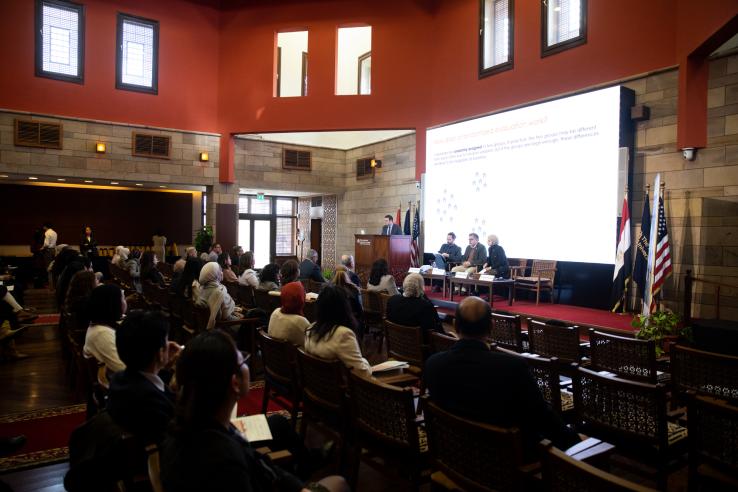
Ahmed Elsayed speaking at Global Evidence for Egypt Conference at the American University in Cairo.
Blog

20 for 20: Bringing global evidence to drive change for child and adolescent wellbeing in Egypt with UNICEF

This is the seventh post of J-PAL’s 20 for 20: Partner Voices blog series, where we showcase stories of results and impact with our partners to celebrate our twentieth anniversary. Read on to learn how J-PAL Middle East and North Africa’s (MENA) partnership with UNICEF Egypt helps bring greater use...
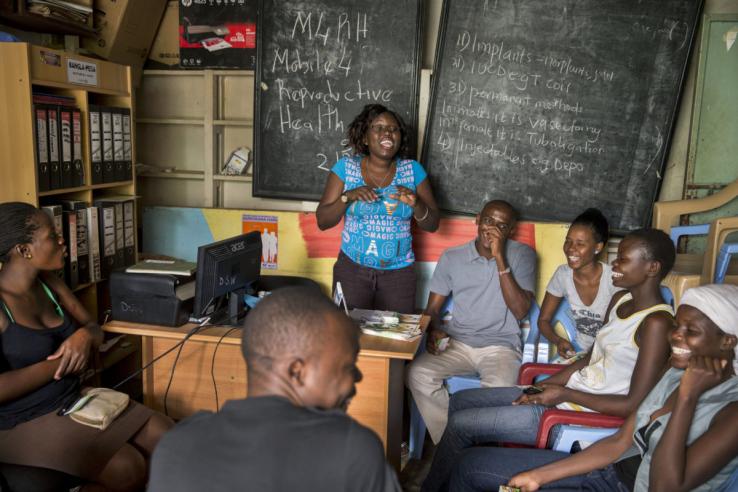
A group of men and women actively engaged during a community outreach on reproductive health
Blog

32 years of 16 Days of Activism against Gender-Based Violence: An Evidence-Based Call to UNITE!

In the fight against gender-based violence (GBV) and intimate-partner violence (IPV), which disproportionately affect women and girls, involving men in the violence prevention may be the key to the puzzle. Many of the conventional approaches to addressing GBV and IPV have been through programs that...

Two doctors speaking with notepad
Blog

The role of health economics in addressing poverty and building better policy

J-PAL staff sat down with Matt Notowidigdo (University of Chicago), Co-Scientific Director of J-PAL North America, and Tal Gross (Boston University) to examine their new book's approach to health economics and the impact of randomized evaluations on their understanding of the health care system...
Resource
Basic page

J-PAL Scholars and Fellows

J-PAL is invested in creating more opportunities to diversify and expand our worldwide research network. The J-PAL Scholars and Fellows programs enable researchers from low- and middle-income countries to drive the research agenda in their regions through the use of randomized evaluations.
Person

Matthew Kraft

Matthew Kraft is an Associate Professor of Education and Economics at Brown University, where he founded and now serves as Faculty Director of SustainableED.

Three Female Students With Teacher Building Robot Vehicle In After School Computer Coding Class
Policy insight

Advancing women’s representation and opportunities in STEM fields through exposure to role models

In high-income countries, exposure to women role models often positively impacts women students’ participation and educational performance in science, technology, engineering, and mathematics (STEM) fields, by improving students’ perceptions and aspirations of having STEM careers.
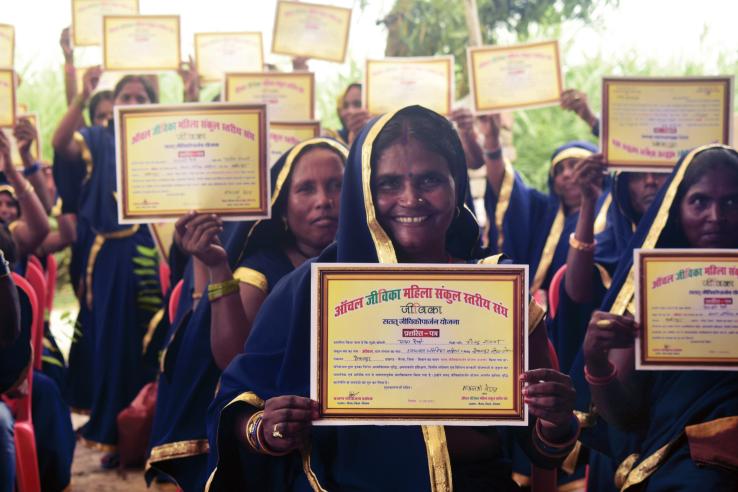
SJY graduated households
Blog

Graduation approach: Updated insights and best practices at scale

Recently, J-PAL updated its Policy Insight on the Graduation approach, in addition to a guide outlining key lessons from the large-scale adaptation of the graduation program, Satat Jeevikoparjan Yojana (SJY) by the State Government of Bihar in India.
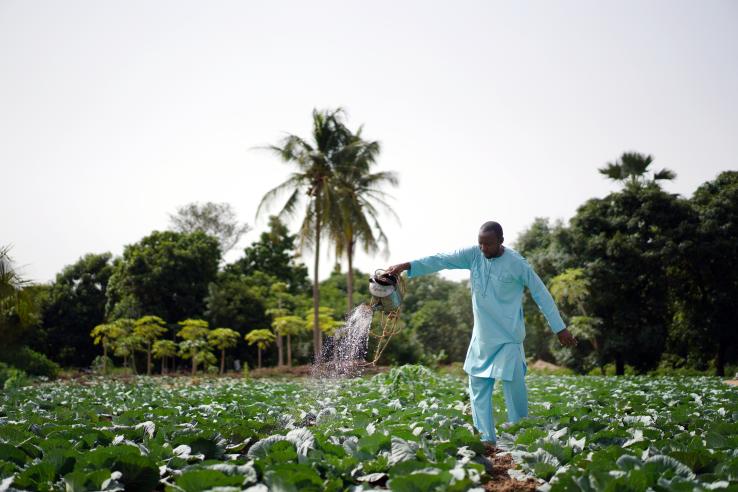
A man waters his crops.
Blog

Using insurance and climate-smart technologies to help farmers cope with weather-based risk

An urgent policy priority, both to increase farmers’ own productivity and profits and to contribute to stabilizing food security throughout these regions, is to provide accessible forms of risk protection. J-PAL’s updated Policy Insight reviews 23 randomized evaluations on common interventions...

White pills spilling from bottle
Blog

Encouraging rigorous, actionable research for opioid epidemic interventions in the United States

In this post, J-PAL North America reviews the ongoing studies supported by J-PAL North America on strategies to address the opioid epidemic and calls for further research in this pressing area.
Person

Raunak Jha

Person

Jordana Ferreira Da Silva

Jordana Silva is a Senior Associate in Research and Training at J-PAL in Latin America and the Caribbean (LAC). She is part of the Partnerships with Governments of Brazil Project team. She is responsible for J-PAL's partnership with the Secretariat of Monitoring and Evaluation in an agenda with the...
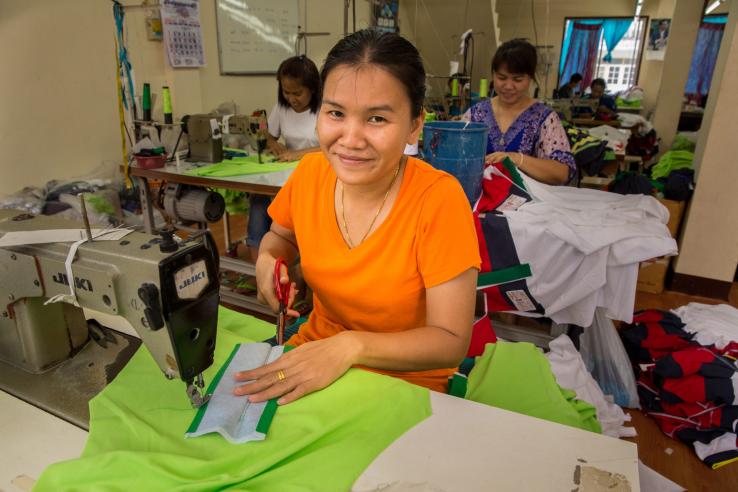
A woman sitting at a sewing desk smiles at the camera while cutting cloth with scissors
Resource
Basic page

Corporate Impact and Sustainability Partnerships

J-PAL supports companies to achieve their responsible and sustainable business goals through evidence-sharing and research partnerships.

Two men in boat in river
Resource
Basic page

Hub of Advanced Policy Innovation for the Environment (HAPIE)

The Hub of Advanced Policy Innovation for the Environment (HAPIE) is J-PAL’s regional Air and Water Lab in Egypt, a global initiative founded by J-PAL and Community Jameel.

Pagination

  • First page « First
  • Previous page ‹
  • …
  • Page 371
  • Page 372
  • Current page 373
  • Page 374
  • Page 375
  • …
  • Next page ›
  • Last page Last »
J-PAL

J-PAL

400 Main Street

E19-201

Cambridge, MA 02142

USA

Contact

+1 617 324 6566

[email protected]


Press Room

Stay Informed

Receive our newsletters

Subscribe


Privacy Policy

Accessibility

MIT