J-PAL J-PAL
The Abdul Latif Jameel Poverty Action Lab
  • About
    • Overview
    • People
      • Affiliated Professors
      • Invited Researchers
      • J-PAL Scholars
      • Board
      • Leadership
      • Staff
    • Strengthening Our Work
    • Code of Conduct
    • Initiatives
    • Events
    • Blog
    • News
    • Press Room
  • Offices
    • Overview
    • Global
    • Africa
    • Europe
    • Latin America and the Caribbean
    • Middle East and North Africa
    • North America
    • South Asia
    • Southeast Asia
  • Sectors
    • Overview
    • Agriculture
    • Crime, Violence, and Conflict
    • Education
    • Environment, Energy, and Climate Change
    • Finance
    • Firms
    • Gender
    • Health
    • Labor Markets
    • Political Economy and Governance
    • Social Protection
  • Evaluations
  • Research Resources
    • About Us
    • Our Work
    • Join ASPIRE
    • Newsroom
  • Policy Insights
  • Evidence to Policy
    • Pathways and Case Studies
    • The Evidence Effect
  • Blog
  • Careers
  • Courses
  • For Affiliates
  • Support J-PAL

Utility menu

  • Blog
  • Careers
  • Courses
  • For Affiliates
  • Support J-PAL

Quick links

  • Evaluations
  • Research Resources
  • Policy Insights
  • Evidence to Policy
    • Pathways and Case Studies
    • The Evidence Effect
  • About

    The Abdul Latif Jameel Poverty Action Lab (J-PAL) is a global research center working to reduce poverty by ensuring that policy is informed by scientific evidence. Anchored by a network of more than 1,100 researchers at universities around the world, J-PAL conducts randomized impact evaluations to answer critical questions in the fight against poverty.

    • Overview

      The Abdul Latif Jameel Poverty Action Lab (J-PAL) is a global research center working to reduce poverty by ensuring that policy is informed by scientific evidence. Anchored by a network of more than 1,100 researchers at universities around the world, J-PAL conducts randomized impact evaluations to answer critical questions in the fight against poverty.

      • Affiliated Professors

        Our affiliated professors are based at over 130 universities and conduct randomized evaluations around the world to design, evaluate, and improve programs and policies aimed at reducing poverty. They set their own research agendas, raise funds to support their evaluations, and work with J-PAL staff on research, policy outreach, and training.

      • Invited Researchers
      • J-PAL Scholars
      • Board
        Our Board of Directors, which is composed of J-PAL affiliated professors and senior management, provides overall strategic guidance to J-PAL, our sector programs, and regional offices.
      • Leadership
      • Staff
    • Strengthening Our Work

      Our research, policy, and training work is fundamentally better when it is informed by a broad range of perspectives.

    • Code of Conduct
    • Initiatives
      J-PAL initiatives concentrate funding and other resources around priority topics for which rigorous policy-relevant research is urgently needed.
    • Events
      We host events around the world and online to share results and policy lessons from randomized evaluations, to build new partnerships between researchers and practitioners, and to train organizations on how to design and conduct randomized evaluations, and use evidence from impact evaluations.
    • Blog
      News, ideas, and analysis from J-PAL staff and affiliated professors.
    • News
      Browse news articles about J-PAL and our affiliated professors, read our press releases and monthly global and research newsletters, and connect with us for media inquiries.
    • Press Room
      Based at leading universities around the world, our experts are economists who use randomized evaluations to answer critical questions in the fight against poverty. Connect with us for all media inquiries and we'll help you find the right person to shed insight on your story.
  • Offices
    J-PAL is based at MIT in Cambridge, MA and has seven regional offices at leading universities in Africa, Europe, Latin America and the Caribbean, Middle East and North Africa, North America, South Asia, and Southeast Asia.
    • Overview
      J-PAL is based at MIT in Cambridge, MA and has seven regional offices at leading universities in Africa, Europe, Latin America and the Caribbean, Middle East and North Africa, North America, South Asia, and Southeast Asia.
    • Global
      Our global office is based at the Department of Economics at the Massachusetts Institute of Technology. It serves as the head office for our network of seven independent regional offices.
    • Africa
    • Europe
    • Latin America and the Caribbean
    • Middle East and North Africa
    • North America
    • South Asia
    • Southeast Asia
  • Sectors
    Led by affiliated professors, J-PAL sectors guide our research and policy work by conducting literature reviews; by managing research initiatives that promote the rigorous evaluation of innovative interventions by affiliates; and by summarizing findings and lessons from randomized evaluations and producing cost-effectiveness analyses to help inform relevant policy debates.
    • Overview
      Led by affiliated professors, J-PAL sectors guide our research and policy work by conducting literature reviews; by managing research initiatives that promote the rigorous evaluation of innovative interventions by affiliates; and by summarizing findings and lessons from randomized evaluations and producing cost-effectiveness analyses to help inform relevant policy debates.
    • Agriculture
      How can we encourage small farmers to adopt proven agricultural practices and improve their yields and profitability?
    • Crime, Violence, and Conflict
      What are the causes and consequences of crime, violence, and conflict and how can policy responses improve outcomes for those affected?
    • Education
      How can students receive high-quality schooling that will help them, their families, and their communities truly realize the promise of education?
    • Environment, Energy, and Climate Change
      How can we increase access to energy, reduce pollution, and mitigate and build resilience to climate change?
    • Finance
      How can financial products and services be more affordable, appropriate, and accessible to underserved households and businesses?
    • Firms
      How do policies affecting private sector firms impact productivity gaps between higher-income and lower-income countries? How do firms’ own policies impact economic growth and worker welfare?
    • Gender
      How can we reduce gender inequality and ensure that social programs are sensitive to existing gender dynamics?
    • Health
      How can we increase access to and delivery of quality health care services and effectively promote healthy behaviors?
    • Labor Markets
      How can we help people find and keep work, particularly young people entering the workforce?
    • Political Economy and Governance
      What are the causes and consequences of poor governance and how can policy improve public service delivery?
    • Social Protection
      How can we identify effective policies and programs in low- and middle-income countries that provide financial assistance to low-income families, insuring against shocks and breaking poverty traps?
Displaying 8476 - 8490 of 8540
Job

Research Associate - Identifying and nurturing Math Talent at Scale: Piloting - J-PAL South Asia

Job

Data Fellow - Accelerator Program - J-PAL South Asia

Person

Meryem Mestassi

Meryem is the Senior Policy & Training Associate at the UM6P-J-PAL Applied Lab for Agriculture (UJALA).
Person

Angela Ciceri

Angela Ciceri is a Senior Policy Associate at J-PAL Europe, where she works on the Innovation, Data, and Experimentation in Education (IDEE) program.
Update
J-PAL Updates

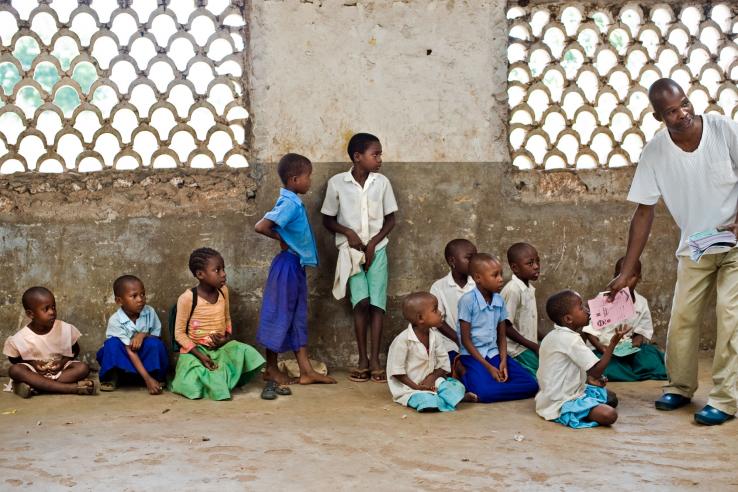
National study in Zambia finds a focus on teaching the basics leads to broad learning gains over time

A new national study of Zambia's Teaching at the Right Level (TaRL) program finds that helping children build foundational literacy and math skills can lead to broader learning gains over time.
Evaluation

Long-run and Intergenerational Impacts of Child Health Gains from Deworming in Kenya

Researchers conducted long-term follow-ups a mass school-based deworming program in western Kenya, which had substantially improved health and school participation of treated children, as well as of untreated children in treatment schools and children in neighboring schools in the short-term. Approximately ten years after treatment, researchers found that the program increased women’s educational attainment and men’s labor supply, with accompanying shifts in occupation choice. Twenty years after treatment, earnings, spending, and time spent working outside of agriculture had improved.
Farmers planting rice near Yogyakarta, Indonesia
Initiative Resource
Initiative projects and documents

UJALA Researcher-Led Evaluations Request for Proposal (RFP)

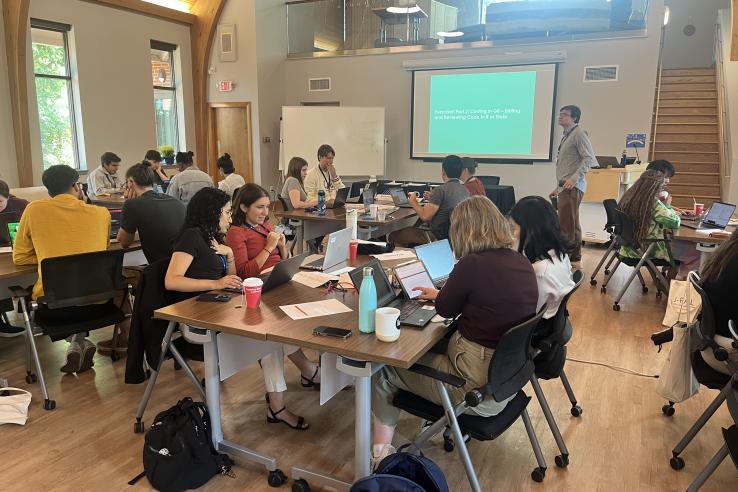
A group of training participants sit at desks in front of an instructor who stands at the front of the room by a projector and training slides.
Event

J-PAL North America 2026 Research Staff Training

J-PAL North America will host its annual Research Staff Training (RST) as an in-person, three-day training program designed specifically for research staff working on randomized evaluations. Sessions blend lectures, hands-on exercises, and peer learning.
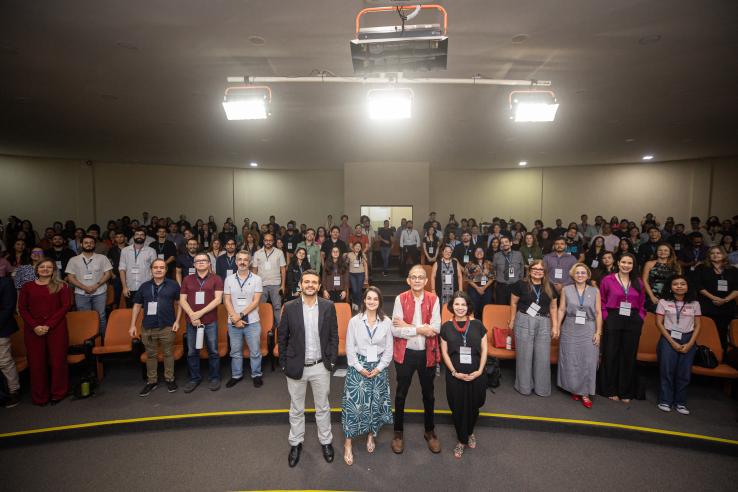
Pessoas posam para foto após evento
Resource
Layout Page

J-PAL LAC: Fellows and Scholars Program

Fellows Program Brasil 2026: Formação em Avaliação de Impacto para Pesquisadoras e Pesquisadores do Norte e Nordeste.
Person

Anant Sudarshan

Anant Sudarshan an Associate Professor of Economics at the University of Warwick and a Senior Fellow at the Energy Policy Institute at the University of Chicago (EPIC). His research spans several aspects of energy and environment policy, including the design of environmental regulation, reducing air...
government building
Initiative

US State and Local Innovation Initiative (SLII)

The J-PAL State and Local Innovation Initiative supports US state and local leaders in building a culture of evidence generation and use.
Initiative Resource
Initiative projects and documents

Leveraging Evaluation and Evidence for Equitable Recovery (LEVER) Evaluation Incubator

Farmers planting rice near Yogyakarta, Indonesia
Initiative

UM6P-J-PAL Applied Lab for Agriculture (UJALA)

UJALA funds research to rigorously evaluate agricultural technologies and practices aimed at improving the productivity, profitability, food security, and environmental sustainability of small-scale farmers globally.

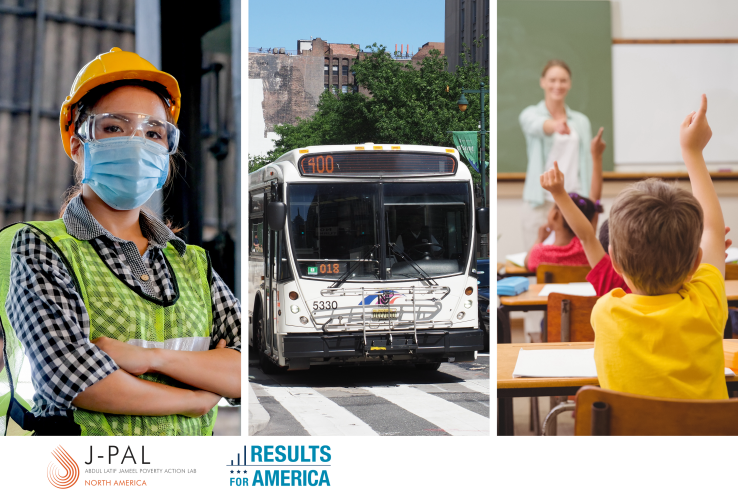
A photo collage of three images: on the left is a woman at a job training site wearing a hard hat and safety vest; in the middle is a city bus at an intersection; on the right, young students raise their hands to respond to a teacher's question. Below the photo are the logos for J-PAL North America and Results for America.
Event

Information Session on LEVER Evaluation Incubator

Learn more about LEVER’s Evaluation Incubator opportunity!
Person

Harini Kannan

Harini Kannan is a Research Scientist at J-PAL South Asia.

Pagination

  • First page « First
  • Previous page ‹
  • …
  • Page 564
  • Page 565
  • Current page 566
  • Page 567
  • Page 568
  • …
  • Next page ›
  • Last page Last »
J-PAL

J-PAL

400 Main Street

E19-201

Cambridge, MA 02142

USA

Contact

+1 617 324 6566

[email protected]


Press Room

Stay Informed

Receive our newsletters

Subscribe


Privacy Policy

Accessibility

MIT