J-PAL J-PAL
The Abdul Latif Jameel Poverty Action Lab
  • About
    • Overview
    • People
      • Affiliated Professors
      • Invited Researchers
      • J-PAL Scholars
      • Board
      • Leadership
      • Staff
    • Strengthening Our Work
    • Code of Conduct
    • Initiatives
    • Events
    • Blog
    • News
    • Press Room
  • Offices
    • Overview
    • Global
    • Africa
    • Europe
    • Latin America and the Caribbean
      • Growing Futures
    • Middle East and North Africa
    • North America
    • South Asia
    • Southeast Asia
  • Sectors
    • Overview
    • Agriculture
    • Crime, Violence, and Conflict
    • Education
    • Environment, Energy, and Climate Change
    • Finance
    • Firms
    • Gender
    • Health
    • Labor Markets
    • Political Economy and Governance
    • Social Protection
  • Evaluations
  • Research Resources
    • About Us
    • Our Work
    • Join ASPIRE
    • Newsroom
  • Policy Insights
  • Evidence to Policy
    • Pathways and Case Studies
    • The Evidence Effect
  • Blog
  • Careers
  • Courses
  • For Affiliates
  • Support J-PAL

Utility menu

  • Blog
  • Careers
  • Courses
  • For Affiliates
  • Support J-PAL

Quick links

  • Evaluations
  • Research Resources
  • Policy Insights
  • Evidence to Policy
    • Pathways and Case Studies
    • The Evidence Effect
  • About

    The Abdul Latif Jameel Poverty Action Lab (J-PAL) is a global research center working to reduce poverty by ensuring that policy is informed by scientific evidence. Anchored by a network of more than 1,100 researchers at universities around the world, J-PAL conducts randomized impact evaluations to answer critical questions in the fight against poverty.

    • Overview

      The Abdul Latif Jameel Poverty Action Lab (J-PAL) is a global research center working to reduce poverty by ensuring that policy is informed by scientific evidence. Anchored by a network of more than 1,100 researchers at universities around the world, J-PAL conducts randomized impact evaluations to answer critical questions in the fight against poverty.

      • Affiliated Professors

        Our affiliated professors are based at over 130 universities and conduct randomized evaluations around the world to design, evaluate, and improve programs and policies aimed at reducing poverty. They set their own research agendas, raise funds to support their evaluations, and work with J-PAL staff on research, policy outreach, and training.

      • Invited Researchers
      • J-PAL Scholars
      • Board
        Our Board of Directors, which is composed of J-PAL affiliated professors and senior management, provides overall strategic guidance to J-PAL, our sector programs, and regional offices.
      • Leadership
      • Staff
    • Strengthening Our Work

      Our research, policy, and training work is fundamentally better when it is informed by a broad range of perspectives.

    • Code of Conduct
    • Initiatives
      J-PAL initiatives concentrate funding and other resources around priority topics for which rigorous policy-relevant research is urgently needed.
    • Events
      We host events around the world and online to share results and policy lessons from randomized evaluations, to build new partnerships between researchers and practitioners, and to train organizations on how to design and conduct randomized evaluations, and use evidence from impact evaluations.
    • Blog
      News, ideas, and analysis from J-PAL staff and affiliated professors.
    • News
      Browse news articles about J-PAL and our affiliated professors, read our press releases and monthly global and research newsletters, and connect with us for media inquiries.
    • Press Room
      Based at leading universities around the world, our experts are economists who use randomized evaluations to answer critical questions in the fight against poverty. Connect with us for all media inquiries and we'll help you find the right person to shed insight on your story.
  • Offices
    J-PAL is based at MIT in Cambridge, MA and has seven regional offices at leading universities in Africa, Europe, Latin America and the Caribbean, Middle East and North Africa, North America, South Asia, and Southeast Asia.
    • Overview
      J-PAL is based at MIT in Cambridge, MA and has seven regional offices at leading universities in Africa, Europe, Latin America and the Caribbean, Middle East and North Africa, North America, South Asia, and Southeast Asia.
    • Global
      Our global office is based at the Department of Economics at the Massachusetts Institute of Technology. It serves as the head office for our network of seven independent regional offices.
    • Africa
    • Europe
    • Latin America and the Caribbean
    • Middle East and North Africa
    • North America
    • South Asia
    • Southeast Asia
  • Sectors
    Led by affiliated professors, J-PAL sectors guide our research and policy work by conducting literature reviews; by managing research initiatives that promote the rigorous evaluation of innovative interventions by affiliates; and by summarizing findings and lessons from randomized evaluations and producing cost-effectiveness analyses to help inform relevant policy debates.
    • Overview
      Led by affiliated professors, J-PAL sectors guide our research and policy work by conducting literature reviews; by managing research initiatives that promote the rigorous evaluation of innovative interventions by affiliates; and by summarizing findings and lessons from randomized evaluations and producing cost-effectiveness analyses to help inform relevant policy debates.
    • Agriculture
      How can we encourage small farmers to adopt proven agricultural practices and improve their yields and profitability?
    • Crime, Violence, and Conflict
      What are the causes and consequences of crime, violence, and conflict and how can policy responses improve outcomes for those affected?
    • Education
      How can students receive high-quality schooling that will help them, their families, and their communities truly realize the promise of education?
    • Environment, Energy, and Climate Change
      How can we increase access to energy, reduce pollution, and mitigate and build resilience to climate change?
    • Finance
      How can financial products and services be more affordable, appropriate, and accessible to underserved households and businesses?
    • Firms
      How do policies affecting private sector firms impact productivity gaps between higher-income and lower-income countries? How do firms’ own policies impact economic growth and worker welfare?
    • Gender
      How can we reduce gender inequality and ensure that social programs are sensitive to existing gender dynamics?
    • Health
      How can we increase access to and delivery of quality health care services and effectively promote healthy behaviors?
    • Labor Markets
      How can we help people find and keep work, particularly young people entering the workforce?
    • Political Economy and Governance
      What are the causes and consequences of poor governance and how can policy improve public service delivery?
    • Social Protection
      How can we identify effective policies and programs in low- and middle-income countries that provide financial assistance to low-income families, insuring against shocks and breaking poverty traps?
Displaying 856 - 870 of 7147
Electrician installing energy efficient lightbulbs
Evaluation

The Impact of Energy Efficiency Messaging on Audit Takeup and Investment in Wisconsin

Researchers examined the informational, behavioral, and monetary drivers behind takeup of residential energy efficiency audits and subsequent investments in Wisconsin. While receipt of promotional letters and subsidies did induce higher rates of audit participation, overall takeup and investment in energy efficient home solutions remained low and realized energy savings fell short of predicted models.
Three men assemble a metal well frame J-PAL Africa evaluation summary
Evaluation

The Economic, Health, and Psychological Effects of Health Insurance and Unconditional Cash Transfers in Kenya

Researchers evaluated the effects of a free health insurance policy and UCTs of the same value on the economic, health, and psychological outcomes of informal workers in Kenya. Participants who received health insurance self-reported reduced stress and had lower cortisol levels; UCTs led to fewer children in the household being sick and reduced overall hospitalizations in the household. Neither intervention had meaningful impacts on economic outcomes or other metrics of health and healthcare utilization.
Men and women sit at a table with voter rolls in the Philippines.
Evaluation

The Impact of Deliberative Political Campaigns on Voter Behavior in the Philippines

Researchers partnered with two political parties in the Philippines to evaluate the effect of deliberative campaigns on voter turnout and vote shares. While deliberative town halls did not increase voter turnout, results suggest that they were effective in increasing vote shares by changing voters’ attitudes and making the party’s platform more persuasive among specific societal groups.
Outdoor toilet in West Java, Indonesia
Evaluation

The Impact of a Large-Scale Community-Led Total Sanitation Program in Indonesia

Researchers conducted a randomized evaluation to study the impact of a large-scale Community-Led Total Sanitation (CLTS) program in Indonesia on sanitation practices, attitudes towards open defecation, and child health. When implemented by external resource agencies instead of local governments, CLTS increased toilet construction, reduced roundworm infestations among children under five, and decreased tolerance of open defecation.
Health worker administrates polio-vaccine drops to a child during anti-polio immunization campaign at Pak-Afghan Border on January 20, 2015 in Chaman.
Evaluation

Pay for Perfomance Incentives for Heathcare Workers in Pakistan

Polio is endemic in Pakistan, and vaccination campaigns often suffer when government health workers hired to administer the vaccine underperform. Researchers introduced individualized bonus contracts to health workers to evaluate the impact of time preferences on vaccine delivery and quality of service. Relative to those with random contracts, vaccinators with tailored contracts provided significantly smoother service.
Screenshot of digital dashboard in Japanese showing a bar chart of daily electricity usage
Evaluation

Energy Conservation through Text Messages and Price Increases in Japan

Researchers introduced two programs during peak consumption hours—text messages encouraging energy conservation for the benefit of society, or price increases—to evaluate the impact of social motivation and dynamic pricing on energy conservation. Both programs led to reductions in electricity use, but the impacts of the dynamic pricing were larger and persisted for longer than the impacts of the social motivation messages.
Evaluation

The Impact of Evidence-Based Learning Instruction on Students' Reading Performance in the U.S.

Group of women participating in electoral event supporting the African National Congress in South Africa
Evaluation

Using Technology to Promote Electoral Participation in South Africa

Researchers conducted a randomized evaluation of the VIP:Voice, a digital election participation platform, to measure the impact of information and communications technologies on individuals’ political participation. Via the platform, researchers interacted with nearly 100,000 citizens, recruited citizen monitors in 38 percent of the wards of South Africa and deployed 347 citizen monitors to polling places. However, around 50 percent of participants dropped out at each subsequent, and more time-intensive, form of engagement requested via the platform.
Evaluation

Improving Credit Scores with Information in Peru

In Peru, researchers are conducting a randomized evaluation to measure the impact of an SMS reminder campaign on the frequency of credit report checks, credit scores, total debt levels, and interest rates paid on debt.
Black man has a blood pressure monitor fitted by Black doctor.
Evaluation

Matching Provider Race to Increase Take-up of Preventive Health Services among Black Men in the United States

Researchers examined the impact of race concordance (when the race of a patient matches that of their physician) and incentives on the take-up of preventive health services by Black men. Results indicate that physician race concordance significantly boosted demand for all preventive health services, and especially for more invasive tests.
Evaluation

Targeted Debt Relief and the Origins of Financial Distress: Experimental Evidence from Distressed Credit Card Borrowers

Person

Martin Abel

Martin Abel is an Assistant Professor of Economics at Bowdoin College.
Person

Michela Carlana

Michela Carlana is an Associate Professor of Public Policy at the Harvard Kennedy School. Her research focuses on the impact of exposure to gender stereotypes on performance in mathematics, self-confidence, and track choice of adolescents, as well as topics related to immigration.
Person

Kyle Emerick

Kyle Emerick is an Associate Professor of Economics at Tufts University. He focuses on Development Economics, with a particular emphasis on the Agricultural sector.
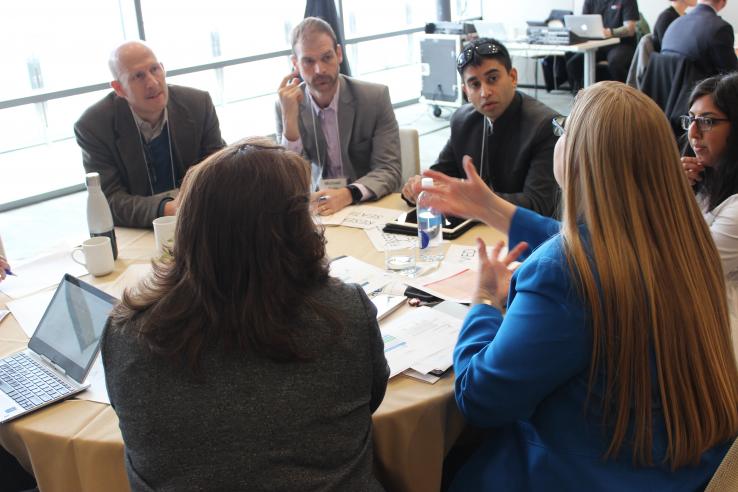
Conference attendees have discussing at round table.
Event

Charting the Next Decade of Evidence Generation in State and Local Government: A Virtual Webinar Series

J-PAL North America’s State and Local Innovation Initiative virtual webinar series “Charting the Next Decade of Evidence Generation in State and Local Government” will explore pressing policy and research priorities facing state and local governments. Speakers in the series will discuss how state...

Pagination

  • First page « First
  • Previous page ‹
  • …
  • Page 56
  • Page 57
  • Current page 58
  • Page 59
  • Page 60
  • …
  • Next page ›
  • Last page Last »
J-PAL

J-PAL

400 Main Street

E19-201

Cambridge, MA 02142

USA

Contact

+1 617 324 6566

[email protected]


Press Room

Stay Informed

Receive our newsletters

Subscribe


Privacy Policy

Accessibility

MIT