

Displaying 1216 - 1230 of 7222
Evaluation
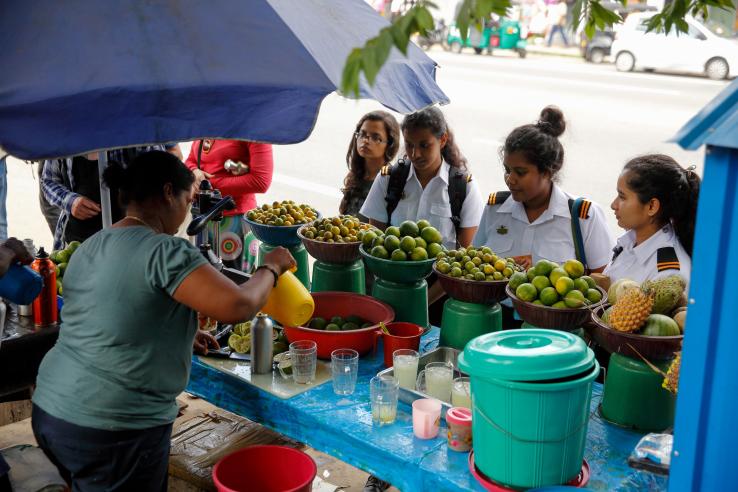
The Impact of Training and Cash Grants on Female-Owned Businesses in Sri Lanka
Researchers evaluated the impact of a business training intervention, alone and combined with a cash grant, on the income and other business outcomes for self-employed women in Sri Lanka. Researchers found that business training alone was not sufficient to generate business growth, but when combined with a US$129 cash grant, the business training program appeared to boost profits in the short-term.

Update
J-PAL Updates
December 2019 Newsletter
J-PAL's December 2019 newsletter celebrates Nobel laureates, J-PAL co-founders Abhijit Banerjee and Esther Duflo, and longtime J-PAL affiliate Michael Kremer, welcomes twelve new affiliate professors, and discusses European Social Inclusion Initiative's first round of grant funding.

Update
J-PAL Updates
January 2020 Newsletter
J-PAL's January 2020 newsletter looks back at J-PAL's accomplishments, including launching new initiatives, growing the online MicroMasters program, and J-PAL co-founders Abhijit Banerjee and Esther Duflo and longtime affiliate Michael Kremer being awarded the Nobel Prize in Economics.
Page
Landing page
Home
Evaluation
Cash and Microenterprise Support for the Ultra-Poor in Uganda
In partnership with the Association of Volunteers in International Service, researchers evaluated the impact of the Women’s Income Generating Support (WINGS) program, an initiative which provided low-income Ugandan individuals, mainly women, with financial grants, business skills training, and ongoing supervision on individuals’ economic outcomes. The WINGS program improved individuals’ earnings and access to nonfarm business opportunities in postwar Uganda.

Evaluation
The Impact of Government Subsidies on Private Secondary School Performance in Uganda
Researchers partnered with the Ugandan government to evaluate the impact of a public private partnership (PPP) program with low-cost private secondary schools on absorbing large increases in secondary school enrollment in Uganda. The PPP program led to both greater private school enrollment and higher student performance, with improved performance potentially being linked to increased input availability and positive household-driven selection of PPP student participants.
Evaluation
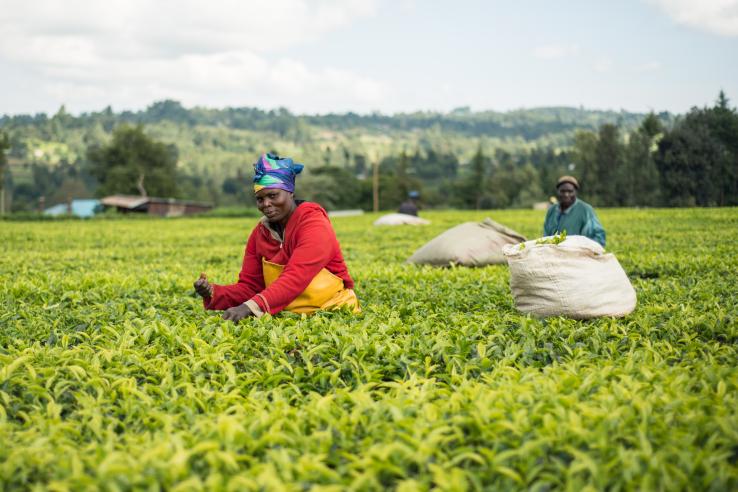
Consumer information to reduce counterfeit agricultural goods in Kenya
In Kenya, researchers assessed the impact of training farmers to verify seed quality on their seed purchasing decisions and productivity, and the responses of seed markets to these changes. Trained farmers became better able to detect seed quality, more selective about where they bought seeds, and experienced higher yields. Sellers, however, did not improve seed quality or adjust their prices in response to the shifts in farmer demand, possibly due to the high cost of doing so. Instead, many opted to exit the market.
Blog
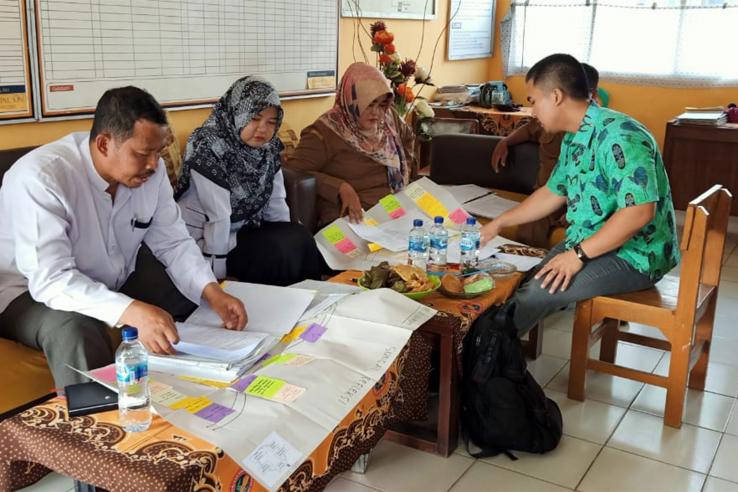
Patrya Pratama, J-PAL ’15, leverages his policy experience to build an education nonprofit
Patrya Pratama joined J-PAL Southeast Asia as a senior research associate in 2014. Now the founder and director of the INSPIRASI Foundation, he joined us to reflect on lessons learned over the course of his public policy career and chat about his work at INSPIRASI.
Blog
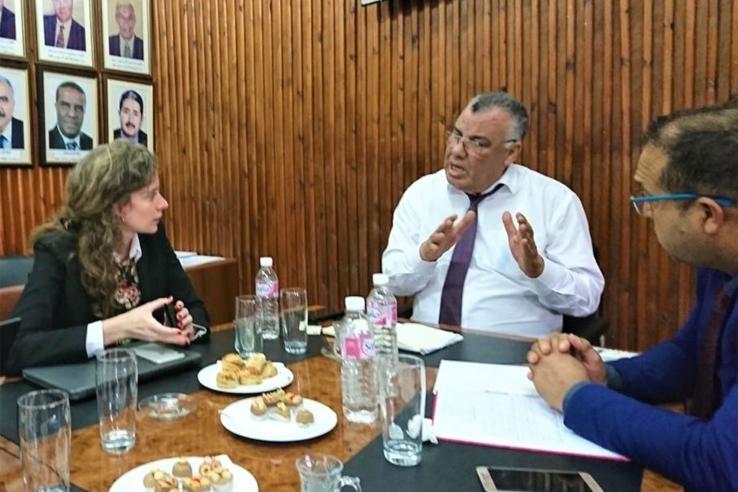
Juliette Keeley, J-PAL ’18, on navigating the international development ecosystem
Juliette Keeley was a senior policy associate at J-PAL North America and later a West Africa policy consultant for J-PAL. Now a manager at Instiglio—a nonprofit consultancy focusing on results-based financing and performance management in developing countries—she reflects on her experiences working...

Blog
Expanding access to higher education through the DEDP MicroMasters
Since its inception in 2017, MIT and J-PAL’s online MicroMasters in Data, Economics, and Development Policy (DEDP) has engaged thousands of learners from over 210 countries. As the number of DEDP learners grows, J-PAL is engaging with universities to provide learners with more ways to benefit from...
Blog
Addressing inequalities in women’s work: J-PAL launches Gender and Economic Agency Initiative
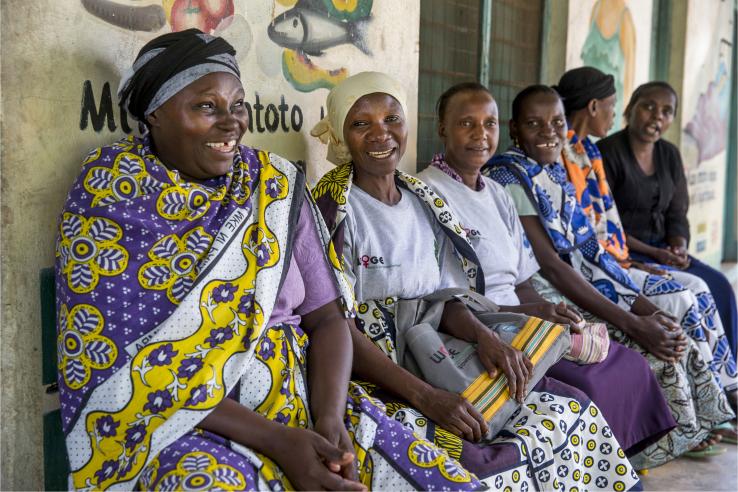
Women face even greater challenges to labor force participation than usual due to the pandemic. J-PAL’s new Gender and Economic Agency Initiative (GEA) launches to support innovative research on strategies to promote women’s work and enhance women’s economic agency.

Blog
Behind the scenes: Making the J-PAL Voices podcast
With J-PAL Voices, J-PAL North America is making its first foray into podcasting. J-PAL North America’s Rohit Naimpally and Dave Lishansky of David Benjamin Sound take you behind the scenes and reflect on the experience of producing this podcast together.
Page
Landing page
Policy Publications
Person
Isaac Mbiti
Isaac Mbiti is an Assistant Professor of Public Policy and Economics at the University of Virginia and Co-Scientific Director of J-PAL Africa. His research interests are in economic development, labor economics, and demography.
Person
Jeremy Magruder
Jeremy Magruder is a Professor in the Department of Agricultural and Resource Economics, at University of California, Berkeley. His research interests include unemployment in South Africa, job networks in India, and HIV/AIDS in Malawi. He received a PhD in Economics from Yale University and a BA in...