J-PAL J-PAL
The Abdul Latif Jameel Poverty Action Lab
  • About
    • Overview
    • People
    • Strengthening Our Work
    • Code of Conduct
    • Initiatives
    • Events
    • Blog
    • News
    • Press Room
  • Offices
    • Overview
    • Global
    • Africa
    • Europe
    • Latin America and the Caribbean
    • Middle East and North Africa
    • North America
    • South Asia
    • Southeast Asia
  • Sectors
    • Overview
    • Agriculture
    • Crime, Violence, and Conflict
    • Education
    • Environment, Energy, and Climate Change
    • Finance
    • Firms
    • Gender
    • Health
    • Labor Markets
    • Political Economy and Governance
    • Social Protection
  • Evaluations
  • Research Resources
    • About Us
    • Our Work
    • Join ASPIRE
    • Newsroom
  • Policy Insights
  • Evidence to Policy
    • Pathways and Case Studies
    • The Evidence Effect
  • Blog
  • Careers
  • Courses
  • For Affiliates
  • Support J-PAL

Utility menu

  • Blog
  • Careers
  • Courses
  • For Affiliates
  • Support J-PAL

Quick links

  • Evaluations
  • Research Resources
  • Policy Insights
  • Evidence to Policy
    • Pathways and Case Studies
    • The Evidence Effect
  • About

    The Abdul Latif Jameel Poverty Action Lab (J-PAL) is a global research center working to reduce poverty by ensuring that policy is informed by scientific evidence. Anchored by a network of more than 1,100 researchers at universities around the world, J-PAL conducts randomized impact evaluations to answer critical questions in the fight against poverty.

    • Overview

      The Abdul Latif Jameel Poverty Action Lab (J-PAL) is a global research center working to reduce poverty by ensuring that policy is informed by scientific evidence. Anchored by a network of more than 1,100 researchers at universities around the world, J-PAL conducts randomized impact evaluations to answer critical questions in the fight against poverty.

      • Affiliated Professors

        Our affiliated professors are based at over 130 universities and conduct randomized evaluations around the world to design, evaluate, and improve programs and policies aimed at reducing poverty. They set their own research agendas, raise funds to support their evaluations, and work with J-PAL staff on research, policy outreach, and training.

      • Invited Researchers
      • J-PAL Scholars
      • Board
        Our Board of Directors, which is composed of J-PAL affiliated professors and senior management, provides overall strategic guidance to J-PAL, our sector programs, and regional offices.
      • Staff
    • Strengthening Our Work

      Our research, policy, and training work is fundamentally better when it is informed by a broad range of perspectives.

    • Code of Conduct
    • Initiatives
      J-PAL initiatives concentrate funding and other resources around priority topics for which rigorous policy-relevant research is urgently needed.
    • Events
      We host events around the world and online to share results and policy lessons from randomized evaluations, to build new partnerships between researchers and practitioners, and to train organizations on how to design and conduct randomized evaluations, and use evidence from impact evaluations.
    • Blog
      News, ideas, and analysis from J-PAL staff and affiliated professors.
    • News
      Browse news articles about J-PAL and our affiliated professors, read our press releases and monthly global and research newsletters, and connect with us for media inquiries.
    • Press Room
      Based at leading universities around the world, our experts are economists who use randomized evaluations to answer critical questions in the fight against poverty. Connect with us for all media inquiries and we'll help you find the right person to shed insight on your story.
  • Offices
    J-PAL is based at MIT in Cambridge, MA and has seven regional offices at leading universities in Africa, Europe, Latin America and the Caribbean, Middle East and North Africa, North America, South Asia, and Southeast Asia.
    • Overview
      J-PAL is based at MIT in Cambridge, MA and has seven regional offices at leading universities in Africa, Europe, Latin America and the Caribbean, Middle East and North Africa, North America, South Asia, and Southeast Asia.
    • Global
      Our global office is based at the Department of Economics at the Massachusetts Institute of Technology. It serves as the head office for our network of seven independent regional offices.
    • Africa
    • Europe
    • Latin America and the Caribbean
    • Middle East and North Africa
      J-PAL MENA is based at the American University in Cairo, Egypt.
    • North America
    • South Asia
    • Southeast Asia
      J-PAL Southeast Asia is based at the Faculty of Economics and Business at the University of Indonesia (FEB UI).
  • Sectors
    Led by affiliated professors, J-PAL sectors guide our research and policy work by conducting literature reviews; by managing research initiatives that promote the rigorous evaluation of innovative interventions by affiliates; and by summarizing findings and lessons from randomized evaluations and producing cost-effectiveness analyses to help inform relevant policy debates.
    • Overview
      Led by affiliated professors, J-PAL sectors guide our research and policy work by conducting literature reviews; by managing research initiatives that promote the rigorous evaluation of innovative interventions by affiliates; and by summarizing findings and lessons from randomized evaluations and producing cost-effectiveness analyses to help inform relevant policy debates.
    • Agriculture
      How can we encourage small farmers to adopt proven agricultural practices and improve their yields and profitability?
    • Crime, Violence, and Conflict
      What are the causes and consequences of crime, violence, and conflict and how can policy responses improve outcomes for those affected?
    • Education
      How can students receive high-quality schooling that will help them, their families, and their communities truly realize the promise of education?
    • Environment, Energy, and Climate Change
      How can we increase access to energy, reduce pollution, and mitigate and build resilience to climate change?
    • Finance
      How can financial products and services be more affordable, appropriate, and accessible to underserved households and businesses?
    • Firms
      How do policies affecting private sector firms impact productivity gaps between higher-income and lower-income countries? How do firms’ own policies impact economic growth and worker welfare?
    • Gender
      How can we reduce gender inequality and ensure that social programs are sensitive to existing gender dynamics?
    • Health
      How can we increase access to and delivery of quality health care services and effectively promote healthy behaviors?
    • Labor Markets
      How can we help people find and keep work, particularly young people entering the workforce?
    • Political Economy and Governance
      What are the causes and consequences of poor governance and how can policy improve public service delivery?
    • Social Protection
      How can we identify effective policies and programs in low- and middle-income countries that provide financial assistance to low-income families, insuring against shocks and breaking poverty traps?
Displaying 6361 - 6375 of 8311
tailor working with sewing machine outdoors
Evaluation

Impact of Community Information in Identifying High Ability Microentrepreneurs

Identifying high-potential microentrepreneurs in low-income countries remains a challenge due to lack of verifiable information. Researchers conducted a randomized evaluation to test the value of community knowledge in identifying high-potential microentrepreneurs.
Evaluation

Reducing Covid-19 Infections and Holiday Travel through Social Media Campaigns in the United States

By running a Facebook public health campaign, researchers found that social media messaging from doctors and nurses reduced holiday travel and subsequent Covid-19 infection rates. This suggests that social media campaigns may be an impactful and cost-effective way to slow the spread of Covid-19 and enact behavior change.
Students take a test in Santiago, Chile
Evaluation

The Medium-Term Educational Effects of Short-Term Literacy Tutoring in Chile

Researchers conducted a randomized evaluation to gauge whether a short-term reading tutoring program could improve a range of student educational outcomes in the short- and medium-term (up to eight years after the program). They found that the program increased language test scores in the short term and improved several outcomes in the medium term, including reducing students’ probability of dropout, increasing their probability of graduating on time from primary and secondary school, and improving attendance, grades and test scores.
A student in a classroom in India.
Evaluation

The Impact of Diagnostic Feedback for Teachers on Student Learning in India

Researchers evaluated whether providing low-stakes diagnostic tests and feedback to teachers led to improved student learning outcomes in India. They found that teachers in intervention schools exerted more effort when observed in the classroom but students in these schools performed no better on independently-administered tests than students in schools that did not receive the program.
Two women, a dentist and her patient, look at a dental X-ray on a screen.
Evaluation

The Impact of Free Dental Health Services on Employment in Chile

Researchers evaluated the impact of access to a package of free dental services on employment levels for urban residents of Santiago, Chile. Results found that participants with access to these services had better dental health, and that self-esteem and short-term employment increased among women, particularly those who had previously been missing front teeth or with lower levels of self-esteem.
Primary school teacher and students in a classroom in Uganda.
Evaluation

Leveraging Teacher Incentives to Improve Student Performance and Reduce Dropout in Uganda

Researchers evaluated whether an alternative teacher incentive scheme, providing rewards based on the performance of all students, could help reduce dropout and improve student math learning. Introducing the pay-for-percentile incentive scheme reduced overall student dropout rates. However, these reductions were driven almost entirely by students at intervention schools with math textbooks. Among schools with math books, the incentive scheme also improved the math achievement for higher performing students.
Evaluation

The Impact of a Quiz-Style Information Campaign on Covid-19 Prevention in Ghana

Researchers are measuring the impact of a quiz-style information strategy on people’s learning and adherence to Covid-19 health protocols. This study is part of a three-country research program in Ghana, the US, and Zambia aiming to find evidence on the best strategies to communicate health measures.
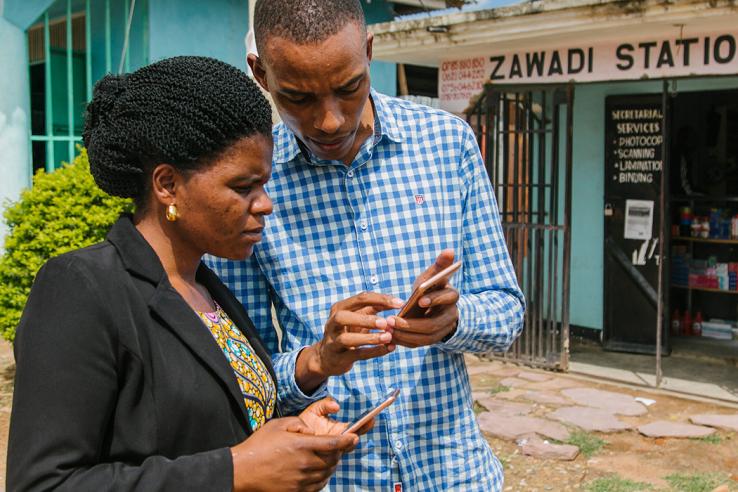
man holding cell phone in front of him
Evaluation

The Impact of a Quiz-Style Information Campaign on Covid-19 Prevention in the United States

Researchers are measuring the impact of a quiz-style information campaign on people’s learning and adherence to Covid-19 health protocols. This study is part of a three-country research in the United States, Ghana, and Zambia program aiming to generate evidence on the best strategies to effectively communicate health measures.
Evaluation

The Impact of a Peer Information Sharing Strategy to Combat the Spread of Covid-19 in Zambia

Researchers are measuring the impact of a peer information sharing strategy on people’s learning and adherence to Covid-19 health protocols. This study is part of a three-country research program in Zambia, Ghana, and the US aiming to find evidence on the most effective strategies to communicate health measures.
Indian farmer milking a cow
Evaluation

Incentives for Milk Cleanliness and Production Quality for Cooperatives in India

Much economic activity in low-income countries takes place through cooperative or collective organizations. Researchers in the Indian state of Karnataka conducted a randomized evaluation to study whether collective incentive payments to village cooperatives of dairy farmers could increase milk quality by reducing microbial contamination. Incentive payments increased cleanliness and point to the importance of leadership and social networks in cooperative production. However, a third of cooperative managers declined payments when they had to publicly disclose them.
image focuses on one wholesale sack of grain and shows several grains behind it in an open air market setting
Evaluation

Are Agricultural Traders Colluding? Testing the Degree of Competition Among Maize Traders in Kenya

Researchers conducted three randomized evaluations to measure the degree of competition among wholesale maize traders, understand the implications for social welfare, and test whether new traders could make a market more competitive. Researchers found that traders did not pass through much of a randomly administered cost reduction by lowering prices to consumers and, instead, colluded with other traders to maximize their profits.
Outdoor view of payday store with yellow and red sign in the United States.
Evaluation

Understanding Borrowers' Decisions: Payday Loans in the United States

Researchers partnered with a large payday lender in Indiana to conduct an evaluation to better understand consumers’ decision-making. The results suggest that average borrowers can anticipate their probability of taking loans in the future. However, people focus too much on the present when making decisions about payday loans, a behavior that they would like to change.
Evaluation

Testing Legislator Responsiveness to Citizens and Firms in the Vietnamese National Assembly

Responsive governments have the ability to make laws and decisions that reflect their constituents’ preferences. However, legislators may lack necessary information about constituents’ opinions and may therefore be unable to meet their demands. Researchers measured whether providing targeted information about citizens’ and firms’ preferences to members of the Vietnamese National Assembly (VNA) increased legislators’ responsiveness. VNA delegates who received information about their citizens’ preferences were more prepared and likely to speak in debates ; however, delegates did not appear to be responsive to information about local firms’ preferences. In addition, delegates grew more responsive as other delegates received the same information.
Evaluation

The Impact of Asset Transfers on Clean Fuel Use in India

Using data from a previous randomized evaluation in rural India that tested the effect of asset transfers to low-income households on overall consumption, researchers analyzed whether an increase in household wealth led to changes in energy use. While households consumed significantly more energy after the asset transfer, they did not reduce their use of dirty fuels.
Person

Lucia Corno

Lucia Corno is an Associate Professor of Economics at Cattolica University and Executive Director of the Laboratory for Effective Antipoverty Policies (LEAP) at Bocconi University.

Pagination

  • First page « First
  • Previous page ‹
  • …
  • Page 423
  • Page 424
  • Current page 425
  • Page 426
  • Page 427
  • …
  • Next page ›
  • Last page Last »
J-PAL

J-PAL

400 Main Street

E19-201

Cambridge, MA 02142

USA

Contact

+1 617 324 6566

[email protected]


Press Room

Stay Informed

Receive our newsletters

Subscribe


Privacy Policy

Accessibility

MIT