

Displaying 886 - 900 of 1309

Evaluation
Matching Donations to Increase Charitable Giving in the United States
Altruistic individuals may hesitate to give when they doubt the quality of a charity, but knowing that a high-profile donor supports the charity might alleviate these concerns. Researchers evaluated the impact of publicizing a matching grant from the Bill and Melinda Gates Foundation (BMGF) on charitable giving to Technoserve, a US-based poverty-alleviation charity. Identifying the matching donor as BMGF increased the number of donors compared to mentioning an anonymous matching donor and compared to making no mention of a matching donor. However, the average size of donations remained the same regardless of the publicizing method used.
Evaluation
The Impact of Enhanced Business Training for High-Potential Entrepreneurs in Colombia
Small and medium enterprises are thought to be an important source of innovation and employment in developing countries, but entrepreneurs face a number of barriers to expanding their businesses. In Colombia, researchers are examining the impact of a combination of training, mentorship, and networking interventions on business outcomes.
Evaluation
Local Leadership and the Voluntary Provision of Public Goods in Bolivia
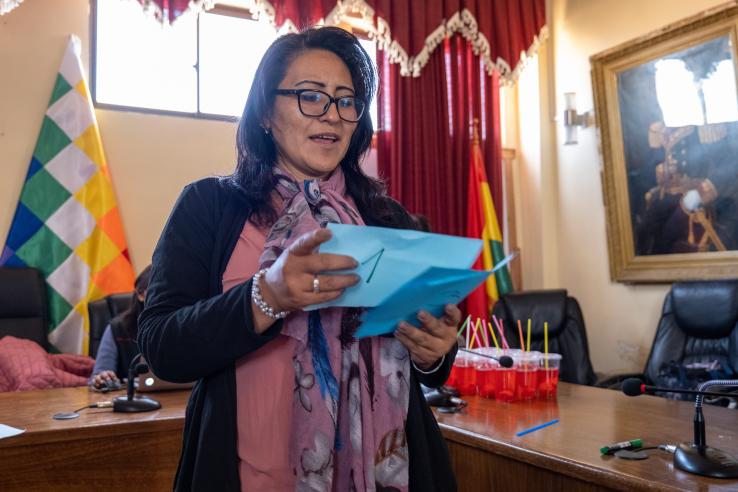
Researchers used a randomized evaluation to test how local leaders influence the voluntary provision of public goods. They solicited contributions for environmental education books, which all members of the community would be able to access, and varied whether leaders made public contributions. They found that when elected community leaders were asked to set an example, they increased the amount they gave and induced followers to contribute more as well.

Evaluation
Improving the Allocation of Land Use Subsidies Through Self-Selection in Malawi
In Malawi, researchers tested the impact of a subsidized tree planting program and tested whether allocating contracts randomly or through self-selection resulted in better program outcomes. Self-targeting outperformed random allocation of contracts in terms of tree survival and mitigated increases in land clearing and labor shortages.

Evaluation
Assessing the Effectiveness of Alternative Text Messages to Improve Collection of Delinquent Fines in the United Kingdom
The collection of delinquent fines is a massive public administrative challenge. In the United Kingdom for instance, unpaid court fines amounted to more than £600 million in 2011. Managing noncompliant accounts and dispatching bailiffs to collect fines in person is costly. Researchers used a randomized evaluation to test the effectiveness of mobile phone text messaging as a relatively inexpensive alternative method to encourage people to pay their outstanding fees. Text message reminders significantly increased average payment of fines, and were particularly effective when they addressed the recipient by name.

Evaluation
Encouraging Technology Adoption in Agriculture through Recommendations and In-Kind Transfers to Smallholder Farmers in Mexico
In Mexico, researchers conducted a randomized evaluation to test the effect of providing plot-specific or general soil quality analyses and input recommendations, agricultural extension services, and flexible or inflexible in-kind grants on smallholder farmers’ adoption and knowledge of improved practices and fertilizer combinations, yields, profits, and attitudes toward innovation. In the short run, they did not find differences on farmers’ fertilizer adoption when comparing specific and general input recommendations, nor when comparing flexible and inflexible in-kind grants. However, farmers with greater grant spending flexibility had substantially higher adoption of improved practices two years after the intervention ended.

Evaluation
Mobilizing Group Membership: The Impact of Personalization and Social Pressure Emails in the United States
This study evaluated the efficacy of three different types of emails in encouraging group membership: an impersonal email, a personalized email, and a personalized email that included an element of social pressure. Researchers found that membership increased most among recipients of the social pressure email followed by recipients of the personalized email.

Evaluation
Do Online Advertisements Increase Name Recognition or Favorability of Political Candidates in the United States?
In order to assess the effects of online advertising, researchers evaluated the impact of a high volume of Facebook advertising on name recognition and favorability of political candidates. E xposure to Facebook ads did not increase recognition of a candidate’s name or increase positive assessments of the candidate.

Evaluation
Using Media to Change Norms and Behaviors in Post-Genocide Rwanda
Researchers conducted a randomized evaluation in Rwanda to examine how important aspects of cultural practice do or do not change in the wake of exposure to media messages delivered through a radio soap opera drama. While the radio program had little effect on changing individual beliefs and attitudes, it did have a strong impact on listeners’ willingness to express dissent and the ways they resolved communal problems.

Evaluation
The Effect of Discussion Group Composition on Policy Preferences in the United States
In a series of three evaluations throughout the United States, researchers evaluated the effect of group composition on individual participants’ political views. They found little evidence that the ideological and demographic complexion of the group influenced post-discussion opinions.

Evaluation
Disaggregating the Effects of Deliberation on Policy Attitudes in the United States
Researchers evaluated the impact of deliberation on voters’ attitudes about two policy issues: airport expansion and revenue sharing. The results indicate that formal on-site deliberations produced changes in attitudes and increased the likelihood that participants would have ordered, consistent preferences, particularly for the less salient policy issue.
Evaluation
Social Pressure and Voter Turnout in the United States
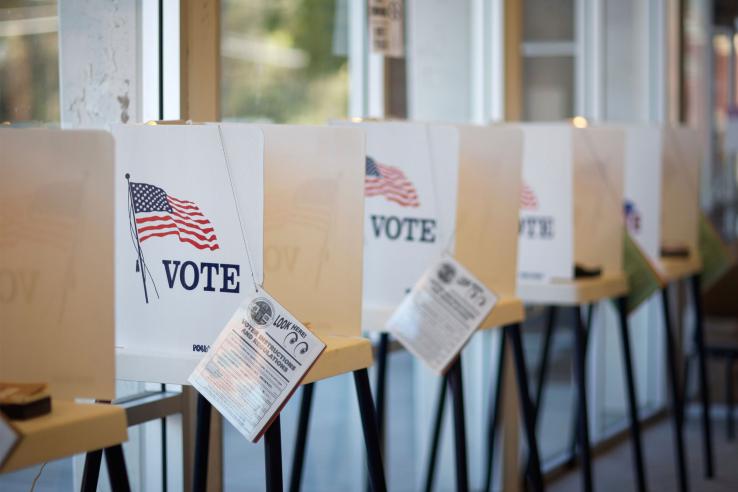
To study the effect of increased social pressure on turnout, researchers sent households one of four randomly selected mailings eleven days before Michigan’s August 2006 primary election. All four mailings increased turnout, but informing households of their neighbors’ past voting records raised turnout among registered voters by 8.1 percentage points, making the mailing about as effective as in-person canvassing.