J-PAL J-PAL
The Abdul Latif Jameel Poverty Action Lab
  • About
    • Overview
    • People
      • Affiliated Professors
      • Invited Researchers
      • J-PAL Scholars
      • Board
      • Leadership
      • Staff
    • Strengthening Our Work
    • Code of Conduct
    • Initiatives
    • Events
    • Blog
    • News
    • Press Room
  • Offices
    • Overview
    • Global
    • Africa
    • Europe
    • Latin America and the Caribbean
      • Growing Futures
    • Middle East and North Africa
    • North America
    • South Asia
    • Southeast Asia
  • Sectors
    • Overview
    • Agriculture
    • Crime, Violence, and Conflict
    • Education
    • Environment, Energy, and Climate Change
    • Finance
    • Firms
    • Gender
    • Health
    • Labor Markets
    • Political Economy and Governance
    • Social Protection
  • Evaluations
  • Research Resources
    • About Us
    • Our Work
    • Join ASPIRE
    • Newsroom
  • Policy Insights
  • Evidence to Policy
    • Pathways and Case Studies
    • The Evidence Effect
  • Blog
  • Careers
  • Courses
  • For Affiliates
  • Support J-PAL

Utility menu

  • Blog
  • Careers
  • Courses
  • For Affiliates
  • Support J-PAL

Quick links

  • Evaluations
  • Research Resources
  • Policy Insights
  • Evidence to Policy
    • Pathways and Case Studies
    • The Evidence Effect
  • About

    The Abdul Latif Jameel Poverty Action Lab (J-PAL) is a global research center working to reduce poverty by ensuring that policy is informed by scientific evidence. Anchored by a network of more than 1,100 researchers at universities around the world, J-PAL conducts randomized impact evaluations to answer critical questions in the fight against poverty.

    • Overview

      The Abdul Latif Jameel Poverty Action Lab (J-PAL) is a global research center working to reduce poverty by ensuring that policy is informed by scientific evidence. Anchored by a network of more than 1,100 researchers at universities around the world, J-PAL conducts randomized impact evaluations to answer critical questions in the fight against poverty.

      • Affiliated Professors

        Our affiliated professors are based at over 130 universities and conduct randomized evaluations around the world to design, evaluate, and improve programs and policies aimed at reducing poverty. They set their own research agendas, raise funds to support their evaluations, and work with J-PAL staff on research, policy outreach, and training.

      • Invited Researchers
      • J-PAL Scholars
      • Board
        Our Board of Directors, which is composed of J-PAL affiliated professors and senior management, provides overall strategic guidance to J-PAL, our sector programs, and regional offices.
      • Leadership
      • Staff
    • Strengthening Our Work

      Our research, policy, and training work is fundamentally better when it is informed by a broad range of perspectives.

    • Code of Conduct
    • Initiatives
      J-PAL initiatives concentrate funding and other resources around priority topics for which rigorous policy-relevant research is urgently needed.
    • Events
      We host events around the world and online to share results and policy lessons from randomized evaluations, to build new partnerships between researchers and practitioners, and to train organizations on how to design and conduct randomized evaluations, and use evidence from impact evaluations.
    • Blog
      News, ideas, and analysis from J-PAL staff and affiliated professors.
    • News
      Browse news articles about J-PAL and our affiliated professors, read our press releases and monthly global and research newsletters, and connect with us for media inquiries.
    • Press Room
      Based at leading universities around the world, our experts are economists who use randomized evaluations to answer critical questions in the fight against poverty. Connect with us for all media inquiries and we'll help you find the right person to shed insight on your story.
  • Offices
    J-PAL is based at MIT in Cambridge, MA and has seven regional offices at leading universities in Africa, Europe, Latin America and the Caribbean, Middle East and North Africa, North America, South Asia, and Southeast Asia.
    • Overview
      J-PAL is based at MIT in Cambridge, MA and has seven regional offices at leading universities in Africa, Europe, Latin America and the Caribbean, Middle East and North Africa, North America, South Asia, and Southeast Asia.
    • Global
      Our global office is based at the Department of Economics at the Massachusetts Institute of Technology. It serves as the head office for our network of seven independent regional offices.
    • Africa
    • Europe
    • Latin America and the Caribbean
    • Middle East and North Africa
    • North America
    • South Asia
    • Southeast Asia
  • Sectors
    Led by affiliated professors, J-PAL sectors guide our research and policy work by conducting literature reviews; by managing research initiatives that promote the rigorous evaluation of innovative interventions by affiliates; and by summarizing findings and lessons from randomized evaluations and producing cost-effectiveness analyses to help inform relevant policy debates.
    • Overview
      Led by affiliated professors, J-PAL sectors guide our research and policy work by conducting literature reviews; by managing research initiatives that promote the rigorous evaluation of innovative interventions by affiliates; and by summarizing findings and lessons from randomized evaluations and producing cost-effectiveness analyses to help inform relevant policy debates.
    • Agriculture
      How can we encourage small farmers to adopt proven agricultural practices and improve their yields and profitability?
    • Crime, Violence, and Conflict
      What are the causes and consequences of crime, violence, and conflict and how can policy responses improve outcomes for those affected?
    • Education
      How can students receive high-quality schooling that will help them, their families, and their communities truly realize the promise of education?
    • Environment, Energy, and Climate Change
      How can we increase access to energy, reduce pollution, and mitigate and build resilience to climate change?
    • Finance
      How can financial products and services be more affordable, appropriate, and accessible to underserved households and businesses?
    • Firms
      How do policies affecting private sector firms impact productivity gaps between higher-income and lower-income countries? How do firms’ own policies impact economic growth and worker welfare?
    • Gender
      How can we reduce gender inequality and ensure that social programs are sensitive to existing gender dynamics?
    • Health
      How can we increase access to and delivery of quality health care services and effectively promote healthy behaviors?
    • Labor Markets
      How can we help people find and keep work, particularly young people entering the workforce?
    • Political Economy and Governance
      What are the causes and consequences of poor governance and how can policy improve public service delivery?
    • Social Protection
      How can we identify effective policies and programs in low- and middle-income countries that provide financial assistance to low-income families, insuring against shocks and breaking poverty traps?
Displaying 2971 - 2985 of 7156
Evaluation

Digital Marketing for Microenterprises and Small Businesses in Egypt

Researchers aim to identify which firms can benefit from engaging with and advertising on digital advertising platforms, to explore the reasons why they may not already be doing so, and to test whether input-based versus results-based approaches are most cost-effective for policy.
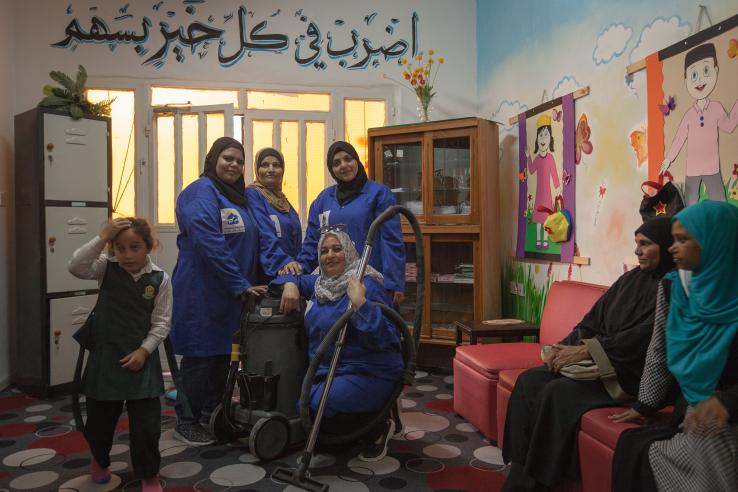
A group of female plumbers enter a school to fix a water tank in Jordan.
Evaluation

Job Search Assistance for Syrian Refugees in Jordan

Researchers conducted a randomized evaluation that introduced an adaptive targeted treatment assignment methodology to measure the impact of providing different types of job search assistance on job search rates and labor outcomes for Syrian refugees and local jobseekers in Jordan. While none of the interventions had an impact on whether participants were in wage employment after six weeks, a small cash transfer had large impacts on refugee employment and earnings two and four months after the intervention.
Evaluation

Evaluating an Exporting Scheme in Tunisia

To promote export diversification, the Tunisian government is implementing a $22 million export matching-grant scheme, TASDIR+. TASDIR+ aims to increase exports and promote export diversification toward higher value-added exports and new markets. This study is using a randomized controlled trial to evaluate TASDIR+’s traditional matching grant scheme and a newly implemented rebate scheme.
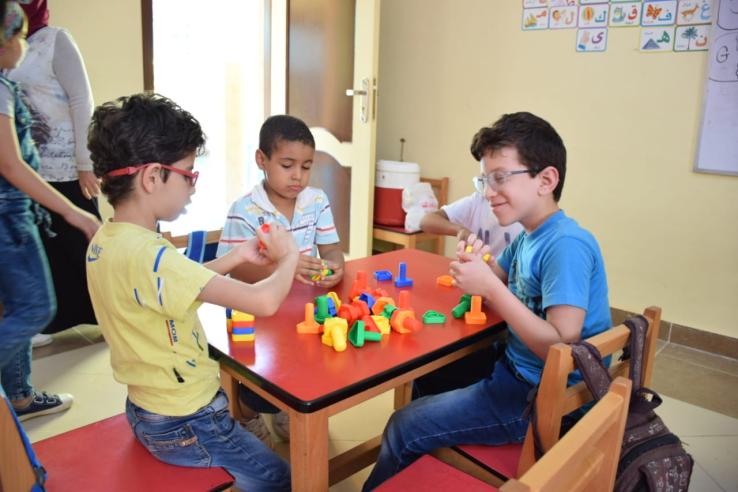
Four young boys sit at a table playing with pegs
Evaluation

The Impact of Childcare Subsidies and Employment Services on Women's Labor Force Participation in Egypt

In collaboration with Egypt’s Ministry of Social Solidarity (MoSS), researchers are conducting a randomized evaluation to test the impact of providing women with childcare subsidies and employment services on their employment and empowerment outcomes, as well as their children’s cognitive and socioemotional skills.
Update
J-PAL Updates

J-PAL Launches New Regional Research Center in Cairo at AUC to Help Improve Lives Across MENA Region

The Abdul Latif Jameel Poverty Action Lab (J-PAL), together with the American University in Cairo (AUC), Community Jameel, and the Massachusetts Institute of Technology (MIT), has announced the launch of a new regional research center in the Middle East and North Africa (MENA) focused on alleviating...
Person

Lars Vilhuber

Person

Lisa A. Gennetian

Lisa Gennetian is Professor of Public Policy and the Pritzker Professor of Early Learning Policy Studies at Duke University.
People in a queue for a vaccination drive.
Event

Webinar Series: Strengthening Safety Nets and Health Care during the Covid-19 Pandemic

Join this webinar series hosted by J-PAL South Asia and the Bill & Melinda Gates Foundation, between July 29, 2020 and October 13, 2020. In this series, J-PAL affiliated professors will present results from research funded by the Cash Transfers for Child Health (CaTCH) Initiative at J-PAL South Asia...
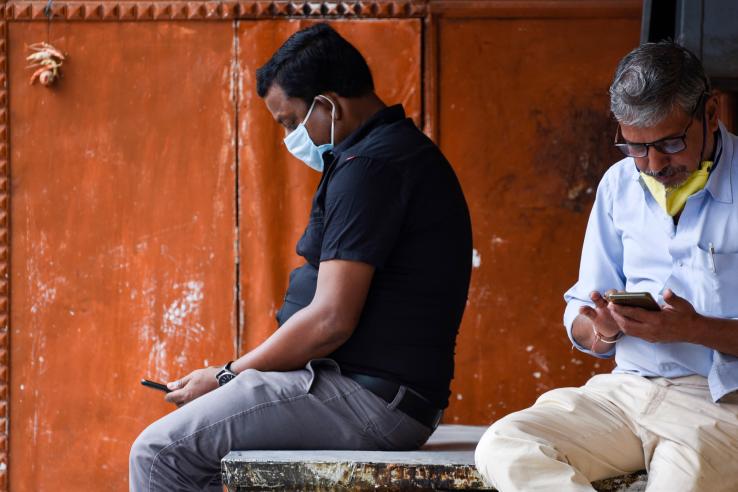
Two men sit on a bench with their phones in their hands
Evaluation

Using Social Media to Spread Public Health Messages for COVID19

During the COVID-19 pandemic in West Bengal, researchers studied whether citizens heeded messages better from the government or from a trusted figure. When people received a video message from a trusted figure, they stayed home, washed their hands more, and reported symptoms more often, and their neighbors did the same, regardless of the message’s content.
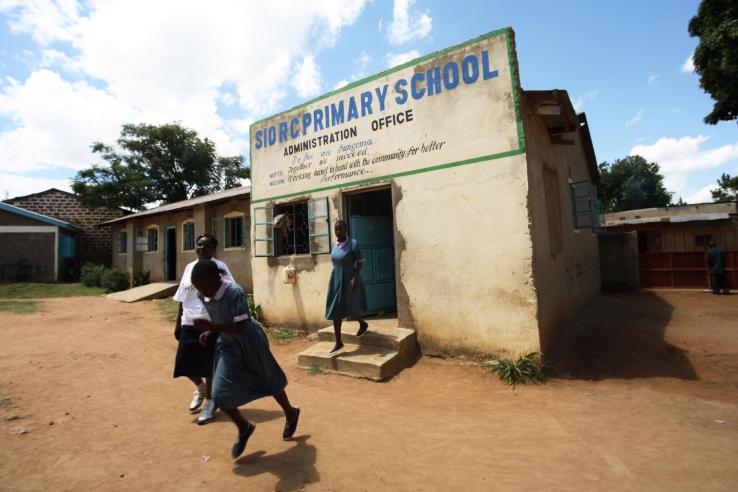
Evaluation

Decentralization: A Cautionary Tale - Public Finance in Kenya

Evaluation

The Rockefeller Effect: Looking at Organizations of the Disadvantaged in Kenya

A teacher hands out textbooks to students in Kenya.
Evaluation

Textbooks and Test Scores in Kenya

Researchers evaluated the impact of a program that provided additional textbooks to primary schools in Kenya on students, teachers, and overall learning. This study found no evidence that textbook provision increased average test scores, or that it reduced either grade repetition or dropout rates.
Evaluation

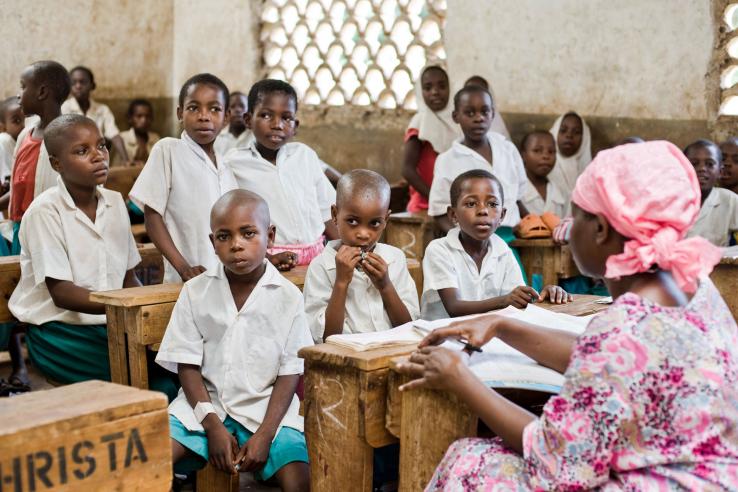
School Meals, Educational Achievement and School Finance in Kenya

Researchers examined the effects of subsidized school meals on school participation, educational achievement, and school finance in Western Kenya. The results suggest that the meals program led to improved school participation, as well as higher curriculum test scores, but only in schools where the teacher was relatively experienced prior to the program. The school meals also displaced teaching time and led to larger class sizes.

Man talks to the camera
Blog

MicroMasters students in Data, Economics, and Development Policy complete first semester

Woman plays educational games with children
Blog

New findings on children’s math learning in India demonstrate the importance of field research for cognitive science

Pagination

  • First page « First
  • Previous page ‹
  • …
  • Page 197
  • Page 198
  • Current page 199
  • Page 200
  • Page 201
  • …
  • Next page ›
  • Last page Last »
J-PAL

J-PAL

400 Main Street

E19-201

Cambridge, MA 02142

USA

Contact

+1 617 324 6566

[email protected]


Press Room

Stay Informed

Receive our newsletters

Subscribe


Privacy Policy

Accessibility

MIT