

J-PAL J-PAL
The Abdul Latif Jameel Poverty Action Lab
  • About
    • Overview
    • People
      • Affiliated Professors
      • Invited Researchers
      • J-PAL Scholars
      • Board
      • Leadership
      • Staff
    • Strengthening Our Work
    • Code of Conduct
    • Initiatives
    • Events
    • Blog
    • News
    • Press Room
  • Offices
    • Overview
    • Global
    • Africa
    • Europe
    • Latin America and the Caribbean
      • Growing Futures
    • Middle East and North Africa
    • North America
    • South Asia
    • Southeast Asia
  • Sectors
    • Overview
    • Agriculture
    • Crime, Violence, and Conflict
    • Education
    • Environment, Energy, and Climate Change
    • Finance
    • Firms
    • Gender
    • Health
    • Labor Markets
    • Political Economy and Governance
    • Social Protection
  • Evaluations
  • Research Resources
    • About Us
    • Our Work
    • Join ASPIRE
    • Newsroom
  • Policy Insights
  • Evidence to Policy
    • Pathways and Case Studies
    • The Evidence Effect
  • Blog
  • Careers
  • Courses
  • For Affiliates
  • Support J-PAL

Utility menu

  • Blog
  • Careers
  • Courses
  • For Affiliates
  • Support J-PAL

Quick links

  • Evaluations
  • Research Resources
  • Policy Insights
  • Evidence to Policy
    • Pathways and Case Studies
    • The Evidence Effect
  • About

    The Abdul Latif Jameel Poverty Action Lab (J-PAL) is a global research center working to reduce poverty by ensuring that policy is informed by scientific evidence. Anchored by a network of more than 1,100 researchers at universities around the world, J-PAL conducts randomized impact evaluations to answer critical questions in the fight against poverty.

    • Overview

      The Abdul Latif Jameel Poverty Action Lab (J-PAL) is a global research center working to reduce poverty by ensuring that policy is informed by scientific evidence. Anchored by a network of more than 1,100 researchers at universities around the world, J-PAL conducts randomized impact evaluations to answer critical questions in the fight against poverty.

      • Affiliated Professors

        Our affiliated professors are based at over 130 universities and conduct randomized evaluations around the world to design, evaluate, and improve programs and policies aimed at reducing poverty. They set their own research agendas, raise funds to support their evaluations, and work with J-PAL staff on research, policy outreach, and training.

      • Invited Researchers
      • J-PAL Scholars
      • Board
        Our Board of Directors, which is composed of J-PAL affiliated professors and senior management, provides overall strategic guidance to J-PAL, our sector programs, and regional offices.
      • Leadership
      • Staff
    • Strengthening Our Work

      Our research, policy, and training work is fundamentally better when it is informed by a broad range of perspectives.

    • Code of Conduct
    • Initiatives
      J-PAL initiatives concentrate funding and other resources around priority topics for which rigorous policy-relevant research is urgently needed.
    • Events
      We host events around the world and online to share results and policy lessons from randomized evaluations, to build new partnerships between researchers and practitioners, and to train organizations on how to design and conduct randomized evaluations, and use evidence from impact evaluations.
    • Blog
      News, ideas, and analysis from J-PAL staff and affiliated professors.
    • News
      Browse news articles about J-PAL and our affiliated professors, read our press releases and monthly global and research newsletters, and connect with us for media inquiries.
    • Press Room
      Based at leading universities around the world, our experts are economists who use randomized evaluations to answer critical questions in the fight against poverty. Connect with us for all media inquiries and we'll help you find the right person to shed insight on your story.
  • Offices
    J-PAL is based at MIT in Cambridge, MA and has seven regional offices at leading universities in Africa, Europe, Latin America and the Caribbean, Middle East and North Africa, North America, South Asia, and Southeast Asia.
    • Overview
      J-PAL is based at MIT in Cambridge, MA and has seven regional offices at leading universities in Africa, Europe, Latin America and the Caribbean, Middle East and North Africa, North America, South Asia, and Southeast Asia.
    • Global
      Our global office is based at the Department of Economics at the Massachusetts Institute of Technology. It serves as the head office for our network of seven independent regional offices.
    • Africa
    • Europe
    • Latin America and the Caribbean
    • Middle East and North Africa
    • North America
    • South Asia
    • Southeast Asia
  • Sectors
    Led by affiliated professors, J-PAL sectors guide our research and policy work by conducting literature reviews; by managing research initiatives that promote the rigorous evaluation of innovative interventions by affiliates; and by summarizing findings and lessons from randomized evaluations and producing cost-effectiveness analyses to help inform relevant policy debates.
    • Overview
      Led by affiliated professors, J-PAL sectors guide our research and policy work by conducting literature reviews; by managing research initiatives that promote the rigorous evaluation of innovative interventions by affiliates; and by summarizing findings and lessons from randomized evaluations and producing cost-effectiveness analyses to help inform relevant policy debates.
    • Agriculture
      How can we encourage small farmers to adopt proven agricultural practices and improve their yields and profitability?
    • Crime, Violence, and Conflict
      What are the causes and consequences of crime, violence, and conflict and how can policy responses improve outcomes for those affected?
    • Education
      How can students receive high-quality schooling that will help them, their families, and their communities truly realize the promise of education?
    • Environment, Energy, and Climate Change
      How can we increase access to energy, reduce pollution, and mitigate and build resilience to climate change?
    • Finance
      How can financial products and services be more affordable, appropriate, and accessible to underserved households and businesses?
    • Firms
      How do policies affecting private sector firms impact productivity gaps between higher-income and lower-income countries? How do firms’ own policies impact economic growth and worker welfare?
    • Gender
      How can we reduce gender inequality and ensure that social programs are sensitive to existing gender dynamics?
    • Health
      How can we increase access to and delivery of quality health care services and effectively promote healthy behaviors?
    • Labor Markets
      How can we help people find and keep work, particularly young people entering the workforce?
    • Political Economy and Governance
      What are the causes and consequences of poor governance and how can policy improve public service delivery?
    • Social Protection
      How can we identify effective policies and programs in low- and middle-income countries that provide financial assistance to low-income families, insuring against shocks and breaking poverty traps?
Displaying 3946 - 3960 of 7219
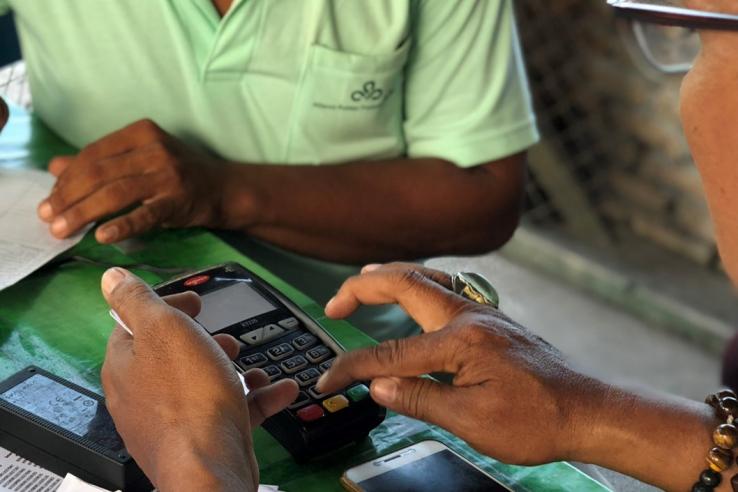
A close-up picture of two hands operating a card reader
Blog

Tantangan dan Isu Utama dalam Meningkatkan Inklusi Layanan Keuangan Digital di Indonesia: Analisis Laporan White paper IFII J-PAL SEA

Keberhasilan Indonesia dalam meningkatkan inklusi keuangan dalam beberapa tahun terakhir didukung oleh komitmen yang kuat dari pemerintah dan sektor swasta, serta pesatnya inovasi teknologi terutama yang mendukung penyediaan layanan keuangan digital atau digital financial service (DFS). Memperluas...

A small business woman making on handmade Pappor
Evaluation

Flexible Loan Contracts for Microentrepreneurs in Bangladesh

In Bangladesh, researchers partnered with BRAC to evaluate the impact of repayment flexibility in loan contracts for microentrepreneurs. Repayment flexibility benefited traditional microfinance borrowers primarily through the provision of insurance, enabling riskier investments at lower default rates.

caucasian man working on laptop
Evaluation

Improving Tax Compliance through Behavioral Messages in Latvia

In partnership with the Latvian tax authority, researchers tested several types of emails to investigate the effect of behaviorally-informed messages on tax compliance. Messages that aimed to deter bad behavior by highlighting taxpayers’ moral obligations towards action increased on-time tax declaration submissions. In contrast, messages meant to induce social pressure did not increase on-time compliance, though they increased overall submission rates (i.e., the submission of on-time as well as late declarations).
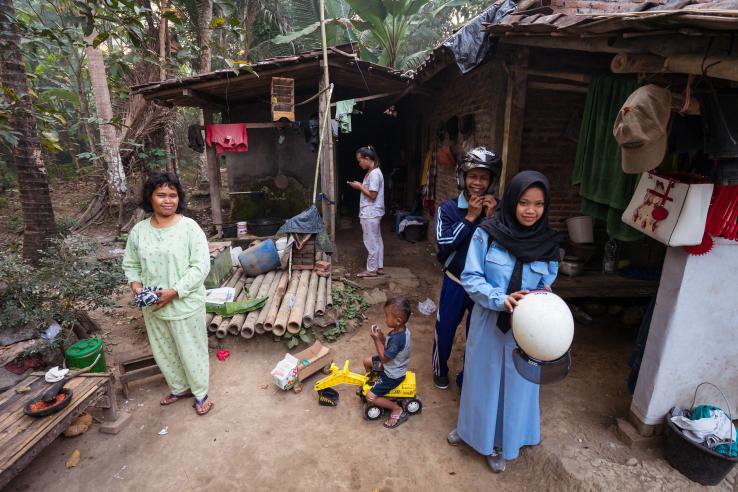
A family stands outside their home
Evaluation

The Impact of Social Program Targeting Strategies on Reported and Actual Asset Ownership in Indonesia

Researchers partnered with the Government of Indonesia to conduct a randomized evaluation that tested whether adding questions on flat-screen televisions and cellphone SIM cards to a targeting census would change people’s reporting and actual purchases of those items. The findings suggest that while targeting may cause people to misreport what they own in the short term for some goods, it is unlikely to change people’s decisions about whether to actually purchase those items.
Person

Chaerudin Kodir

Person

David Yanagizawa-Drott

David Yanagizawa-Drott is Professor of Development and Emerging Markets at the University of Zurich. His research interests include economic development and political economy, with a special focus on civil conflict, health, information, and mass media. He has explored issues such as the impact of...
Page
Landing page

Initiatives

Person

Margaret McConnell

Margaret McConnell is Associate Professor of Global Health Economics at the Harvard School of Public Health. Her current research combines behavioral economics with field and laboratory experiments to design and evaluate policies to change health and financial behaviors. She is currently working on...

A poster in Indonesia with health recommendations
Blog

Cushioning the poor from the COVID-19 shock

In an op-ed for Project Syndicate, Rema Hanna and Ben Olken explain that expanding social protection to reach the most vulnerable people must be a pillar of every country’s COVID-19 strategy.
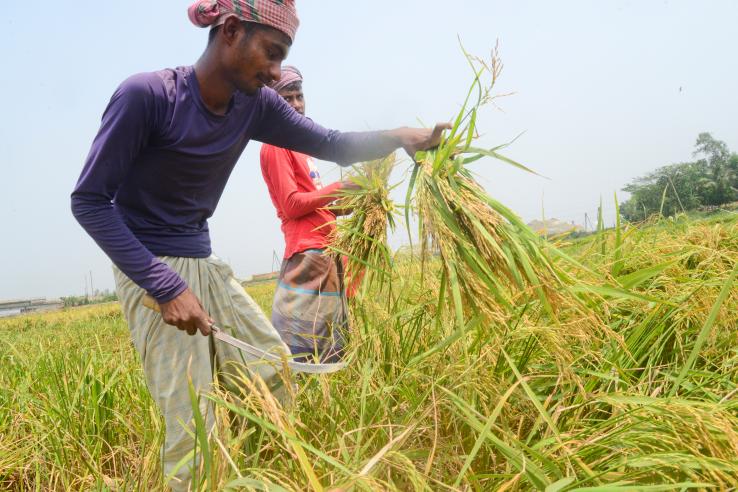
rice farmer holding up his crop
Evaluation

Pricing Schemes and Irrigation Techniques for Water Conservation and Farm Profits in Bangladesh

Researchers conducted two randomized evaluations in Bangladesh to study the impact of a new irrigation method and different pricing schemes on water use and conservation. The new irrigation method reduced water consumption and costs for farmers who were already paying for water by the hour, or by volume.
Person

Diana Suarez

Diana Suárez is a Research and Training Manager at J-PAL LAC, where she works contributing to the development and curation of research resources, best practices, and knowledge management for the LAC office, monitoring the projects adherence to the research protocols, developing training proposals...
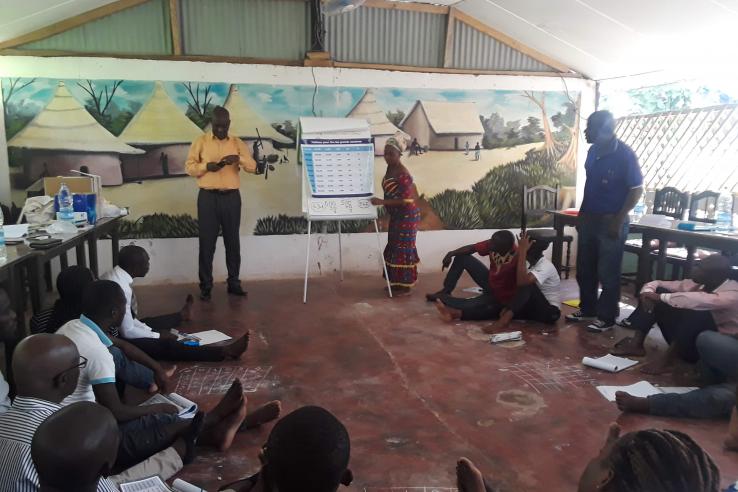
A person is speaking in front of a group of teachers in a classroom.
Blog

The devil’s in the details (of adapting and scaling evidence-based programs)

J-PAL Senior Policy Associate Robert Rogers discusses his experience working on an education scale-up in Cote d'Ivoire.

teacher holding book up in front of students
Update
J-PAL Updates

J-PAL Europe announces new project funding, expanded research initiative for tackling challenges of social exclusion of migrants

J-PAL Europe announces new project funding together with BNP Paribas and expanded research initiative for tackling challenges of social exclusion of migrants.
Person

Gerard van den Berg

Gerard van den Berg is an Honorary Professor at the University of Bristol. His research focuses on econometrics, labor economics, and health economics, particularly the effects of conditions early in life on health later in life.
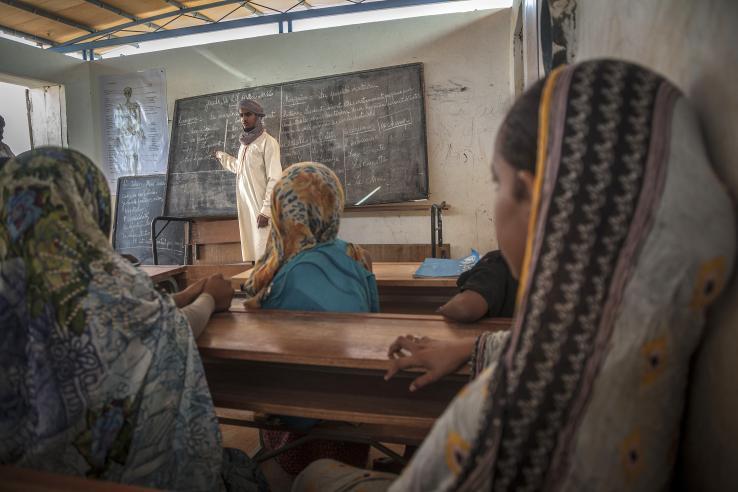
Teachers and other child protection stakeholders receive training on the delivery of psycho-social support to children in Mauritania.
Resource
Basic page

Randomised Evaluations in Humanitarian Action: A Learning Agenda for the Humanitarian Initiative

The Humanitarian Initiative’s Learning Agenda takes these questions as a starting point to then provide guidance on how randomised impact evaluations can be deployed in humanitarian settings and draw on examples from existing studies to inform avenues for future research.

Pagination

  • First page « First
  • Previous page ‹
  • …
  • Page 262
  • Page 263
  • Current page 264
  • Page 265
  • Page 266
  • …
  • Next page ›
  • Last page Last »
J-PAL

J-PAL

400 Main Street

E19-201

Cambridge, MA 02142

USA

Contact

+1 617 324 6566

[email protected]


Press Room

Stay Informed

Receive our newsletters

Subscribe


Privacy Policy

Accessibility

MIT