
The Abdul Latif Jameel Poverty Action Lab (J-PAL) is a global research center working to reduce poverty by ensuring that policy is informed by scientific evidence. Anchored by a network of more than 1,100 researchers at universities around the world, J-PAL conducts randomized impact evaluations to answer critical questions in the fight against poverty.
Our affiliated professors are based at over 130 universities and conduct randomized evaluations around the world to design, evaluate, and improve programs and policies aimed at reducing poverty. They set their own research agendas, raise funds to support their evaluations, and work with J-PAL staff on research, policy outreach, and training.
Our Board of Directors, which is composed of J-PAL affiliated professors and senior management, provides overall strategic guidance to J-PAL, our sector programs, and regional offices.
We host events around the world and online to share results and policy lessons from randomized evaluations, to build new partnerships between researchers and practitioners, and to train organizations on how to design and conduct randomized evaluations, and use evidence from impact evaluations.
Browse news articles about J-PAL and our affiliated professors, read our press releases and monthly global and research newsletters, and connect with us for media inquiries.
Based at leading universities around the world, our experts are economists who use randomized evaluations to answer critical questions in the fight against poverty. Connect with us for all media inquiries and we'll help you find the right person to shed insight on your story.
J-PAL is based at MIT in Cambridge, MA and has seven regional offices at leading universities in Africa, Europe, Latin America and the Caribbean, Middle East and North Africa, North America, South Asia, and Southeast Asia.
Our global office is based at the Department of Economics at the Massachusetts Institute of Technology. It serves as the head office for our network of seven independent regional offices.
Led by affiliated professors, J-PAL sectors guide our research and policy work by conducting literature reviews; by managing research initiatives that promote the rigorous evaluation of innovative interventions by affiliates; and by summarizing findings and lessons from randomized evaluations and producing cost-effectiveness analyses to help inform relevant policy debates.
How do policies affecting private sector firms impact productivity gaps between higher-income and lower-income countries? How do firms’ own policies impact economic growth and worker welfare?
How can we identify effective policies and programs in low- and middle-income countries that provide financial assistance to low-income families, insuring against shocks and breaking poverty traps?
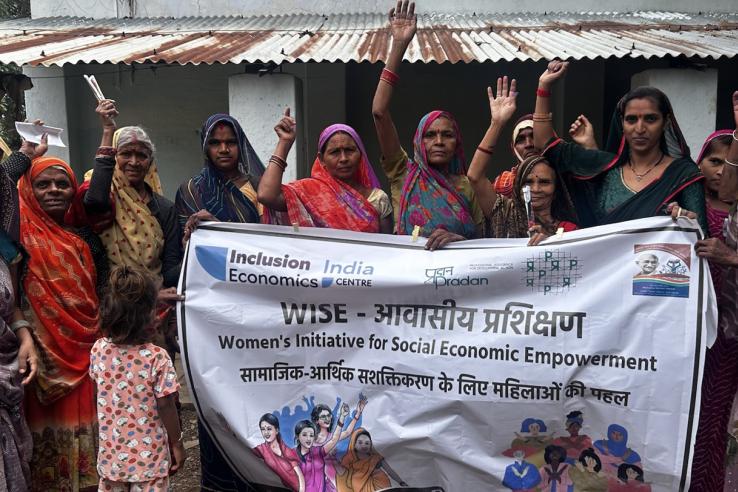
In rural India, researchers are testing whether helping women access public employment and receive wages through direct deposit into individual bank accounts can increase their chances of being employed, their control over earnings, and ultimately their family planning decisions.
Simone Schaner is an Associate Professor (Research) of Economics at the University of Southern California. Her research applies insights from behavioral economics to examine savings behavior in Kenya and Ghana, and the delivery and adoption of malaria treatment in Kenya.
Payments for Ecosystem Services can protect nature, reduce carbon emissions, and decrease local pollution at a low cost. But success depends on getting the scheme right—changing key aspects of program design can make them even more cost-effective.
In August 2010, J-PAL established its Africa office within the Southern Africa Labour and Research Unit (SALDRU) at the University of Cape Town’s (UCT) School of Economics.
Discover how the Egypt Impact Lab (EIL) is working with the Egyptian government to improve development outcomes through evidence-informed policies. Learn about EIL’s mission, approach, and team.

Explore how the Egypt Impact Lab drives data-informed development by generating evidence, building government capacity, and strengthening Egypt’s knowledge ecosystem.
Namrata Rao is a Senior Policy Manager at J-PAL South Asia, where she oversees the health sector portfolio. She is responsible for identifying emerging policy opportunities, building strategic partnerships, and developing interdisciplinary initiatives that integrate health with other key development...
Zil Gala is a Research Associate at J-PAL South Asia where she works on evaluating agroforestry adoption by small holder farmers in India. As a research associate, she supports in-field scoping activities, development and piloting of survey instruments, ensuring data accuracy and preparing analysis...
Eliza leads J-PAL's external communications, including strategic planning and development of editorial content, message guidance, innovative web features, engaging email marketing, and analytics-driven social media.
In partnership with Yamba Malawi, researchers conducted a randomized evaluation to test the impact of a Graduation-style program, integrating cash transfers, child health and business training, preventive health and fertility coaching, and village savings groups, on women’s livelihoods, empowerment, family planning decisions, and their children’s health in Malawi.
I n Senegal, researchers are testing whether encouraging women to join vocational training through scholarships and supportive information from past participants and their families can shape women’s work and family aspirations, their employment decisions, and their families’ perspectives on women’s work.
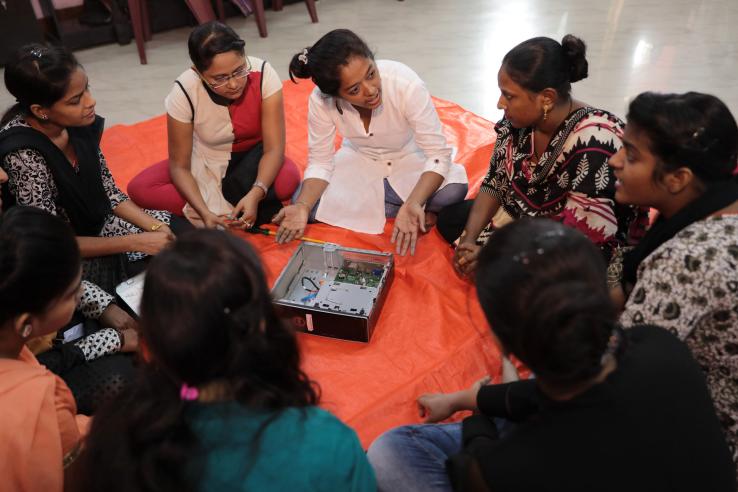
In urban India, researchers are testing whether helping women and men start STEM careers through a job training program improves their employment and earnings, and, for women, enhances economic empowerment and shapes family planning choices.
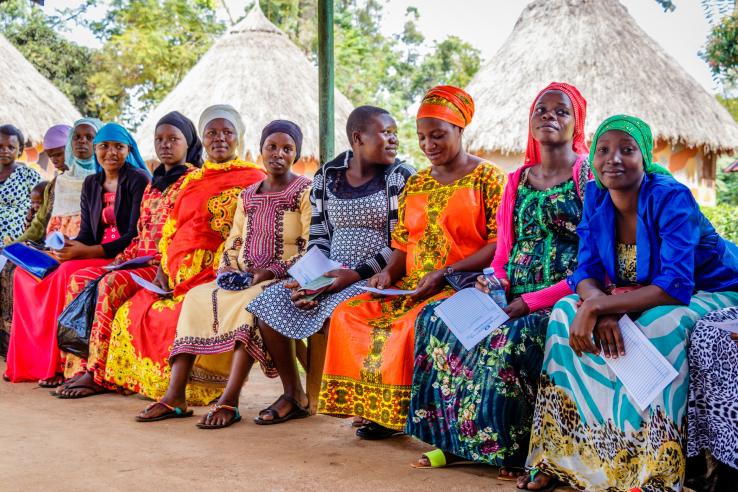
In partnership with Health Access Connect, researchers conducted a randomized evaluation to measure the impact of a community-led primary healthcare outreach program on women’s contraceptive choices, healthcare use, and work decisions in rural Uganda.