J-PAL J-PAL
The Abdul Latif Jameel Poverty Action Lab
  • About
    • Overview
    • People
      • Affiliated Professors
      • Invited Researchers
      • J-PAL Scholars
      • Board
      • Leadership
      • Staff
    • Strengthening Our Work
    • Code of Conduct
    • Initiatives
    • Events
    • Blog
    • News
    • Press Room
  • Offices
    • Overview
    • Global
    • Africa
    • Europe
    • Latin America and the Caribbean
      • Growing Futures
    • Middle East and North Africa
    • North America
    • South Asia
    • Southeast Asia
  • Sectors
    • Overview
    • Agriculture
    • Crime, Violence, and Conflict
    • Education
    • Environment, Energy, and Climate Change
    • Finance
    • Firms
    • Gender
    • Health
    • Labor Markets
    • Political Economy and Governance
    • Social Protection
  • Evaluations
  • Research Resources
    • About Us
    • Our Work
    • Join ASPIRE
    • Newsroom
  • Policy Insights
  • Evidence to Policy
    • Pathways and Case Studies
    • The Evidence Effect
  • Blog
  • Careers
  • Courses
  • For Affiliates
  • Support J-PAL

Utility menu

  • Blog
  • Careers
  • Courses
  • For Affiliates
  • Support J-PAL

Quick links

  • Evaluations
  • Research Resources
  • Policy Insights
  • Evidence to Policy
    • Pathways and Case Studies
    • The Evidence Effect
  • About

    The Abdul Latif Jameel Poverty Action Lab (J-PAL) is a global research center working to reduce poverty by ensuring that policy is informed by scientific evidence. Anchored by a network of more than 1,100 researchers at universities around the world, J-PAL conducts randomized impact evaluations to answer critical questions in the fight against poverty.

    • Overview

      The Abdul Latif Jameel Poverty Action Lab (J-PAL) is a global research center working to reduce poverty by ensuring that policy is informed by scientific evidence. Anchored by a network of more than 1,100 researchers at universities around the world, J-PAL conducts randomized impact evaluations to answer critical questions in the fight against poverty.

      • Affiliated Professors

        Our affiliated professors are based at over 130 universities and conduct randomized evaluations around the world to design, evaluate, and improve programs and policies aimed at reducing poverty. They set their own research agendas, raise funds to support their evaluations, and work with J-PAL staff on research, policy outreach, and training.

      • Invited Researchers
      • J-PAL Scholars
      • Board
        Our Board of Directors, which is composed of J-PAL affiliated professors and senior management, provides overall strategic guidance to J-PAL, our sector programs, and regional offices.
      • Leadership
      • Staff
    • Strengthening Our Work

      Our research, policy, and training work is fundamentally better when it is informed by a broad range of perspectives.

    • Code of Conduct
    • Initiatives
      J-PAL initiatives concentrate funding and other resources around priority topics for which rigorous policy-relevant research is urgently needed.
    • Events
      We host events around the world and online to share results and policy lessons from randomized evaluations, to build new partnerships between researchers and practitioners, and to train organizations on how to design and conduct randomized evaluations, and use evidence from impact evaluations.
    • Blog
      News, ideas, and analysis from J-PAL staff and affiliated professors.
    • News
      Browse news articles about J-PAL and our affiliated professors, read our press releases and monthly global and research newsletters, and connect with us for media inquiries.
    • Press Room
      Based at leading universities around the world, our experts are economists who use randomized evaluations to answer critical questions in the fight against poverty. Connect with us for all media inquiries and we'll help you find the right person to shed insight on your story.
  • Offices
    J-PAL is based at MIT in Cambridge, MA and has seven regional offices at leading universities in Africa, Europe, Latin America and the Caribbean, Middle East and North Africa, North America, South Asia, and Southeast Asia.
    • Overview
      J-PAL is based at MIT in Cambridge, MA and has seven regional offices at leading universities in Africa, Europe, Latin America and the Caribbean, Middle East and North Africa, North America, South Asia, and Southeast Asia.
    • Global
      Our global office is based at the Department of Economics at the Massachusetts Institute of Technology. It serves as the head office for our network of seven independent regional offices.
    • Africa
    • Europe
    • Latin America and the Caribbean
    • Middle East and North Africa
    • North America
    • South Asia
    • Southeast Asia
  • Sectors
    Led by affiliated professors, J-PAL sectors guide our research and policy work by conducting literature reviews; by managing research initiatives that promote the rigorous evaluation of innovative interventions by affiliates; and by summarizing findings and lessons from randomized evaluations and producing cost-effectiveness analyses to help inform relevant policy debates.
    • Overview
      Led by affiliated professors, J-PAL sectors guide our research and policy work by conducting literature reviews; by managing research initiatives that promote the rigorous evaluation of innovative interventions by affiliates; and by summarizing findings and lessons from randomized evaluations and producing cost-effectiveness analyses to help inform relevant policy debates.
    • Agriculture
      How can we encourage small farmers to adopt proven agricultural practices and improve their yields and profitability?
    • Crime, Violence, and Conflict
      What are the causes and consequences of crime, violence, and conflict and how can policy responses improve outcomes for those affected?
    • Education
      How can students receive high-quality schooling that will help them, their families, and their communities truly realize the promise of education?
    • Environment, Energy, and Climate Change
      How can we increase access to energy, reduce pollution, and mitigate and build resilience to climate change?
    • Finance
      How can financial products and services be more affordable, appropriate, and accessible to underserved households and businesses?
    • Firms
      How do policies affecting private sector firms impact productivity gaps between higher-income and lower-income countries? How do firms’ own policies impact economic growth and worker welfare?
    • Gender
      How can we reduce gender inequality and ensure that social programs are sensitive to existing gender dynamics?
    • Health
      How can we increase access to and delivery of quality health care services and effectively promote healthy behaviors?
    • Labor Markets
      How can we help people find and keep work, particularly young people entering the workforce?
    • Political Economy and Governance
      What are the causes and consequences of poor governance and how can policy improve public service delivery?
    • Social Protection
      How can we identify effective policies and programs in low- and middle-income countries that provide financial assistance to low-income families, insuring against shocks and breaking poverty traps?
Displaying 691 - 705 of 7147
Students working together on a laptop.
Evaluation

Books or Laptops? The Cost-Effectiveness of Shifting from Printed to Digital Delivery of Educational Content in Honduras

Researchers partnered with the Honduran government to evaluate the impact of replacing textbooks with laptops on student learning. Using laptops resulted in no change in learning outcomes, suggesting that laptops could be a cost-effective substitute to textbooks if they can replace enough textbooks.
Students working at a Mindspark center in Delhi.
Evaluation

Disrupting Education? Evidence on Technology-Aided Instruction in India

Researchers evaluated a computer-based adaptive learning platform (Mindspark) for secondary school students in urban India to measure the impact of customized learning technology on student test scores. The program increased test scores across all groups of students and was cost-effective compared to traditional schooling models.
Man speaks to two judges in front of a booth with promotional materials for Globalmet
Evaluation

Promoting High Impact Entrepreneurship in Mexico

A lack of access to finance can impede the potential for growth among small firms. To meet this finance gap and to encourage high-growth entrepreneurship, governments and multilateral agencies throughout the developing world often directly fund small and medium enterprises. Governments, however, have little guidance when it comes to choosing the firms with growth potential, and making sure that limited funds are targeted where they will spur the most growth. In Mexico, researchers are evaluating the impact of providing government funding to small enterprises, and whether different types of selection panels are more effective at selecting firms with high growth potential.
External view of the IRS building
Evaluation

Sending Reminders to Improve Tax Filing Decisions Among Low-Income Individuals in the United States

This study examines how reminders to file taxes affect tax filing decisions among low-income individuals who did not appear on a filed tax return. The results of two randomized evaluations demonstrate that one-time reminders increase tax filing—both to claim tax refunds as well as to voluntarily pay balances owed to the IRS.
Patients were paired with health providers from a mix of public and private facilities to engage in a game set up to simulate real-world interactions between patients and providers.
Evaluation

Improving Health Provider Performance in Kenya

Poor infrastructure, limited access to medicine, poor service provision, and a lack of accountability often lead to poor health outcomes in many developing countries. Researchers conducted a lab-in-the-field randomized experiment to evaluate patients’ willingness to file complaints against service providers and provider responsiveness to those complaints. Attaching tangible consequences to patient complaints increased provider performance as compared to providing a complaint box.
Students taking an exam in a classroom in Chile
Evaluation

The Impact of Information on Selective and Less-Selective Schools in Chile

Researchers conducted a randomized evaluation to test the impact of providing information to students on enrollment at different quality schools. Students who were provided information applied to and enrolled in different types of schools. However, overall a greater number of students did not enroll in school despite receiving information.
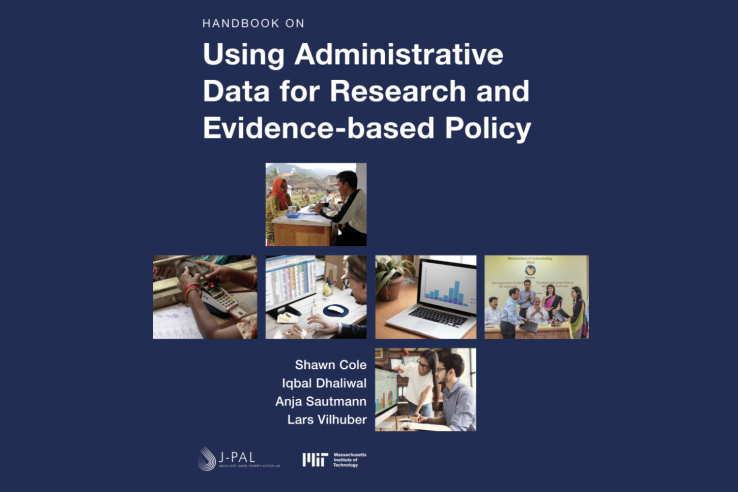
The cover of the IDEA Handbook, with a grid of photos showing key points in the process of accessing, using, and communicating data
Event

IDEA Handbook Webinar Series

Join the webinar series hosted by the IDEA Initiative on Mondays at 11am EDT during the Fall 2020 semester, starting on 9/28/2020. In this series the authors of the Handbook on Using Administrative Data for Research and Evidence-Based Policy will present case studies on successful administrative...

Evaluation

Expressive Arts, Recidivism and the Labor Market Reintegration of Juvenile Offenders

Farmer holds a hoe
Evaluation

Are Rainwater Harvesting Techniques Profitable for Small-Scale Farmers? The Adoption and Impact of RWH Techniques in Niger

In Niger, researchers conducted a randomized evaluation to test the impact of providing training and conditional or unconditional cash transfers on farmers’ adoption and use of an environmental technology, their resulting land use, agricultural production and profitability, and labor allocation. Providing farmers with training led to a substantially higher probability of adopting the technology, while the conditional or unconditional cash transfers had no additional effect on farmers’ decision to adopt.
Person

Alicia Sasser Modestino

Alicia Sasser Modestino is an Associate Professor with appointments in the School of Public Policy and Urban Affairs and the Department of Economics at Northeastern University, where she also serves as the Research Director of the Dukakis Center for Urban and Regional Policy. Her current research...
Young men playing chess in a public space.
Evaluation

Vocational Training for Improved Employability and Job Expectations in the Dominican Republic

Researchers introduced a soft skills component into a vocational training program in the Dominican Republic to assess the interaction between job and soft skills training on labor market outcomes and expectations. Women experienced increased employment rates and wages in the short term, which dissipated over time; men, on the other hand, experienced negative or no impacts on employment rates and wages in the short term, and no effects in the long term.

Students studying.
Evaluation

Shaping Educational Careers of Immigrant Children: Motivation, Cognitive Skills and Teachers' Beliefs in Italy

Researchers conducted a randomized evaluation to measure the impact of an academic tutoring and career counseling program designed to reduce educational inequalities between native-born and immigrant children. Can tutoring and career counseling help improve the educational outcomes of high-ability immigrant students? Results showed that offering tutoring and career counseling closed the educational gap between native-born and immigrant boys in Italy.

Evaluation

Empowering Women through Land Tenure Regularization: Evidence from the Impact Evaluation of the National Program in Rwanda

A man and woman walk together holding hands
Event

Gender-Based Violence in a Pandemic: Evidence to Inform Prevention and Response

Amid COVID-19, a “shadow pandemic” of gender-based violence (GBV) has emerged, with some recent data showing increases in reports of GBV across the world. This webinar will explore policy questions and research insights to help practitioners prevent and address GBV during the pandemic.

University students from around the world working together
Evaluation

Reducing Racial Stereotypes by Encouraging Interaction in South Africa

Researchers studied the effects of a university policy in South Africa to promote racial integration, by randomly allocating incoming students to roommates of a different race. The policy reduced negative racial stereotypes among white students, improved attitudes and behaviors towards members of other races, and improved academic performance among black students.

Pagination

  • First page « First
  • Previous page ‹
  • …
  • Page 45
  • Page 46
  • Current page 47
  • Page 48
  • Page 49
  • …
  • Next page ›
  • Last page Last »
J-PAL

J-PAL

400 Main Street

E19-201

Cambridge, MA 02142

USA

Contact

+1 617 324 6566

[email protected]


Press Room

Stay Informed

Receive our newsletters

Subscribe


Privacy Policy

Accessibility

MIT