

J-PAL J-PAL
The Abdul Latif Jameel Poverty Action Lab
  • About
    • Overview
    • People
      • Affiliated Professors
      • Invited Researchers
      • J-PAL Scholars
      • Board
      • Leadership
      • Staff
    • Strengthening Our Work
    • Code of Conduct
    • Initiatives
    • Events
    • Blog
    • News
    • Press Room
  • Offices
    • Overview
    • Global
    • Africa
    • Europe
    • Latin America and the Caribbean
    • Middle East and North Africa
    • North America
    • South Asia
    • Southeast Asia
  • Sectors
    • Overview
    • Agriculture
    • Crime, Violence, and Conflict
    • Education
    • Environment, Energy, and Climate Change
    • Finance
    • Firms
    • Gender
    • Health
    • Labor Markets
    • Political Economy and Governance
    • Social Protection
  • Evaluations
  • Research Resources
    • About Us
    • Our Work
    • Join ASPIRE
    • Newsroom
  • Policy Insights
  • Evidence to Policy
    • Pathways and Case Studies
    • The Evidence Effect
  • Blog
  • Careers
  • Courses
  • For Affiliates
  • Support J-PAL

Utility menu

  • Blog
  • Careers
  • Courses
  • For Affiliates
  • Support J-PAL

Quick links

  • Evaluations
  • Research Resources
  • Policy Insights
  • Evidence to Policy
    • Pathways and Case Studies
    • The Evidence Effect
  • About

    The Abdul Latif Jameel Poverty Action Lab (J-PAL) is a global research center working to reduce poverty by ensuring that policy is informed by scientific evidence. Anchored by a network of more than 1,100 researchers at universities around the world, J-PAL conducts randomized impact evaluations to answer critical questions in the fight against poverty.

    • Overview

      The Abdul Latif Jameel Poverty Action Lab (J-PAL) is a global research center working to reduce poverty by ensuring that policy is informed by scientific evidence. Anchored by a network of more than 1,100 researchers at universities around the world, J-PAL conducts randomized impact evaluations to answer critical questions in the fight against poverty.

      • Affiliated Professors

        Our affiliated professors are based at over 130 universities and conduct randomized evaluations around the world to design, evaluate, and improve programs and policies aimed at reducing poverty. They set their own research agendas, raise funds to support their evaluations, and work with J-PAL staff on research, policy outreach, and training.

      • Invited Researchers
      • J-PAL Scholars
      • Board
        Our Board of Directors, which is composed of J-PAL affiliated professors and senior management, provides overall strategic guidance to J-PAL, our sector programs, and regional offices.
      • Leadership
      • Staff
    • Strengthening Our Work

      Our research, policy, and training work is fundamentally better when it is informed by a broad range of perspectives.

    • Code of Conduct
    • Initiatives
      J-PAL initiatives concentrate funding and other resources around priority topics for which rigorous policy-relevant research is urgently needed.
    • Events
      We host events around the world and online to share results and policy lessons from randomized evaluations, to build new partnerships between researchers and practitioners, and to train organizations on how to design and conduct randomized evaluations, and use evidence from impact evaluations.
    • Blog
      News, ideas, and analysis from J-PAL staff and affiliated professors.
    • News
      Browse news articles about J-PAL and our affiliated professors, read our press releases and monthly global and research newsletters, and connect with us for media inquiries.
    • Press Room
      Based at leading universities around the world, our experts are economists who use randomized evaluations to answer critical questions in the fight against poverty. Connect with us for all media inquiries and we'll help you find the right person to shed insight on your story.
  • Offices
    J-PAL is based at MIT in Cambridge, MA and has seven regional offices at leading universities in Africa, Europe, Latin America and the Caribbean, Middle East and North Africa, North America, South Asia, and Southeast Asia.
    • Overview
      J-PAL is based at MIT in Cambridge, MA and has seven regional offices at leading universities in Africa, Europe, Latin America and the Caribbean, Middle East and North Africa, North America, South Asia, and Southeast Asia.
    • Global
      Our global office is based at the Department of Economics at the Massachusetts Institute of Technology. It serves as the head office for our network of seven independent regional offices.
    • Africa
    • Europe
    • Latin America and the Caribbean
    • Middle East and North Africa
    • North America
    • South Asia
    • Southeast Asia
  • Sectors
    Led by affiliated professors, J-PAL sectors guide our research and policy work by conducting literature reviews; by managing research initiatives that promote the rigorous evaluation of innovative interventions by affiliates; and by summarizing findings and lessons from randomized evaluations and producing cost-effectiveness analyses to help inform relevant policy debates.
    • Overview
      Led by affiliated professors, J-PAL sectors guide our research and policy work by conducting literature reviews; by managing research initiatives that promote the rigorous evaluation of innovative interventions by affiliates; and by summarizing findings and lessons from randomized evaluations and producing cost-effectiveness analyses to help inform relevant policy debates.
    • Agriculture
      How can we encourage small farmers to adopt proven agricultural practices and improve their yields and profitability?
    • Crime, Violence, and Conflict
      What are the causes and consequences of crime, violence, and conflict and how can policy responses improve outcomes for those affected?
    • Education
      How can students receive high-quality schooling that will help them, their families, and their communities truly realize the promise of education?
    • Environment, Energy, and Climate Change
      How can we increase access to energy, reduce pollution, and mitigate and build resilience to climate change?
    • Finance
      How can financial products and services be more affordable, appropriate, and accessible to underserved households and businesses?
    • Firms
      How do policies affecting private sector firms impact productivity gaps between higher-income and lower-income countries? How do firms’ own policies impact economic growth and worker welfare?
    • Gender
      How can we reduce gender inequality and ensure that social programs are sensitive to existing gender dynamics?
    • Health
      How can we increase access to and delivery of quality health care services and effectively promote healthy behaviors?
    • Labor Markets
      How can we help people find and keep work, particularly young people entering the workforce?
    • Political Economy and Governance
      What are the causes and consequences of poor governance and how can policy improve public service delivery?
    • Social Protection
      How can we identify effective policies and programs in low- and middle-income countries that provide financial assistance to low-income families, insuring against shocks and breaking poverty traps?
Displaying 7516 - 7530 of 8537
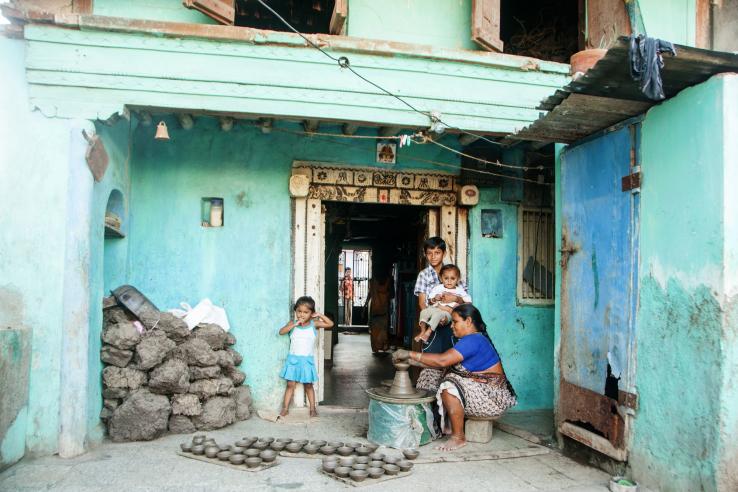
A household business in India
Evaluation

Unpacking the Links from Financial Education to Financial Behaviors in India

Researchers conducted a randomized evaluation of a video-based financial education course on participants’ financial behaviors in India to study which components of financial education programs are most effective. While the course alone had no impact on participants’ abilities to carry out financial calculations, it influenced their awareness of and attitudes towards financial products. Additionally, personalized supplements to the course increased effects on budgeting and saving.

A mentor is coaching a program participant
Evaluation

Intensive Case Management to Overcome Barriers to Self-Sufficiency in the United States

Researchers worked with the City of Rochester and local social service providers to evaluate the Bridges to Success program, in which participants were paired with mentors who helped them move towards economic self-sufficiency.

Market stall in Accra, Ghana
Evaluation

Cash and In-kind Transfers to Increase Profits of Microenterprises in Ghana

Microenterprises often struggle to survive and grow after their initial start-up. A key issue for policymakers is understanding how to best encourage the survival and growth of resource-constrained firms by using policy tools like unrestricted cash grants and conditional transfers of materials or equipment. Researchers conducted a randomized evaluation of male- and female-owned firms in Ghana to identify and distinguish the impacts of cash and in-kind transfers on the profits of microenterprises. Results indicate that the impacts of cash and in-kind transfers vary according to firm size, profitability, and gender, where female-owned, high-profit firms experienced substantial growth with the support of in-kind grants.
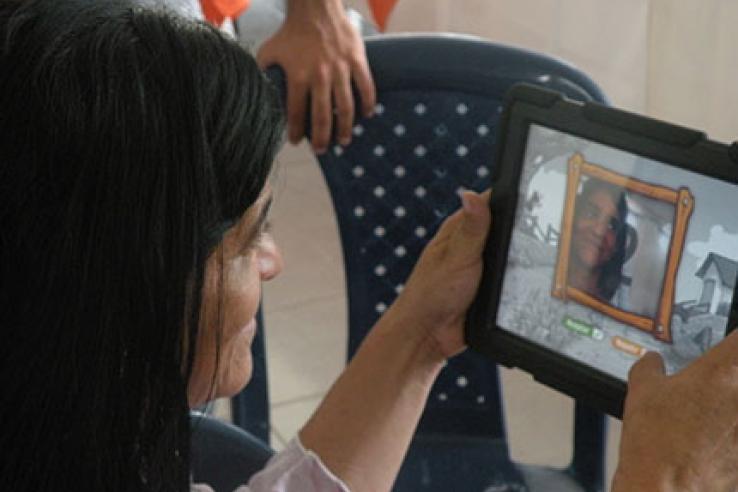
A woman using her tablet in Colombia.
Evaluation

Tablet-Based Financial Education in Colombia

Researchers collaborated with Fundación Capital and the Government of Colombia to conduct a randomized evaluation of LISTA, a tablet-based financial education program designed for participants in Colombia's government CCT program, to study its impact on financial knowledge and behavior. LISTA had significant positive impacts on participants’ financial knowledge, attitudes, practices, and performance.

A person holding a red and yellow cocoa pod in Ghana
Evaluation

The Impact of a Digital Credit for Small-Scale Farmers in Ghana

Researchers are evaluating the impact of an innovative mobile phone-based digital finance program on loan repayment rates, investment decisions, savings, and use of other financial services, as well as agricultural yields and profits.
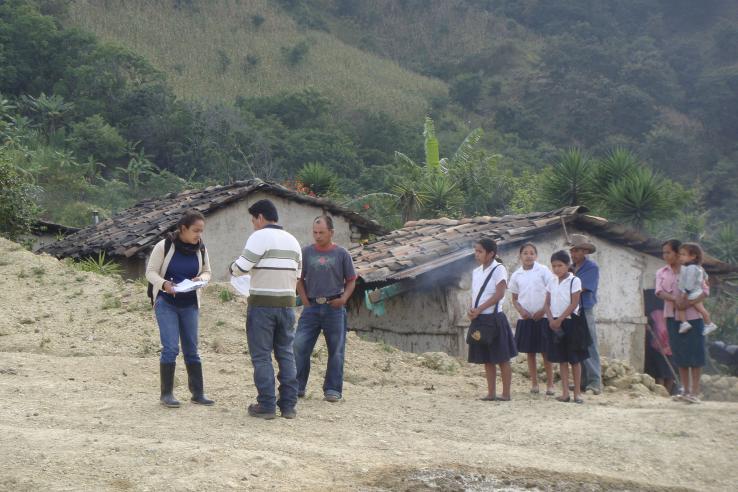
Villagers gather around a survey team in Lempira, Honduras.
Evaluation

Conditional Cash Transfers in Honduras

Researchers analyzed the effects of a small conditional cash transfer for education in Honduras on school enrollment and child labor.
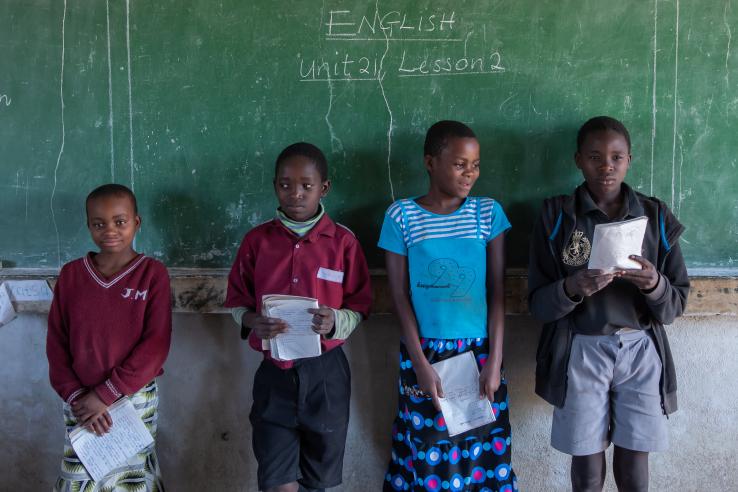
A group of students in front of a chalkboard
Evaluation

The Impact of Secondary Education on Economic Decision-Making in Malawi

Researchers evaluated whether randomly providing financial support for secondary education could improve economic decision-making in addition to educational outcomes for secondary school students in Malawi. Results show that the intervention improved educational outcomes and economic decision-making, especially among 9th grade students.
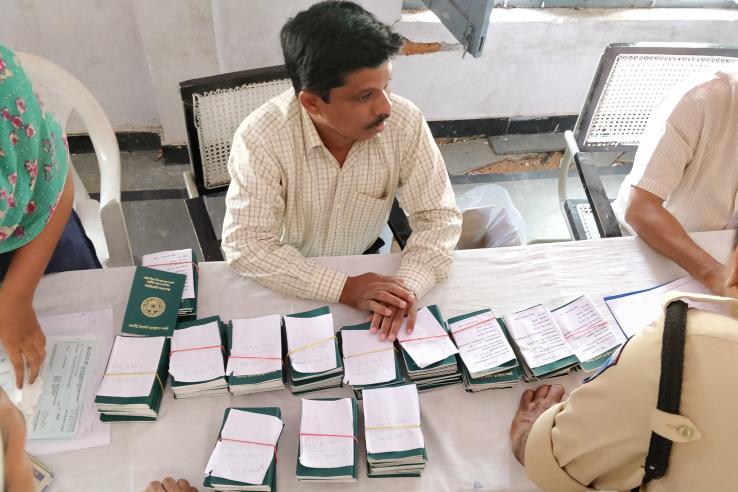
An officer conducting document verification for check distribution.
Evaluation

Using Cell Phones to Monitor the Delivery of Government Payments to Farmers in India

Researchers conducted a randomized evaluation to test the impact of a cell phone-based monitoring system on the delivery of government-issued payments for farmers in Telangana, India. The system significantly improved the likelihood of farmers ever receiving their payments as well as receiving them on time, indicating improved performance by on-the-ground service providers in delivering payments to farmers.

An older woman talks on her cell phone in India.
Evaluation

Providing Therapy and Cash Transfers to Improve Older Adult Mental Health in India

Researchers evaluated the impact of cognitive behavioral therapy (CBT) and cash transfers on functional impairment (or difficulty performing daily tasks), depression, and food security among adults 55 and older living alone in Tamil Nadu, India. At a three-week follow-up, cash transfers improved participants’ reported ability to perform daily tasks and led to a small decline in depression, while neither CBT nor the combination of the two impacted these outcomes.
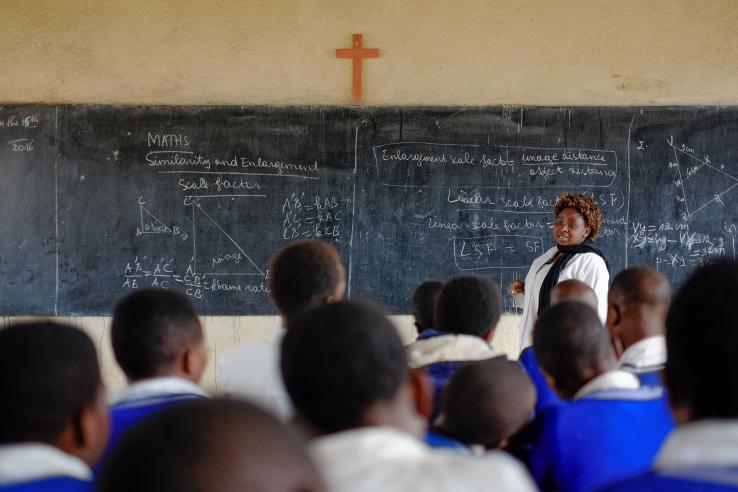
Teacher teaching students in a classroom in Rwanda
Evaluation

Improving Student Learning through Pay-for-Performance Teacher Contracts in Rwanda

Researchers conducted a randomized evaluation to test the impact of pay for performance contracts on teachers’ qualities, effort, and student learning in Rwanda. Pay for performance improved teacher effort, particularly their presence in classroom and their pedagogical effectiveness, and raised student learning outcomes.
Evaluation

Vouchers to Help Farmers Access Rental Equipment Markets in India

Partnering with one of the biggest providers of rental agricultural equipment in India, researchers conducted a randomized evaluation to test the impact of providing agricultural equipment vouchers and cash transfers on farmers’ use of machines, their decision to reallocate household labor or hire outside laborers, and their income. Farmers were more likely to rent agricultural equipment and hire workers for agricultural activities, while family members worked less in agriculture.

A woman uses her credit card to make a purchase.
Evaluation

The Demand for Status Goods in Indonesia

Working with a large bank in Indonesia that markets platinum credit cards to high-income customers, researchers designed a series of randomized evaluations to understand the demand for status goods. Overall, researchers found that a substantial part of the demand for the platinum card is explained by the desire to own the prestigious card itself, beyond the tangible benefits and services it comes with.

Two people working together
Evaluation

The Impact of Individualized, Holistic Case Management on Economic Stability for Individuals Experiencing Poverty in the United States

Researchers evaluated the impact of Padua, a holistic, individualized, wrap-around support program for individuals who have recently experienced a negative economic shock. Exploratory analyses suggest that Padua impacted housing and employment outcomes specific to participants’ individual needs.
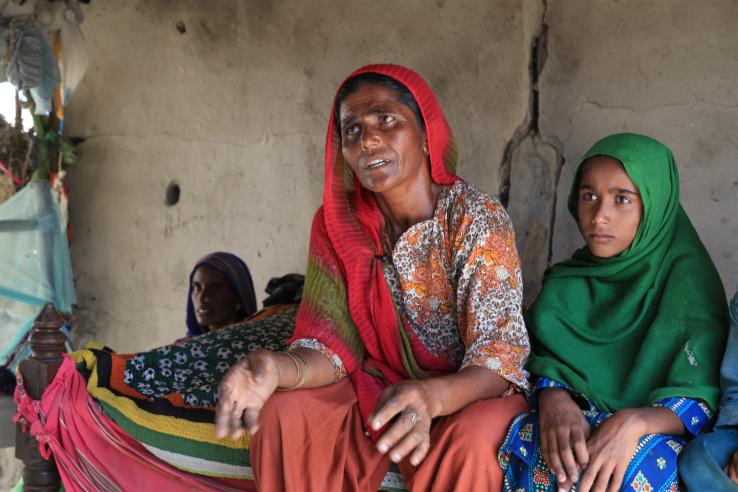
Two Pakistani woman having a conversation
Evaluation

Community Policing, Citizen Feedback, and Public Trust in Pakistan

It is unclear whether a gender-differentiated intervention may be more effective in reducing some or all types of crime. To better understand this issue, researchers are working with the local police force in two districts in Pakistan to study its effects on trust levels and occurrence of crime.

Woman patient with bandage compression knee brace to support injury on hospital bed.
Evaluation

The Spillover Effects of a Nationwide Medicare Bundled Payment Reform

Researchers evaluated the spillover effects of a nationwide Medicare bundled payment reform on privately insured Medicare Advantage (MA) patients who were not targeted by the reform. They found that the bundled payment reform’s spillover effect on non-targeted MA patients was similar to the bundled payment reform’s direct effect on targeted Traditional Medicare patients.

Pagination

  • First page « First
  • Previous page ‹
  • …
  • Page 500
  • Page 501
  • Current page 502
  • Page 503
  • Page 504
  • …
  • Next page ›
  • Last page Last »
J-PAL

J-PAL

400 Main Street

E19-201

Cambridge, MA 02142

USA

Contact

+1 617 324 6566

[email protected]


Press Room

Stay Informed

Receive our newsletters

Subscribe


Privacy Policy

Accessibility

MIT