

Displaying 1816 - 1830 of 7205


Evaluation
Effectiveness of Provider Incentives for Anemia Reduction in Rural China
Encouraging the adoption of health seeking behaviors remains a challenge today, despite the affordability and availability of health improving technologies and services. Researchers tested whether providing principals in rural primary schools in China with information, school subsidies, and performance based financial incentives reduced the prevalence of anemia in schools. Only schools receiving the financial incentive showed a significant decrease in anemia prevalence; however when pre-existing incentives for educational performance were also present, both the information and the financial incentives were effective in reducing anemia.
Evaluation
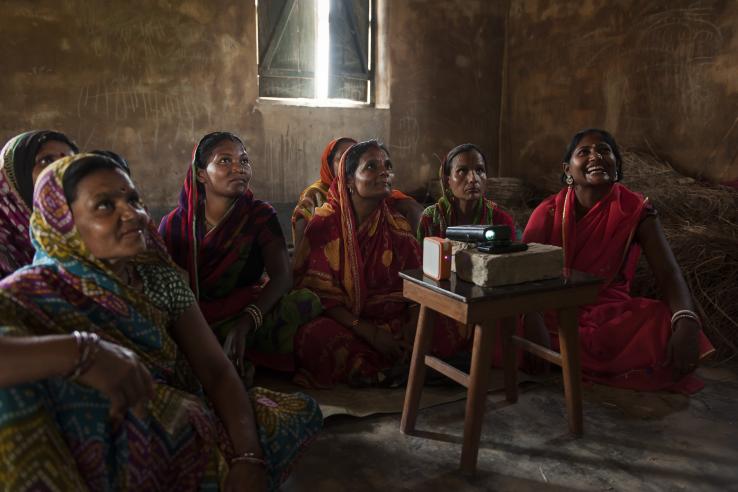
An Evaluation of Digital Green's Agricultural Extension Program in India
In partnership with Digital Green and Jeevika, researchers conducted a randomized evaluation in Bihar, India, to assess the impact of a video-based training on female farmers’ adoption of a climate-smart technique called System of Rice Intensification (SRI), and their yields and profits. Farmers increased their yields and estimated profits and the intervention demonstrated cost-effectiveness.

Evaluation
Reducing Parent-School Information Gaps and Improving Education Outcomes: Evidence from High-Frequency Text Messages
Researchers conducted a randomized evaluation to test the impact of regular informational text messages to parents on children’s academic performance. The intervention improved math grades and attendance, although it did not impact negative classroom behavior on average. These effects were generally largest for those at highest risk of dropout.

Evaluation
The Effect of Randomized School Admissions on Voter Participation in the United States
Understanding the factors that influence voting behavior is a central policy issue. Often voting outcomes directly determine funding of critical public goods such as public education.

Evaluation
Identifying Effective Teachers in the United States
Researchers evaluated how well different measures of teacher effectiveness predicted student performance in six school districts in the United States. Measures of teacher effectiveness based on student achievement in the previous year, classroom observations, and student surveys accurately identified which teachers produced higher average student test scores.
Evaluation
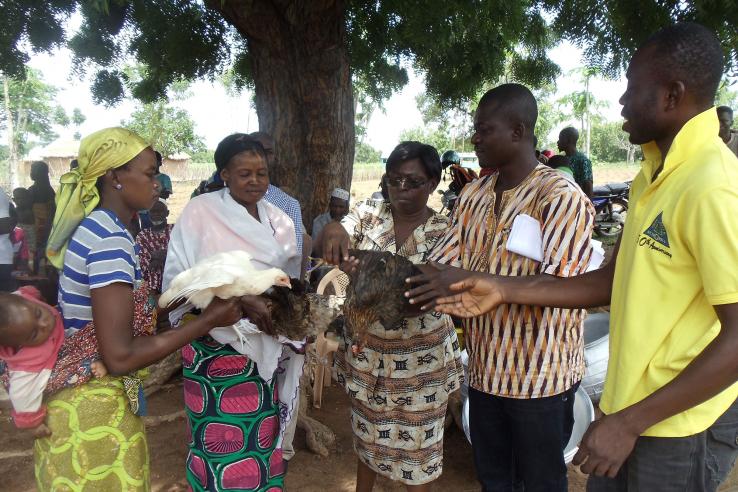
Graduating the Ultra-Poor in Ghana
Researchers evaluated a multi-faceted approach aimed at improving the long-term incomes of the ultra-poor. They found that the approach had long-lasting economic and self-employment impacts and that the long-run benefits, measured in terms of household expenditures, outweighed their up-front costs.

Evaluation
Graduating Low-Income Households in Honduras
To test this theory, researchers in six countries evaluated a multi-faceted approach aimed at improving long term income of low-income households. They found that the approach had long-lasting economic and self-employment impacts and that the long-run benefits, measured in terms of household expenditures, outweighed their up-front costs. This evaluation summarizes the Honduras site, where an unexpected chicken illness destroyed most of participants’ program-related productive assets. Honduras was the only country where long-run benefits did not outweigh their up-front costs.

Evaluation
Tablet-Based Financial Education in Colombia
Researchers collaborated with Fundación Capital and the Government of Colombia to conduct a randomized evaluation of LISTA, a tablet-based financial education program designed for participants in Colombia's government CCT program, to study its impact on financial knowledge and behavior. LISTA had significant positive impacts on participants’ financial knowledge, attitudes, practices, and performance.

Evaluation
Increasing Public Transportation for Higher Employment and Women's Empowerment in Pakistan
Researchers are partnering with Lahore Transport Company (LTC), the public vehicle operation regulator, to introduce routes for small vehicles, known as wagons, that feed into a bus rapid transit system and will reserve a portion of wagons for women only. Researchers will evaluate the impact of these investments in public transportation on employment outcomes as well as on women’s empowerment.
Evaluation
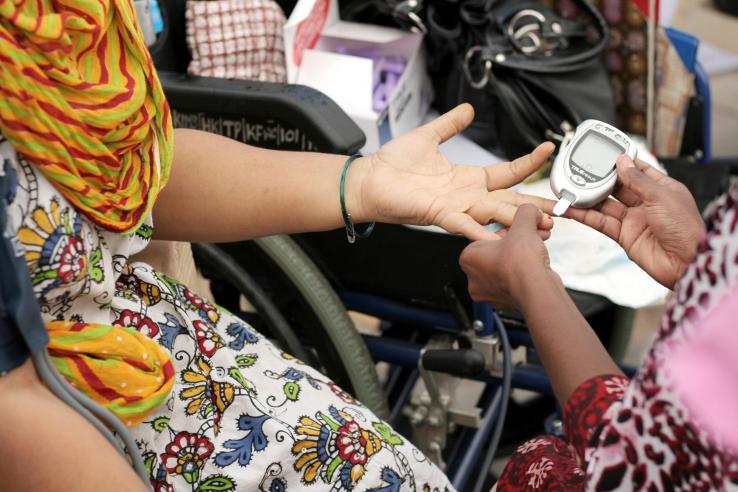
Improving Non-Communicable Disease Compliance in India
In India, researchers will evaluate the impact of financial incentives, information, and reminders on treatment regimen compliance among patients of a healthcare provider in the slums of Mumbai.

Evaluation
Motivating Citizens to Seek Political Office in Pakistan
Researchers examined the impact of different types of motivation on the number and quality of candidates running for village councils in Pakistan, electoral outcomes, and elected candidates’ policy alignment with citizens’ interests. They found that portraying politics as socially beneficial–rather than personally rewarding–increased candidate entry, their electoral success, and elected officials’ policy alignment with citizen preferences.