

J-PAL J-PAL
The Abdul Latif Jameel Poverty Action Lab
  • About
    • Overview
    • People
      • Affiliated Professors
      • Invited Researchers
      • J-PAL Scholars
      • Board
      • Leadership
      • Staff
    • Strengthening Our Work
    • Code of Conduct
    • Initiatives
    • Events
    • Blog
    • News
    • Press Room
  • Offices
    • Overview
    • Global
    • Africa
    • Europe
    • Latin America and the Caribbean
      • Growing Futures
    • Middle East and North Africa
    • North America
    • South Asia
    • Southeast Asia
  • Sectors
    • Overview
    • Agriculture
    • Crime, Violence, and Conflict
    • Education
    • Environment, Energy, and Climate Change
    • Finance
    • Firms
    • Gender
    • Health
    • Labor Markets
    • Political Economy and Governance
    • Social Protection
  • Evaluations
  • Research Resources
    • About Us
    • Our Work
    • Join ASPIRE
    • Newsroom
  • Policy Insights
  • Evidence to Policy
    • Pathways and Case Studies
    • The Evidence Effect
  • Blog
  • Careers
  • Courses
  • For Affiliates
  • Support J-PAL

Utility menu

  • Blog
  • Careers
  • Courses
  • For Affiliates
  • Support J-PAL

Quick links

  • Evaluations
  • Research Resources
  • Policy Insights
  • Evidence to Policy
    • Pathways and Case Studies
    • The Evidence Effect
  • About

    The Abdul Latif Jameel Poverty Action Lab (J-PAL) is a global research center working to reduce poverty by ensuring that policy is informed by scientific evidence. Anchored by a network of more than 1,100 researchers at universities around the world, J-PAL conducts randomized impact evaluations to answer critical questions in the fight against poverty.

    • Overview

      The Abdul Latif Jameel Poverty Action Lab (J-PAL) is a global research center working to reduce poverty by ensuring that policy is informed by scientific evidence. Anchored by a network of more than 1,100 researchers at universities around the world, J-PAL conducts randomized impact evaluations to answer critical questions in the fight against poverty.

      • Affiliated Professors

        Our affiliated professors are based at over 130 universities and conduct randomized evaluations around the world to design, evaluate, and improve programs and policies aimed at reducing poverty. They set their own research agendas, raise funds to support their evaluations, and work with J-PAL staff on research, policy outreach, and training.

      • Invited Researchers
      • J-PAL Scholars
      • Board
        Our Board of Directors, which is composed of J-PAL affiliated professors and senior management, provides overall strategic guidance to J-PAL, our sector programs, and regional offices.
      • Leadership
      • Staff
    • Strengthening Our Work

      Our research, policy, and training work is fundamentally better when it is informed by a broad range of perspectives.

    • Code of Conduct
    • Initiatives
      J-PAL initiatives concentrate funding and other resources around priority topics for which rigorous policy-relevant research is urgently needed.
    • Events
      We host events around the world and online to share results and policy lessons from randomized evaluations, to build new partnerships between researchers and practitioners, and to train organizations on how to design and conduct randomized evaluations, and use evidence from impact evaluations.
    • Blog
      News, ideas, and analysis from J-PAL staff and affiliated professors.
    • News
      Browse news articles about J-PAL and our affiliated professors, read our press releases and monthly global and research newsletters, and connect with us for media inquiries.
    • Press Room
      Based at leading universities around the world, our experts are economists who use randomized evaluations to answer critical questions in the fight against poverty. Connect with us for all media inquiries and we'll help you find the right person to shed insight on your story.
  • Offices
    J-PAL is based at MIT in Cambridge, MA and has seven regional offices at leading universities in Africa, Europe, Latin America and the Caribbean, Middle East and North Africa, North America, South Asia, and Southeast Asia.
    • Overview
      J-PAL is based at MIT in Cambridge, MA and has seven regional offices at leading universities in Africa, Europe, Latin America and the Caribbean, Middle East and North Africa, North America, South Asia, and Southeast Asia.
    • Global
      Our global office is based at the Department of Economics at the Massachusetts Institute of Technology. It serves as the head office for our network of seven independent regional offices.
    • Africa
    • Europe
    • Latin America and the Caribbean
    • Middle East and North Africa
    • North America
    • South Asia
    • Southeast Asia
  • Sectors
    Led by affiliated professors, J-PAL sectors guide our research and policy work by conducting literature reviews; by managing research initiatives that promote the rigorous evaluation of innovative interventions by affiliates; and by summarizing findings and lessons from randomized evaluations and producing cost-effectiveness analyses to help inform relevant policy debates.
    • Overview
      Led by affiliated professors, J-PAL sectors guide our research and policy work by conducting literature reviews; by managing research initiatives that promote the rigorous evaluation of innovative interventions by affiliates; and by summarizing findings and lessons from randomized evaluations and producing cost-effectiveness analyses to help inform relevant policy debates.
    • Agriculture
      How can we encourage small farmers to adopt proven agricultural practices and improve their yields and profitability?
    • Crime, Violence, and Conflict
      What are the causes and consequences of crime, violence, and conflict and how can policy responses improve outcomes for those affected?
    • Education
      How can students receive high-quality schooling that will help them, their families, and their communities truly realize the promise of education?
    • Environment, Energy, and Climate Change
      How can we increase access to energy, reduce pollution, and mitigate and build resilience to climate change?
    • Finance
      How can financial products and services be more affordable, appropriate, and accessible to underserved households and businesses?
    • Firms
      How do policies affecting private sector firms impact productivity gaps between higher-income and lower-income countries? How do firms’ own policies impact economic growth and worker welfare?
    • Gender
      How can we reduce gender inequality and ensure that social programs are sensitive to existing gender dynamics?
    • Health
      How can we increase access to and delivery of quality health care services and effectively promote healthy behaviors?
    • Labor Markets
      How can we help people find and keep work, particularly young people entering the workforce?
    • Political Economy and Governance
      What are the causes and consequences of poor governance and how can policy improve public service delivery?
    • Social Protection
      How can we identify effective policies and programs in low- and middle-income countries that provide financial assistance to low-income families, insuring against shocks and breaking poverty traps?
Displaying 2956 - 2970 of 7156
Person

Sharvari Ravishankar

Sharvari Ravishankar is a Senior Research Associate at J-PAL South Asia on the Migration and Technology project in collaboration with the online recruitment website QuikrJobs in Bangalore.
Person

Ignatius Sebastian

Ignatius Sebastian is a Research Associate at J-PAL Southeast Asia, where he works on the data analysis of the randomized evaluation on the tax offices in Indonesia.

A laptop computer screen displays J-PAL's research resources website.
Blog

Announcing J-PAL’s newly updated research resources

Structured around the lifecycle of a project, these research resources provide practical guidance on conducting RCTs and include templates, checklists, and concrete advice based on J-PAL’s deep experience implementing field research projects.
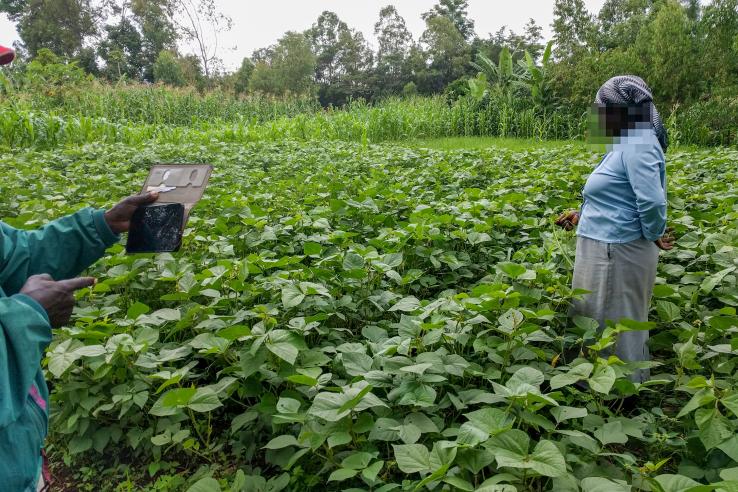
farmer (face blurred) showing off her bean plot to the research team
Evaluation

Farmers and the fear of crime: Improving agricultural productivity through farm protection in Kenya

In Kenya, researchers matched farmers with subsidized, trained watchmen to evaluate the effect of improved farm security on farmers’ decision-making, agricultural productivity, and conflict with neighbors. Security was shown to increase and in response, farmers made different cropping, time use, and investment decisions, had higher agricultural yields, and experienced less conflict with their neighbors.
Person

Prakash L

Person

Rachel M. Heath

Rachel M. Heath is an Alberta C. Corkery Professor of Economics at the University of Washington.
Person

Christopher Palmer

Christopher Palmer is the Albert and Jeanne Clear Career Development Professor and an Associate Professor of Finance at the MIT Sloan School of Management. His research focuses on how credit, real estate, and labor markets respond to periods of significant upheaval. His recent experimental work...
Person

Jishnu Das

Jishnu Das is a Distinguished Professor at the McCourt School of Public Policy at Georgetown University. His work focuses on the delivery of basic services, particularly health and education.
Person

Simon Jaeger

Simon Jäger is an Associate Professor of Economics and Public Affairs, jointly appointed by Princeton University’s Department of Economics and the School of Public and International Affairs (SPIA), and a member of Princeton’s Industrial Relations Section.
Person

Sandhya Seetharaman

Person

Indriani Pratiwi

Indriani Pratiwi is a Senior Research Associate at J-PAL Southeast Asia. Her research experience includes: socio-economic impacts of Covid-19, social protection programs, gender-based violence & unpaid care work, and female adolescent health. She is also a member of the J-PAL Gender Working Group
Person

Nadeen ElAshmawy

Nadeen ElAshmawy is a Senior Policy Associate at J-PAL Middle East and North Africa where she works on policy analysis and outreach related to translating J-PAL MENA’s research into policy lessons and promoting evidence-informed policymaking in the region.
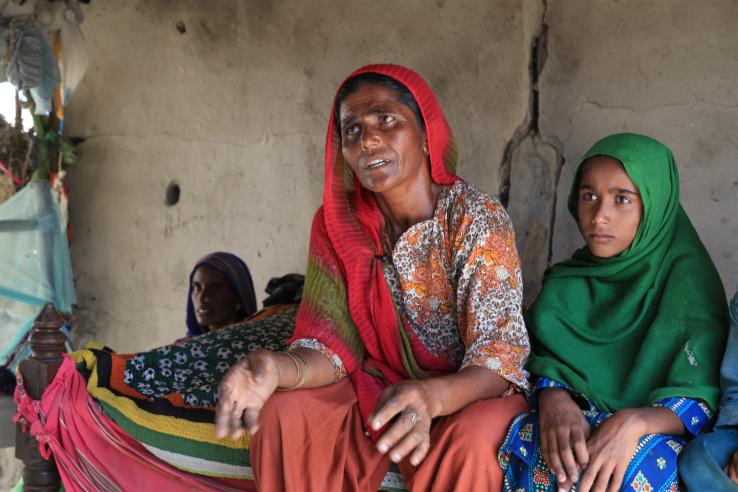
Two Pakistani woman having a conversation
Evaluation

Community Policing, Citizen Feedback, and Public Trust in Pakistan

It is unclear whether a gender-differentiated intervention may be more effective in reducing some or all types of crime. To better understand this issue, researchers are working with the local police force in two districts in Pakistan to study its effects on trust levels and occurrence of crime.
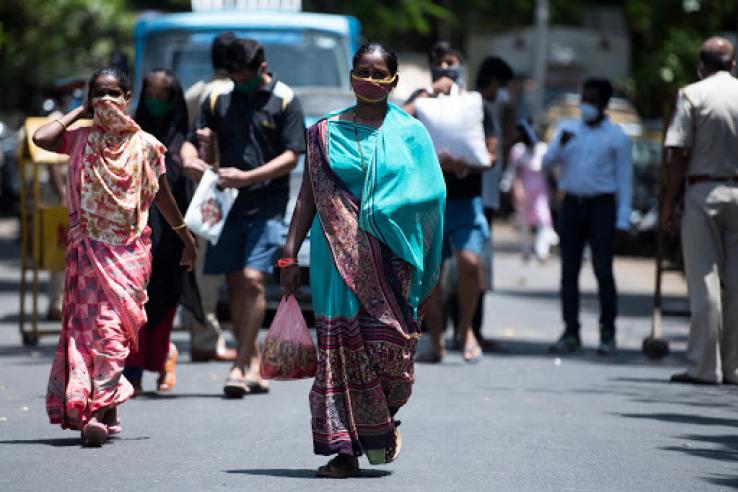
Women walk down a street wearing face masks
Blog

Taking an evidence-informed approach to pandemic response

As the COVID-19 pandemic started to take hold worldwide, J-PAL affiliated professors and staff jumped into action to critically analyze the evidence base and work closely with government partners to inform policy decisions with evidence.

A woman in a mask sits typing on a laptop outside
Blog

Foundations of ethical and high-quality data collection during the COVID-19 pandemic

There have been many innovations in data collection methods over the past few months to adapt to contactless research. Many research organizations, including J-PAL, have shifted to data collection through phone surveys, as field activities remain halted. As we support and strengthen these...

Pagination

  • First page « First
  • Previous page ‹
  • …
  • Page 196
  • Page 197
  • Current page 198
  • Page 199
  • Page 200
  • …
  • Next page ›
  • Last page Last »
J-PAL

J-PAL

400 Main Street

E19-201

Cambridge, MA 02142

USA

Contact

+1 617 324 6566

[email protected]


Press Room

Stay Informed

Receive our newsletters

Subscribe


Privacy Policy

Accessibility

MIT