

Opportunities for state and local policy responses to climate change: A recap from the State and Local Webinar Series
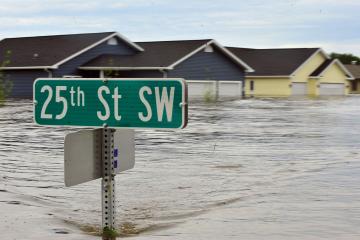
Reducing emissions within North America is essential to addressing the global challenges of poverty and climate change. Within the region, structural disparities and discrimination have led to low-income populations and people of color disproportionately experiencing a range of climate change-related hazards, including air pollution, water pollution, and elevated risk of harm from extreme heat and weather events.
State and local governments are attuned to how policy questions uniquely manifest for their communities. As such, they can be well positioned to provide immediate, context-relevant responses to address the challenges of climate change. To highlight the momentum of efforts around climate change and pollution mitigation, examples of current state and local interventions, and opportunities for collaboration between researchers and state and local agencies, J-PAL North America held a webinar on October 7, 2020 titled “State and Local Policy Responses to Climate Change.”
The webinar featured Fiona Burlig (University of Chicago), Zoe Davis (Climate Ready Boston, City of Boston), James Goldstene (California Air Resources Board (CARB)), and Katrina Jessoe (University of California, Davis).
Collaborative partnerships with state and local entities
In her presentation on researcher-practitioner partnerships for developing climate change interventions, Katrina Jessoe, Associate Professor at the Department of Agricultural and Resource Economics at UC Davis, stated that “through partnerships, we can take stock of impacts, cost effectiveness, and how the benefits and costs of policies are distributed.”
To illustrate the value of partnerships between researchers, policymakers, and implementers, Jessoe discussed her randomized evaluation with a California utility company. This project assesses the impact of a water conservation instrument on energy use and its cost effectiveness in conserving energy. Jessoe also discussed her research on water resources in San Joaquin, CA. This evaluation will measure the cost of droughts on access to drinking water and the quality of drinking water in disadvantaged communities. Measuring water in these communities is challenging because many people access water from domestic wells or small systems that are not subject to the same federal oversight as public systems. Collaboration with state and local agencies that collect water quality and quantity data from these systems can help in improving our understanding of how droughts impact water quality and access.
Using data to shape climate policies
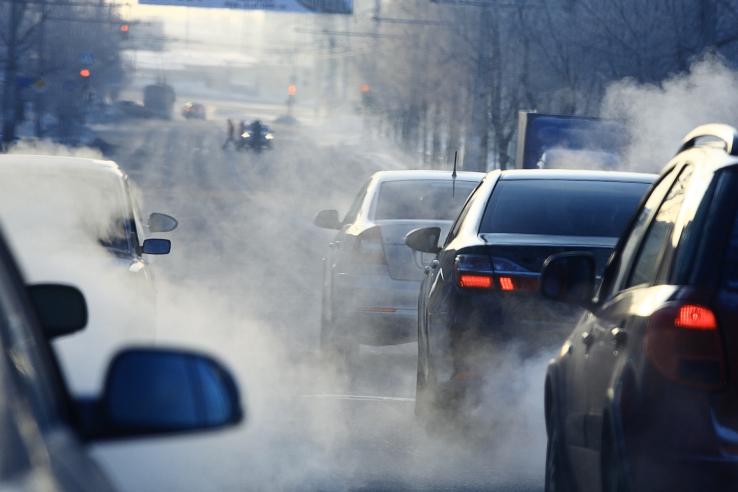
Fiona Burlig, Assistant Professor at the Harris School of Public Policy at the University of Chicago, and James Goldstene, a vehicle program specialist at CARB and a professor in the Environmental Studies department at California State University–Sacramento, discussed their ongoing evaluation measuring the impact of different compliance strategies on the emissions from heavy-duty trucks. CARB regularly conducts screenings of heavy-duty vehicles operating in California but due to the high volume of vehicles, it is important to detect and address regulatory violations efficiently. In California, air pollution disproportionately affects low-income communities. This means that strategies for ensuring compliance with standards for particulate emissions are one important part of broader efforts to improve environmental justice outcomes in the region.
Goldstene discussed solutions that require both engineering and behavioral solutions. For example, making an engine work more efficiently, reducing carbon intensity, or identifying other technological improvements are all strategies that can help improve air quality. However, these strategies are only part of a full set of solutions. According to Goldstene, economists’ research about human behavior can complement technological improvements by supporting behavior changes required when adopting new technology, as well as encouraging people to examine the way they live and make other types of changes to reduce their own carbon footprints.
Zoe Davis, the Climate Resilience Project Coordinator at Climate Ready Boston, stressed that resilience planning should be holistic and inclusive in its approach, should account for the intersectionality of multiple risks (54:05), and should draw on data (57:25). She shared that the Climate Ready Boston initiative was developed by the City of Boston to prepare for the long-term impacts of climate change and was designed based on data from a detailed report by the Boston Research Advisory Group. The report used information from climate models to understand the impacts of stormwater, coastal flooding, and extreme heat. Davis stated that data has been critical in determining the time horizons for implementing coastal planning and other resilience solutions.
Centering priority communities in climate change responses
Zoe Davis highlighted the importance of centering marginalized communities and priority populations throughout the process and into the outcome of the planning in climate change initiatives (1:01:00). She states,
Although we are looking towards the future when considering climate change, we must be cognizant of the fact that the effects of climate change are being felt today. It is also important to reflect the daily lives of priority communities into the development of climate adaptation interventions so they work for actual people. [We must] recognize the history of intentional disinvestment in communities of color and in immigrant communities and make sure that this fact is reflected in the work for climate adaptation.
Davis recommended recognizing community expertise, power, and knowledge with processes of co-creation, where processes and solutions are built in tandem with community partners. For example, in early planning phases, it can be valuable to procure services from within communities that will be affected by the projects being planned (1:02:24). This can mean that residents will be able to connect with project team members who are familiar with their neighborhood, understand their values, and will make sure their voices are heard.
James Goldstene also highlighted the importance of soliciting input from communities (1:04:55):
One of the things that we’re always paying attention to is making sure that communities that have a disproportionate burden of pollution are able to communicate with us. We have relationships all over the state with community groups… we have a whole office or division set up to reach out to communities that are disproportionately impacted [by] air and climate pollutants.
Fiona Burlig discussed how inclusive, informative measurement is key for understanding impacts and designing solutions that address the needs priority communities (1:06:51):
Measurement here is really key. It’s really hard to understand how to effectively design an intervention if we can’t observe what’s happening on the ground. [Often,] communities of color and low-income communities are also underserved by the same measurement resources that help us to inform effective solutions. If, for example, I’m interested in using pollution monitoring and none of the monitors sit in a low-income community, then… it’s difficult for me to address a problem that I can’t see. One set of solutions to this is developing innovative ways to do new measurement, like we’re doing with CARB, [and leveraging] satellite data and new sources of information.
Burlig also highlighted how partnerships between researchers and policymakers are helpful in understanding not just average impacts, but also in measuring and understanding how interventions have different levels of effectiveness in different settings (1:08:10).
Katrina Jessoe also emphasized the importance of measurement, and reflected on the role of economists in helping policymakers and communities (1:10:10):
If we’re trying to understand climate impacts, mitigation options, or ways of adaptation, economists can help with research design: [designing] an evaluation strategy to use data and answer the question that we’re after.
To learn more about J-PAL North America’s work in Environment, Energy, and Climate Change, read about our work or contact J-PAL North America Environment, Energy, and Climate Change Sector Lead Erin Graeber.
As part of a blog series on J-PAL’s work related to climate change, this post highlights J-PAL North America’s contributions to the evidence base in environment, energy, and climate change to date and articulates our agenda for catalyzing more policy-relevant research.
As part of a blog series on J-PAL’s work related to climate change, this post highlights J-PAL North America’s contributions to the evidence base in environment, energy, and climate change to date and articulates our agenda for catalyzing more policy-relevant research in collaboration with the King Climate Action Initiative (K-CAI) at J-PAL. In an earlier post, our Energy, Environment, and Climate Change sector team reflects on the nexus of climate change and poverty and on the need for evidence-informed climate policy.
In collaboration with our J-PAL colleagues around the globe, the J-PAL North America regional office is taking time to reflect on how the consequences of a changing climate are already affecting communities both worldwide and in our own region.
In North America and globally, structural disparities and discrimination have led to low-income populations and people of color disproportionately experiencing a range of climate change-related hazards including (though not limited to) air and water pollution, loss of livelihoods, and elevated risk of harm from extreme weather events and extreme heat.
As a global organization, J-PAL is working to understand how we can support human development while also better protecting our environment and climate. In the North America region, our network of affiliated professors is working to understand how to most effectively reduce greenhouse gas emissions, reduce carbon co-pollutants that have immediate health consequences, and lower the burden that climate change poses for vulnerable populations in the region.
Climate change priorities in North America
As outlined in the earlier post, climate change and poverty are closely related. Within North America, low-income communities already grapple with the consequences of a changing climate. Researchers also project that issues such as rising temperatures, increases in the frequency of extreme weather, and sea level rise will continue to disproportionately affect people experiencing poverty in the region.
With the United States as the second largest emitter of greenhouse gases in the world, reducing emissions within North America is essential to addressing the dual challenges of poverty and climate change around the world.
This is also important because carbon co-pollutants cause disproportionately high rates of health problems for people experiencing poverty. The current global pandemic is further revealing the linkages between exposure to environmental pollution and increased COVID-19 infection rates, which disproportionately affect low-income neighborhoods and communities of color that tend to be exposed to higher levels of air pollution. Increases in particulate matter and other air pollutants lead to increases in respiratory health problems for children in the United States, particularly for children from low-income households. For these reasons, reducing pollution is a priority area of climate change research for J-PAL North America.
Particularly for communities that are projected to feel the effects of climate change and local pollutants most intensely, rapid adaptation is essential.
However, more research is needed in the context of North America to measure the impacts of common approaches to help communities cope with the impacts of a changing climate.
These can include, for example, updating physical infrastructure such as urban centers and transportation infrastructure to be more resilient to extreme weather, creating cooling centers and community response networks to respond to periods of extreme heat, supporting agricultural institutions and workers in adapting to changing conditions, and training communities for emergency preparedness for extreme weather events.
Leveraging existing evidence: lessons from household energy efficiency programs
J-PAL North America supports the generation of rigorous evidence on equitable programs that address the causes and consequences of challenges in environment, energy, and climate change, and synthesizes evidence on these issues into accessible policy lessons.
One area where rigorous evidence generated by J-PAL affiliated researchers—and by researchers and practitioners from a wide range of fields—can already inform policy decisions is on residential energy efficiency.
Results from five randomized evaluations and three quasi-experimental evaluations illustrate that residential energy efficiency programs are often a costly way to reduce energy consumption and carbon emissions. In the absence of rigorous, causal evidence, many policymakers and program implementers have had to rely on laboratory-based estimates of energy reductions, which often fail to hold true in real-life settings.
Some may consider these findings surprising, since energy efficiency measures are often seen as a double-win solution for lowering energy use and household energy bills. These results highlight the importance of real-world research that can inform policy and program design not just with technical estimates, but also with assessments of how programs work in practice. Combining engineering estimates with insights on human behavior from impact evaluations could help policymakers better predict how effective these programs can be.
Rather than prioritize the status quo strategies to improve energy efficiency, policymakers interested in reducing greenhouse gas emissions should consider policies and approaches that come closer to a direct incentive tied to carbon emissions.
Generating new evidence to reduce emissions
Moving forward, J-PAL North America will continue to leverage our network of affiliated researchers and implementing partners to conduct research on mitigation and adaptation efforts in our region. In fact, rigorous research is already underway.
In California, for example, J-PAL affiliated researcher Michael Greenstone and colleagues Fiona Burlig, Ludovica Gazze, and Olga Rostapshova are working with the California Air Resources Board (CARB) on a J-PAL North America State and Local Innovation Initiative-funded pilot project to test the effectiveness of noncompliance notifications targeting particularly high-emitting trucks that likely exceed limits set by emissions regulations.
CARB regularly conducts screenings of heavy-duty vehicles operating in California but due to the high volume of vehicles (one million heavy-duty trucks operate on California’s roadways each year), CARB cannot inspect all vehicles annually, which makes detecting and addressing regulatory violations difficult. In California, this pollution disproportionately affects low-income communities.
In particular, four cities with high levels of poverty compared to the state average—Bakersfield, Fresno, Modesto, and Visalia—are located along a major freight corridor in the state’s Central Valley and rank in the top ten US cities for particulate matter pollution. This evaluation will measure the impact of compliance strategies on the emissions from heavy-duty trucks.
J-PAL North America is eager to support research of the innovative approaches that researchers and implementers create to mitigate and adapt to climate change.
Complex issues of environment, energy, and climate change demand rapid responses, and it is essential to advance rigorous research to identify effective approaches. Staff, researchers, and practitioners who work with J-PAL’s Environment, Energy, and Climate Change sector are committed to building interdisciplinary collaborations to tackle these challenges together.
To connect or learn more about J-PAL North America’s work in Environment, Energy, and Climate Change, read about our work or contact J-PAL North America Environment, Energy, and Climate Change Sector Lead Erin Graeber.
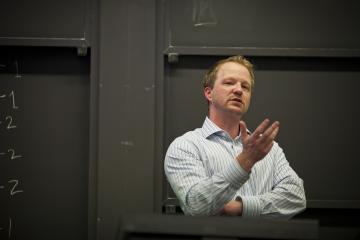
Christopher Knittel is the George P. Shultz Professor and a professor of applied economics at the MIT Sloan School of Management. In this J-PAL affiliate spotlight, Chris sheds light on the research questions he’s pursuing to inform policies on greenhouse gas emissions and carbon co-pollution reductions.
What first drew you to study economics, and why did you choose to focus much of your research around environmental economics and how firms and consumers respond to policies?
I expected to be a lawyer when I entered undergrad, but then I took my first economics class and fell in love with it. I was interested in firm behavior and consumer behavior around firms. My PhD work was in industrial organization. I was doing a lot of work on banking and finance, but when my son was born, I started worrying more about environmental issues. That drew me toward research on local pollution and climate change, and I’ve focused on this ever since.
What research questions are driving your current research agenda?
The overarching question driving my research is how consumers and firms respond to policies and changes in market conditions: whether this is energy prices or policies that impact prices, or policies more generally. I like to come full circle and ask what those responses mean for policy effectiveness and efficiency. I try to understand what firms and consumers do around the energy space and what products lead to pollution, and then write papers to help policymakers design better policies. We’ve focused on energy efficiency because that has been a bipartisan focus for many policymakers. Going forward, I hope that policymakers will enact broader measures around climate change. Much of my work aims to understand climate policies that aren’t on the map today but hopefully will be considered in the future.
What is an example of a randomized evaluation measuring the impact of an environmental or energy policy program that particularly resonated with you? Why did you choose to do this evaluation?
I am wrapping up a study on industrial energy efficiency. Energy efficiency policies have bipartisan support, and a lot of that work focuses on residential consumers—yet questions remain about commercial and industrial facilities and what the impacts of energy efficiency policies might be for them. Catherine Wolfram, Michael Greenstone, and I are finishing an experiment in California that outfitted one hundred industrial facilities with sub-metering. We measured how much energy the compressed air systems were using.
Compressed air might sound boring, but it’s an important consumer of electricity: twenty percent of industrial electricity is used by compressed air. We worked with large firms whose monthly electricity bills were tens of thousands of dollars. To conduct the study, we teamed up with a startup that installs sub-meters and uses data analytics to understand what’s going on. Sometimes, savings were as simple as a notification from the startup saying: “did you know your compressed air machines are running on the weekends, even though you’re not here on the weekends?” Right now, we’re analyzing the data. I don’t want to give away the results, but it’s one of the first experiments that I’m aware of in the industrial space, and we’re excited about this.
What have been some of the most meaningful results or outcomes of your work so far?
Hunt Allcott and I ran a randomized evaluation about how consumers think about fuel costs when buying a car. If you look at the cost-benefit analysis of fuel economy standards, it assumes consumers are myopic (shortsighted), and standards try to correct this. The belief that consumers make mistakes is often conventional wisdom among policymakers. The ideal evaluation to illuminate whether this is accurate would be randomizing loan rates and seeing whether consumers invest more in fuel economy when offered lower interest rate loans. Although we could not do that, we instead asked how consumers respond to information about fuel economy and costs. One reason why consumers might be myopic is if they don’t have such data easily available.
We teamed up with Ford and developed an iPad app about fuel economy and randomly assigned customers walking into seven dealerships across the country to either use the app or see some unrelated information. The app asked what car they drive, what they think gas prices will do in the future, and what car they’re considering. The app took that information and showed them what would happen if they switched to a more fuel efficient car. It translated savings into more tangible terms, such as how many iPads or pairs of jeans they could buy with that money. We then observed what cars those consumers bought.
The results showed that this information does not have an effect on purchases. This is consistent with the idea that consumers were already making accurate assessments of fuel savings, at least on average. We saw both overestimates and underestimates of fuel costs. On average, the information isn’t affecting them, although there is likely to be heterogeneity in these effects (variation in how the treatment affects people), and we were under-powered to test that.
How have your research findings been received and used by the non-academic community?
Questions about how consumers think about fuel economy and the best ways to decarbonize transportation are front and center in the minds of many firms and policymakers. I am fortunate to run a research center at MIT that connects with industrial affiliates and policymakers about research. I’ve heard this study cited in DC and Sacramento and have presented it to policymakers and the Auto Alliance. I think it is one more piece of information for an important policy question.
I think that policy in DC and Sacramento is like a huge boat that takes a long time to turn. The focus on fuel economy standards is going to take a long time to turn towards a focus on something like carbon taxes or alternative policies. I can’t say I’ve seen “the end result” of my work, but I think this work has at least made some policymakers question conventional wisdom, in terms of how consumers make decisions. On the margin, I think my work has helped move them away from what economists have found to be inefficient policies toward more efficient policies.