

How can RCTs help us reduce violence and conflict? 2021 update
In March 2020, UN Secretary-General António Guterres called for an immediate global ceasefire, urging armed parties worldwide to lay down their weapons as the world turned its attention to combating the Covid-19 pandemic. While overall conflict incidents and fatalities have declined since, widespread incidents of political and social violence continue to pose serious threats to global stability.
Over the past year, in Ethiopia, India, Mozambique, Myanmar, and, most recently, in Israel and Palestine, conflict has reignited or escalated; in Brazil, Colombia, Nigeria, and the United States, high-profile instances of police brutality and targeted violence have deteriorated citizen trust in the state; and in households worldwide, a “shadow pandemic” has emerged as intimate partner violence has increased, coinciding with strict lockdown measures. These are just a few examples of how conflict has persisted throughout the past year despite a global halt to most other activities (for more, see the Armed Conflict Location & Event Data Project’s recent report on the impact of Covid-19 on global conflict and demonstration trends.)
Recognizing the combined social, economic, and personal toll of crime, violence, and conflict globally, are we learning enough from evaluations of strategies to address these phenomena?
Encouragingly, the evidence base is growing. Emerging research is enabling us to explore innovative strategies—beyond just traditional policing and security sector interventions—to respond to the myriad factors that may lead to crime and violence in our communities. These innovations are more important now than ever as we grapple with pressing questions on how to reduce police bias and excessive use of force, restore trust between citizens and the state, and promote cohesion and understanding across ethnic and social divides.
Emerging lessons from the Governance, Crime, and Conflict Initiative
In 2017, the UK’s Foreign, Commonwealth & Development Office (formerly the Department for International Development) challenged J-PAL and Innovations for Poverty Action (IPA) to expand the evidence base on effective conflict and violence prevention programs. The result was two major research initiatives, the Crime and Violence Initiative and the Peace and Recovery Program (both encompassed under the broader Governance, Crime, and Conflict Initiative or GCCI).
Since launching these initiatives, we have sought to document what we have been learning from randomized evaluations on various topics—from policing to peacebuilding—and to highlight existing evidence gaps. Today, we are excited to share a second edition of the GCCI Evidence Wrap-up (originally released in 2019), which seeks to capture this growing evidence base. Some of the key additions and revisions of the 2021 edition include:
- Adding 57 new studies and updating many others as new working and published papers have been released;
- Reorienting the evidence on policing to examine not only strategies for more efficiently deploying limited police resources, but also interventions to improve police performance, through training and other efforts to reduce bias and excessive use of force;
- Broadening the discussion of justice provision in fragile and conflict-affected states to consider potential complementarities and trade-offs between state and non-state forms of dispute resolution;
- Expanding the peacebuilding literature to include additional interventions aimed at promoting recovery and rebuilding trust and cohesion, including disarmament, demobilization, and reintegration programs, as well as perspective-taking and personal narratives;
- Developing “deep dives” on hot topics like cognitive behavioral therapy and intergroup contact, highlighting where key open questions remain for future research; and
- Including an entirely new chapter focused on the growing evidence base around preventing and responding to violence against women, which covers evidence on shifting social norms, providing economic support, improving women’s access to police, and more.
For a snapshot of some of these key updates, expand the sections below.
Improving policing strategies and police capacities
The new edition of the GCCI Evidence Wrap-up divides the evidence on effective policing into two main sections:
1. How can we better allocate and deploy police resources? Acknowledging that crime and violence are highly concentrated, and that police have limited resources available to them, the first section has been reoriented to focus on strategies for efficiently deploying and allocating police resources. This includes experimental evidence on policing high-crime areas, improving police engagement with communities, shifting offender behaviors, and combating organized crime.
For example, a recent study by Sabrina Karim (Cornell University) in Liberia demonstrated how facilitating face-to-face contact between police and communities traditionally governed by customary (rather than state) authorities can improve perceptions of state legitimacy, increase crime reporting, and raise demand for police services.
Further, a study by Anna Wilke in South Africa found that connecting crime victims with the police through an alarm system improved local reliance on and perceptions of the police, while reducing willingness to engage in vigilantism.
2. How can we better train police? The second section recognizes the importance of building police capacity on their ultimate ability to tackle crime and maintain collaborative relationships with the community. Recent research examines ways of developing police capacity by diversifying police teams to be more responsive to communities’ needs and by implementing skills-based trainings. For example, Rodrigo Canales (Yale University) has been working with Mexico City’s police force to evaluate the impact of a three-day procedural justice, police legitimacy, and leadership training program on the effectiveness, perceptions, and behavior of officers.
Further, a new subsection on countering police violence acknowledges the damage police violence and excessive use of force has on individual lives, public safety, and the perceived legitimacy of the police. To combat police violence, researchers have evaluated strategies utilizing police monitoring devices, procedural justice, and implicit bias trainings, though this research has largely been concentrated in the United States. Ongoing GCCI-funded research in India, Pakistan, Brazil, and Colombia will contribute to our understanding of effective policing and relationship-building strategies.
Strengthening formal and informal justice systems
For communities emerging from conflict, effective systems of dispute resolution are an essential part of maintaining a lasting peace and preventing future violence. However, formal institutions for justice provision and dispute resolution are often inadequate, overburdened, or non-existent, often resulting in citizen distrust in the state.
In such contexts, researchers are exploring different methods for (re)building citizen trust in state institutions. For example, in a lab-in-the-field experiment in Pakistan, Daron Acemoglu (MIT) and coauthors found that providing information about reduced delays in state courts led citizens to report higher willingness to use these formal institutions and greater trust in the state. When citizens received positive information about the state, they were also less likely to report future plans to use non-state actors in resolving disputes. These findings suggest that simple informational primes can play an important role in shifting citizen attitudes and beliefs about both state and non-state justice systems.
There is also the risk that institutions—both formal and informal—may systematically produce outcomes that favor particular segments of society over others, leading to questions about how best to ensure equal access to justice and procedural fairness, particularly for vulnerable and marginalized groups.
In Bougainville, Papua New Guinea, Jasper Cooper (University of California, San Diego) finds that customary dispute resolution mechanisms and state forces may appeal to men and women in very different ways, particularly when it comes to addressing gender-based violence. Similarly, in Liberia, Robert Blair (Brown University) and coauthors find that increases in crime reporting—resulting from a community policing intervention—came almost entirely from those generally found to be disadvantaged by customary forms of dispute resolution.
Supporting communities recovering from conflict
Since first publishing the GCCI Evidence Wrap-up in 2019, the literature on peacebuilding, reconciliation, and post-conflict recovery has grown across many dimensions, perhaps most notable of which is an expansion in research on intergroup contact. This approach builds on decades of social psychology research on prejudice reduction. However, until recently, there has been relatively little experimental evidence on whether contact interventions are an effective means of altering how individuals interact with one another in contexts experiencing or recovering from conflict.
Recent research from Afghanistan, India, Iraq, and Nigeria is furthering our knowledge of whether and how contact works to shift attitudes and behaviors in conflict-affected contexts. For example:
- In Iraq, Salma Mousa (Stanford University) evaluated the impact of mixed Christian-Muslim soccer teams on social cohesion and interactions between these groups in an ISIS-affected area of Iraq. Results indicate that Christians who played on mixed teams demonstrated a higher likelihood of engaging with Muslim teammates after the league ended. However, the intervention did not improve their overall tolerance toward the Muslim community, suggesting that intergroup contact can build social cohesion between peers and acquaintances after war, but that these effects may not generalize to strangers from the out-group.
- In Nigeria, Alexandra Scacco (WZB) and Shana Warren (IPA) studied a vocational training program that brought together Christian and Muslim young men for sixteen weeks of computer training in either mixed-religion or single-religion classrooms in a conflict-prone city, Kaduna. They find that students in mixed-religion classrooms demonstrated significantly less out-group discriminatory behavior (though there was no change in reported prejudice) compared to students in single-religion classrooms. However, the mixed-religion group did not discriminate any less than a pure comparison group that did not participate in the computer training intervention. This would appear to suggest that the increase in discriminatory behavior amongst those in homogeneous classrooms may have resulted from greater opportunities for in-group bonding, which could reinforce existing biases against the out-group.
While recent work has started to shed light on how contact can alter the ways in which groups view one another and the extent to which they are more tolerant of each other in conflict-prone contexts, additional research is needed to discern whether these efforts ultimately translate into lower levels of conflict or higher degrees of cooperation and collaboration among groups. (For more on open research questions, see the ‘deep dive’ in the evidence wrap-up.) Ongoing research on various intergroup contact approaches in Jordan, Lebanon, and Nigeria will begin to fill in some of these gaps.
Combating violence against women
Gender-based violence (GBV) and intimate partner violence (IPV) pose major global health and policy challenges. The WHO estimates that one in every three women have suffered physical or sexual violence by an intimate partner in their lifetimes. Most recently, the Covid-19 pandemic has led to a spike in reported cases of domestic violence.
With the goal of supporting policymakers and practitioners seeking to identify effective measures to address this urgent issue, this new edition of the GCCI Evidence Wrap-up includes a full chapter on what we know about reducing violence against women (VAW). In this section, we discuss three main areas of research that can contribute to policy design:
1. Shifting social norms: A growing body of evidence has focused on shifting social norms associated with the acceptance and perpetration of VAW, including through gender training, couples’ dialogues, and media campaigns. In Ethiopia, for example, the Unite for a Better Life program (a gender-transformative skills-building program) increased support for gender equitable attitudes, promoted more gender-balanced behaviors, and reduced IPV by up to 50 percent when delivered to groups of men, highlighting the importance of involving men in such interventions.
2. Increasing access to economic resources: Theory suggests that providing women with access to economic resources—such as cash transfers, microcredit, savings groups, or employment—may alleviate familial stresses and increase women’s bargaining power within the household, thereby reducing intrahousehold conflicts and risk of violence. However, evidence on the effectiveness of these programs remains mixed. Studies from Bangladesh, Burkina Faso, Côte d’Ivoire, and South Africa suggest that economic interventions may be more effective when paired with gender-transformative approaches, which offer complementary opportunities to address underlying issues—such as unequal decision-making power—that might affect women’s risk of violence.
3. Equipping institutions to better respond to VAW: Researchers have also been exploring ways to improve strategies deployed by the justice system and state security institutions in responding to this form of violence. Two ongoing GCCI-funded studies in India are evaluating police efforts to increase the representation of female officers in dedicated public-facing roles in Madhya Pradesh, and leverage hotspots street patrolling to target VAW in public spaces in Hyderabad. (Watch a recent webinar on this research and its policy implications.)
Learn more
For much more on all of the above themes, including study snapshots, emerging insights, and open questions, we encourage you to browse the full wrap-up.
We see this wrap-up as a living document that we will periodically update as the evidence base expands. If you know of high-quality, randomized evaluations that have been completed on these themes that you think we should include or if there are key themes you think are missing, please let us know. Moreover, if you wish to consider whether a program or intervention may be suitable for a randomized evaluation, or whether the evidence reviewed potentially offers relevant insights for new program design in a specific area, please get in touch by emailing [email protected].
In 2016, an estimated 560,000 lives were lost due to interpersonal and collective violence; some 100,000 of these were lost in battle. The recent Pathways for Peace report from the UN and the World Bank underscored the need to develop more innovative responses to address the changing nature of violent conflict, particularly in low- and middle-income countries.
In 2017, the UK’s Department for International Development (DFID) challenged J-PAL and Innovations for Poverty Action (IPA) to expand the evidence base on effective conflict and violence prevention programs. The result was two major research initiatives, the Crime and Violence Initiative and the Peace and Recovery Program. These initiatives seek to produce rigorous, generalizable insights into what drives crime, violence, and conflict and the levers to reduce each (not just “what works” but why it works).
What have we and others engaged in this work been learning? There is no list of proven interventions that are ready to scale, as we might find in sectors such as education or health. But several promising lines of inquiry have emerged as new research probes the mechanisms behind successful interventions—i.e. how they work.
Drawing on the results of our recent review of emerging evidence in this field, below we highlight just a few of the areas where research is producing new insights for programming.
1. In post-conflict and fragile settings, relatively inexpensive interventions have the potential to increase trust and social links between groups.
One goal of post-conflict development programming has been to increase trust between communities and promote social bonds that could potentially play a role in preventing further conflict. This has not been easy to achieve: while evaluations of community-driven development (CDD), for example, have found these programs effective in improving service delivery, a 2018 meta-analysis showed that most CDD interventions had null or mixed results on improving social capital and collective behavior.
But recent evaluations of less expensive interventions with very different aims have shown that it is possible to improve social trust and cohesion, at least in the short term. In Sierra Leone, for example, one study found that a low-cost, community-level reconciliation program conducted a decade after the end of the country’s civil war had positive effects on social cohesion and social capital—though it also worsened villagers’ psychological health, suggesting reconciliation programs may need to be implemented alongside complementary interventions that provide psychosocial support.
Increasingly, researchers are also examining how social contact interventions—which facilitate dialogue and repeated interaction between diverse groups of people—might be used to build trust and stimulate strengthened bonds. These new studies draw on earlier research that showed, for example, that white South African college students randomly paired with black roommates reported fewer negative stereotypes and more cross-racial friendships, and that members of mixed-caste cricket teams in India reported more cross-caste friendships and exhibited less own-caste favoritism than homogenous teams who competed against members of different castes.
A recent pilot study in Erbil, Iraq found that assigning Christians to mixed-religion soccer teams led to more open attitudes and greater trust towards Muslim players. Research now underway will improve our understanding of the potential of such interventions, particularly in fragile and conflict-affected contexts: our research initiatives recently funded a large-scale follow-up to the Iraq study, as well as new studies in Nigeria, Jordan, and Bangladesh.
2. In some instances, economic incentives play a clear role in choices to engage in crime or insurgency, providing one important lever for programming.
A growing body of quasi-experimental research has explored how “economic shocks”—sudden spikes or falls in the money available from lawful employment, such as farming or resource extraction—can drive changes in criminal or insurgent activity. For example, two studies in Mexico demonstrated that economic shocks triggered by fluctuations in weather patterns and declines in manufacturing jobs led to increases in drug-related violence and homicides as drug trafficking organizations presumably competed for control over these markets. Studies from Colombia have also shown that fluctuations in the return to legal agricultural commodities (such as coffee) can boost violence as substantially as fluctuations in the return to illegal drug commodities (such as coca).
When opportunities for legal forms of income generation expand (through formal employment, farming, access to new skills and capital), the rewards of pursuing conflict may fall—there are easier ways to make money. Studies suggest that policies designed to mitigate the effects of economic shocks—e.g. insurance schemes, public works projects, and vocational and skills training programs—might constitute an important lever for reducing crime and conflict by ensuring more regular incomes during or immediately following periods of economic instability. Randomized evaluations in Liberia and Afghanistan, for example, found that pairing vocational training with capital inputs or cash transfers led to reductions in illicit activity and support for insurgent groups.
However, we can’t expect training alone to produce transformative changes in participants’ attitudes towards violence or engagement in the community. Research from both Liberia and Uganda finds that various forms of employment programming and cash transfers delivered to young adults in areas recovering from conflict had little impact on measures of antisocial behaviors, community engagement, and attitudes towards violence.
3. But programs that focus on shifting non-material incentives and giving individuals new capabilities and ways of thinking have also been shown to be effective.
Another set of evaluations have focused on programs that equip participants with new skills, capabilities, and ways of decision-making in an effort to nudge them away from violent behavior.
One promising approach draws on principles of cognitive behavioral therapy (CBT) to teach people to evaluate and modify how they make decisions. Evidence from three randomized evaluations on CBT-based interventions in Liberia and the US found they were successful in reducing criminal and antisocial behaviors amongst participants. Further studies are now planned to better understand how these programs work, including whether they can be effective among individuals with deeper criminal engagement, and how long these programs need to run to produce the most cost-effective results.
Another approach that has been shown to be effective involves adapting vocational training and employment programs by adding components that emphasize development of social, emotional, and planning-related “soft” skills. Evidence from three studies of summer youth employment programs in US cities (Boston, Chicago, and New York) found that providing at-risk youth with temporary, minimum-wage employment was effective in reducing participants’ incarceration and mortality rates, at relatively low cost ($1,400 - $3,000 per participant). These impacts persisted months after the programs ended, even though participants didn’t do much better at finding future work.
There’s still much to learn about whether similar dynamics play a role in deterring individuals from joining armed or insurgent organizations. One recently funded study in the Democratic Republic of Congo will examine the role of moral sentiments such as injustice and revenge in driving who joins a rebel group, as well as the power of a household cash transfer to drive rebels to quit.
4. Police presence does deter crime, but what operational strategies work best when resources are limited?
A large body of criminology and economics research—including RCTs—has demonstrated that policing has a deterrent effect. That is to say: criminal behavior is generally reduced by increases in policing presence, either through larger deployments or increased intensity of police presence. But what are we learning about how these police should be deployed and what policing strategies work best?
One popular strategy has been to identify crime “hot spots”—areas with higher incidents of crime that could benefit from intensified police presence. While many experimental studies in the US have shown this approach to be successful, most were conducted on a relatively small scale. What happens when we examine this approach at scale, and outside the US?
Two new studies from Colombia suggest there is more to learn about deploying a hot spots strategy. In Bogota, researchers found that a hot spots intervention randomly assigned to roughly half of about 1,900 high-crime street segments only led to a small decrease in criminal activity in these areas, which may have been offset by an increase in property crime in neighboring street segments. Another study from Medellin found significant reductions only on car thefts (a relatively large source of crime in the city) and few displacement effects. The researchers suggest the reason for differing effects between Bogota and Medellin may partly be due to a higher baseline presence of police in the latter, as well as differences in how organized crime is structured in each city.
Community policing—which seek to bring communities into closer contact with police, improve relations, build trust, and open channels of communication—is another deterrence intervention that is being evaluated across different contexts. (Including through six new studies by the EGAP Network, two of which are co-funded by J-PAL/IPA).
Evidence from the US and the UK has often found community policing more effective at improving perceptions of police legitimacy than actually reducing crime. Two recent evaluations in more fragile settings have shown that increasing police-community interactions can lead to a rise in reporting of crimes—particularly from those who are disadvantaged by traditional forms of dispute resolution.
In the first example, elite units of the Liberian National Police equipped with improved training and equipment were deployed on recurring (though infrequent) “confidence patrols” in rural communities over a period of 14 months. While the intervention did little to increase trust in the police as a whole, it did improve knowledge of the law, increase crime reporting, and reduce the incidence of simple assault and domestic violence. Importantly, these changes were accompanied by improved perceptions of security and property rights.
In the second example, a permanent community police officer was introduced into villages in rural Bougainville, Papua New Guinea, where previous police contact had been limited. The police presence led to increased demand for both police and traditional dispute resolution systems (with women preferring the former), and reduced community perceptions of the prevalence of crime.
5. Increasing the role of women in policing may have important effects in policing gender-specific crimes.
There is also growing interest in understanding how the composition of police teams may influence their ability to respond to the needs of marginalized groups—especially women.
Efforts to better integrate female officers in the police in many countries have ranged from purely cosmetic to more strategic, operational approaches. In the Bougainville study above, research found that the introduction of a permanent police presence led to increased crime reporting by women, especially when the officer was female.
Building on quasi-experimental evidence from India that found a rapid expansion in “all-women” police stations led to a 22 percent increase in reporting of crimes against women, two new studies in India are testing the effect of providing specialized training and resources to female police officers. The first looks at the impact of opening women-staffed help desks for women in police stations, while the second looks at incorporating women into dedicated patrol teams for crimes against women.
Where does this leave us?
As aid spending on conflict and violence reduction looks likely to grow in the coming years, we need sharper insights into what kinds of programs can actually deliver on these important goals.
In many cases, the most significant advance in our understanding from randomized evaluations has not been to reveal the effectiveness of a specific intervention, but rather to help us reframe how to understand the problem or to identify potential new types of solutions. The studies we’ve discussed above represent just a fraction of the innovative research that has emerged on these topics in just the past few years (for more examples, see the full evidence review). Research funded through the J-PAL and IPA initiatives and others over the next five years will provide us with an even richer evidence base for contributing to a more peaceful world.
Featuring research by Sofia Amaral, Joshua Angrist, Jeannie Annan, Kyle Beardsley, Marianne Bertrand, Sonia Bhalotra, Robert Blair, Chris Blattman, Justine Burns, Katherine Casey, Jacobus Cilliers, Daniela Collazos, Jasper Cooper, Lucia Corno, Jonathan Davis, Melissa Dell, Oeindrila Dube, Benjamin Feigenberg, Eliana La Ferrara, Nathan Fiala, Eduardo Garcia, Omar García-Ponce, Alexander Gelber, Michael Gilligan, Donald Green, Jonathan Guryan, Sara Heller, Kosuke Imai, Adam Isen, Julian Jamison, Sabrina Karim, Judd Kessler, Adriana Kugler, Matt Lowe, Jens Ludwig, Jason Lyall, Sebastian Martinez, Daniel Mejia, Alicia Sasser Modestino, Ben Morse, Salma Mousa, Sendhil Mullainathan, Daniel Ortega, Harold Pollack, Nishith Prakash, Anuj Shah, Margaret Sheridan, Bilal Siddiqi, Raul Sanchez de la Sierra, Kensuke Teshima, Kevin Thom, Santiago Tobón, Juan Vargas, and Yang-Yang Zhou.
In 2017, J-PAL and IPA jointly launched the Governance, Crime, and Conflict Initiative to increase our understanding of effective policies to promote peace and good governance, reduce crime, and support individuals and communities recovering from conflict. With three years of research behind us, we reflect on lessons from this effort.
Over the past four decades, the share of the global population living in extreme poverty has fallen substantially. But progress remains uneven. Countries facing political instability, conflict, and violence have experienced increasing rates of poverty during this same period.
By the year 2030, roughly two thirds of the world’s poor are expected to be living in fragile settings. The COVID-19 pandemic threatens to push an additional 150 million people into extreme poverty by 2021.
With these challenges in mind, in 2017, with support from the UK’s Foreign, Commonwealth & Development Office (formerly the Department for International Development), J-PAL and IPA jointly launched the Governance, Crime, and Conflict Initiative (GCCI) to increase our understanding of effective policies to promote peace and good governance, reduce crime, and support individuals and communities recovering from conflict.
With three years of research behind us, we write today to reflect on lessons from this effort and to announce an upcoming webinar series that will delve further into research results and lessons for policy design.
New contexts, new questions, and actionable lessons: Expanding the evidence base on governance, crime, and conflict
Since 2017, the three research initiatives under GCCI—J-PAL’s Governance Initiative and Crime and Violence Initiative and IPA’s Peace and Recovery Program—have funded a combined 98 new research projects.
This research portfolio is breaking new ground on several important dimensions: examining theories previously untested in fragile environments, developing innovative measurement strategies and establishing new research infrastructure, conducting research with unconventional partners, and responding to the new challenges posed by the COVID-19 pandemic. The results of these studies are already beginning to lead to concrete policy change.
To explore some of the innovative research that is underway, expand the sections below.
Expanding research in fragile countries
Field experiments require research infrastructure, absent which researchers may be deterred from working in a particular setting. GCCI-funded research efforts are supporting the development of valuable research infrastructure, which is paving the way for supporting future evaluations in settings that have previously been understudied due to lack of research support systems.
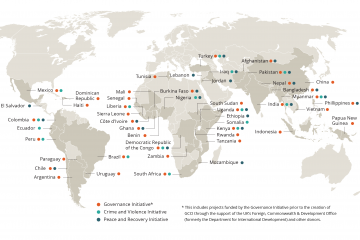
The GCCI portfolio covers 33 countries, including several countries where prior RCT research has been limited—places like the Democratic Republic of the Congo and Somalia (two of Africa’s “scarce seven” countries that account for just 3.5 percent of all economics journal articles on African countries, as highlighted by researcher Obie Porteous), as well as Afghanistan, Iraq, Myanmar, and more.
For example:
- Building a research hub in a humanitarian setting: In Bangladesh, Peace & Recovery Program support has been instrumental in the establishment of an IPA research hub to collect high quality data and run rigorous evaluations in Cox’s Bazar, providing early evidence on programs serving forcibly displaced populations and the first rigorous evidence on the Rohingya refugee response. This infrastructure supports both yearly waves of the Cox’s Bazar Panel Survey and several randomized evaluations of innovative humanitarian response programs.
- Supporting research infrastructure in fragile contexts: In the DRC, the Governance Initiative (GI) has supported multiple evaluations in collaboration with the Government of the Kasaï Central Province in the city of Kananga, producing policy-relevant insights on tax collection and bribery. With the support of GI and other funders, researchers have been able to set up the infrastructure to more easily collect data, which facilitates more work with local government, such as the ongoing evaluation of innovations to strengthen tax collection.
Examining theories previously untested in fragile contexts
GCCI’s portfolio has contributed to our understanding of which governance, crime reduction, and peacebuilding programs are most effective, and why—shedding light on many assumptions underlying common programs that have not previously been evaluated in fragile contexts and adding to our basic understandings of human behavior.
Two cases help illustrate this point:
- Trust in conflict-affected settings: A goal of many peacebuilding programs has been to increase trust between communities and promote social bonds that could play a role in preventing further conflict, but relatively little is known on what types of interventions are most effective in promoting community healing. In Iraq, a GCCI-funded researcher conducted one of the first randomized evaluations examining the impact of “social contact” theory in a conflict-affected context.
The study found that bringing Christians and Muslim soccer players together on mixed-religion teams improved players’ tolerance towards their Muslim teammates, though these sentiments did not extend to Muslims in the broader community.
Taken together, these findings suggest that intergroup contact can build community-level social cohesion with peers and acquaintances after war, but that these effects may not generalize to strangers from the outgroup. - Tax collection in settings with limited administrative capacity: Tax compliance is a challenge in many low- and middle-income countries, particularly in fragile states. How can governments improve tax collection and enforcement in these settings?
In the Democratic Republic of the Congo (DRC), GCCI-funded researchers have partnered with the provincial government of Kasai Central to address questions of optimal tax policies, including through the implementation of one of the first field experiments to identify the tax rate that maximizes government revenue. In Haiti, GCCI-funded researchers are partnering with the Mayor of the City of Carrefour—one of the largest cities in the country, and a setting where tax payment rates are close to zero—to determine the impacts of an increased tax collection effort together with a new service provision and tax notification campaign.
Insights from these settings can not only help inform a government’s tax strategy, but also shed light on whether increased taxation leads citizens to increase their political participation and their oversight over government spending.
Supporting innovations in measurement
The outcomes that matter most in governance and peacebuilding—topics like trust, forgiveness, or corruption—are often difficult to observe. GCCI has supported innovations in measurement that are adding nuance to our understanding of what interventions are most effective and why. For instance:
- Measuring corruption: A challenge in anti-corruption research is measuring actual incidence of corruption, as illicit behavior is generally concealed and perceptions often differ from reality. One innovative way of addressing this challenge, developed by researchers in an ongoing GCCI-funded study in Kenya, entails combining GPS-tracked company vehicle data with administrative data to measure corrupt behavior among bureaucrats of a large public service provider.
- Measuring attitudes and prejudice: Outcomes like changes in attitudes and perceptions, which are often the focus of peacebuilding and social cohesion interventions, can be skewed by self-reporting bias. Drawing on the above work in Iraq, researchers are now using GCCI funds to test whether intergroup contact through mixed soccer teams can improve refugee-host relations, social integration, and prejudice in Lebanon by measuring whether they choose to attend mixed social events, patronize shops owned by members of the “out group”, or diversify their network of facebook friends.
Collaborating with new partners
At J-PAL and IPA, we not only conduct research and policy outreach, but also help develop cultures of evidence-informed decision making within our partner organizations. Expanding the type of partner organizations involved in rigorously evaluating their programs is therefore an important element of our work.
We have forged relationships with a diverse range of partners, many of which had not previously conducted randomized evaluations of their programs and policies, including with:
- Multinational companies—for example, to evaluate the impact of privately enforcing local labor laws on local supplier factories in Bangladesh.
- Tax collection agencies and local governments in Brazil, Côte d’Ivoire, the DRC, Haiti, Kenya, and Paraguay to determine ways to improve tax collection, tax compliance, and tax enforcement.
- Police departments in India, Pakistan, and Uganda to study methods aimed at improving police units’ responsiveness to citizens and increase citizens’ trust in security services.
Responding to COVID-19
Teams are also adapting their research and leveraging prior data collection and randomization to assess the impacts of various interventions initiated before the onset of the pandemic on COVID-19 response and recovery. This research is exploring questions like:
- How are gangs and other organized criminal groups reacting to the crisis? In Medellin, Colombia, GCCI-funded researchers built on a recently-completed field experiment to see whether gangs cooperate with official ordinances (particularly in areas where the state lacks authority) or whether they undermine the state’s response.
They find evidence that gang response to the pandemic is relatively idiosyncratic and unconnected to their pre-pandemic power. In most cases, the state played the largest role in promoting and enforcing COVID-19 response, even in settings where gangs had high levels of pre-pandemic governance over civilians. - How has the pandemic affected cross-border traders and merchants? In the Kenya-Uganda border, researchers are leveraging a census of around 1,800 traders conducted at the beginning of an ongoing field experiment to study how traders’ livelihoods have changed as a result of COVID-19.
- What is the impact of the pandemic on refugee and host community members, and how might crowded living conditions increase the risk of virus spread? In Bangladesh, researchers adapted an ongoing P&R-funded panel survey of refugees and host community members in Cox’s Bazar to measure COVID-19 symptoms, risk factors, and health behaviors.
Results, released through the WHO, suggest that while respondents generally reported high levels of knowledge about respiratory hygiene and COVID-19 transmission, attendance at religious and social gatherings threatened to accelerate the spread of the disease.
Influencing policy and moving towards scale
GCCI-funded researchers are working directly with policymakers, from government officials to civil society organizations, to adapt, pilot, and scale programs based on their evaluation findings. Three years in, these efforts are beginning to lead to evidence uptake and policy change. For instance:
- Reforming labor law to improve workers’ outcomes: Courts often function poorly in many low- and middle-income countries. Outcomes are unpredictable, parties are often misinformed, and processes can be inefficient. In Mexico, overburdened labor courts can result in long delays for dismissed workers seeking severance pay who typically have a limited understanding of the legal process.
A GCCI-funded study found that providing customized information on predicted case outcomes to workers or asking them to meet with court mediators increased settlement rates of labor court cases and led to higher-valued payouts for workers.
Informed by this research, the Government of Mexico passed a national labor law reform that requires workers to meet with a mediator before filing a severance case. - Integrating refugee children to reduce violence and exclusion in schools: Given unprecedented levels of forced displacement globally, policymakers need effective ways to foster social cohesion, especially between ethnic groups. In Turkey, a school-based intervention to support the social integration of Syrian refugees lowered peer violence and victimization, reduced social exclusion and ethnic segregation, and enhanced prosocial behavior.
Based on these findings, the Ministry of Education has decided to scale up the curriculum throughout the country to all schools hosting refugee students as part of the second phase of its refugee integration program.
Given the long-term nature of GCCI-funded research, we expect to see more examples of study findings directly influencing policy decisions.
Emerging insights are shaping policy consensus
Research also has influence beyond the setting where a study was conducted. Over time, evidence can help shift consensus on broader policy issues. GCCI-funded research has been contributing to our library of Policy Insights, highlighting areas where there is emerging consensus and exploring the mechanisms that may explain these results. These insights include:
- Increasing accountability and reducing corruption through government audits: Government audits have often increased political accountability, reduced misuse of public resources, and improved compliance with laws and regulations. In low- and middle-income countries, audits have been more effective when the government had a stronger enforcement capacity, when audit results were widely publicized, or when the audit system incentivized the auditors and those being audited to be honest and truthful.
- The risks and rewards of voter information campaigns in low- and middle-income countries: Providing information on candidates’ qualifications, policy positions, and performance in office can affect voter turnout and who people vote for. In low-income countries, this type of information has been most effective when it was widely disseminated from a credible source.
- Reducing criminal behavior through cognitive behavioral therapy: Cognitive behavioral therapy can reduce criminal behavior among both at-risk youth and criminally engaged men, likely by helping them focus more on the future, change their self-perceptions, and/or slow their decision-making.
As more GCCI-funded studies publish results, those findings will further shape our understanding of human behavior and approaches that may be most effective in tackling the drivers of crime, violence, and corruption in a given context.
Future horizons
In the years ahead, levels of poverty and aid spending are likely to increase in countries with weak institutions or in fragile and conflict-affected contexts. In the face of complex challenges, governments, civil society, and donors need sharper insights into what kinds of programs can actually improve government accountability, reduce conflict, and promote stability.
While GCCI has made significant headway expanding innovative research on conflict and governance, many open questions remain which will guide our work in the years ahead.
In the coming weeks and months, we will host a series of webinars during which researchers funded through GCCI grants will share results from their recently completed studies.
Tune in for the first webinar in this series on November 18 at 3:00pm EST: Salma Mousa and Matt Lowe will each present their research on social contact as a means for reducing outgroup prejudice and building social cohesion.
To stay informed of upcoming webinars in this series, join our mailing list and mark “Political Economy & Governance” and/or “Crime, Violence, & Conflict” as a sector interest area. We will also add links to recordings of past webinars to this blog post, so you can always circle back here to catch up on any you may have missed.
According to the World Health Organization, 1 in 3 women worldwide have experienced physical or sexual violence in their lifetimes. Low rates of reporting pose a barrier to addressing this form of violence, especially as it is commonly perpetrated by an intimate partner within the home. Recent global estimates suggest that fewer than 40 percent of women seek help after experiencing violence, and among those that do, fewer than 10 percent report such cases to the police. Individuals affected by this violence—victims and bystanders alike—may be reluctant to speak out to friends, family, or police.
In recent years, a growing number of randomized evaluations have been launched to help identify concrete measures to increase reporting and reduce the incidence of violence against women. This is just one potential response—other approaches intentionally target instead the behavior of perpetrators of this violence, while a growing strand of research is examining how cash transfers can be effective in reducing intra-household violence. We review here recent studies that have focused on two different approaches to increasing reporting, as part of a broader effort to reduce violence against women:
- Shifting social norms around gender roles and gender-based violence, and
- Opening up new channels for women to report cases to the police.
These studies are starting to build up evidence that it is indeed possible to change norms and behaviors around reporting violence against women (even when norms about the violence itself may be difficult to shift), and that increasing women’s access to the police—including through staffing stations with trained female officers—may also be an important part of the solution.
Shifting social norms
There are a number of potential reasons why women may choose not to report cases of violence. For instance, they might fear retaliation by their partner or have little faith the police will take action. Social norms may also play a role: across Africa and Asia, between 30 and 60 percent of women agree that a husband is justified in beating his wife under certain circumstances.
Trying to shift these norms could ultimately help reduce incidence in two ways: either by directly shaping the behavior of those who engage in such violence or by reducing the perceived costs of speaking out and reporting these crimes. Interventions that focus on the latter would ideally be matched by efforts to ensure that reporting leads to meaningful action by public authorities.
Increased political voice, increased police responsivenessAn earlier study from India provides promising evidence of how a shift in women’s political representation had a dramatic effect on reporting behaviors. Lakshmi Iyer (Notre Dame) and co-authors examine the impact of a 1993 constitutional amendment that called for a random third of village council positions to be reserved for women. They find that the reservation led to a 46 percent increase in the number of documented crimes against women.
They further show that this rise appears to have been primarily due to an increase in reporting of incidents to police rather than any increase in incidence—as there was no significant change in the level of crimes not targeted against women or in crimes against women such as murder that are unlikely to be affected by reporting biases. More encouragingly, the increase in women elected to these village council roles also led to heightened police responsiveness and increased arrests for crimes committed against women. (Learn more about insights from J-PAL studies on the wide-ranging effects of gender quotas in local government here.)
Changing community attitudes towards reportingWitnesses of violence against women may withhold information due to fear of community censure or being branded as a gossip. Encouraging bystanders to report violence may require shifts in norms about what it means to report it.
J-PAL affiliate Donald Green (Columbia), and co-authors Jasper Cooper (UCSD) and Anna Wilke (Columbia), evaluated the effectiveness of using a mass media intervention in rural Uganda to encourage reporting of violence against women. They held a film festival in 112 villages and, in a randomly selected subset of those villages, they screened education-entertainment videos addressing crimes against women during the festival intermissions. The short vignettes depicted violence by a husband towards his wife and appealed to viewers to speak out about these crimes, despite norms against meddling in the private affairs of others.
Following the intervention, women in villages where the videos were screened were 18 percent less likely to believe that they would face social sanctions for reporting violence against women and 22 percent more likely to say they would make a report. The researchers also found a reduction in some measures of incidence: they estimate that the likelihood of women experiencing violence in treatment communities fell by five percentage points (from a baseline of 20 percent in control communities). However, the researchers found no effects on community members’ acceptance of violence against women. Building on these results, Donald Green, Dylan Groves (Columbia), Rachel Jones (Innovations for Poverty Action), and Constantine Manda (Yale) are conducting a similar evaluation in Tanzania to measure the impact of radio programming on both attitudes and behaviors.
Enlisting village leaders as agents of changeResearchers in Peru have partnered with the government to ask whether a locally driven intervention could lead to shifts not only in reporting but also in attitudes towards violence. J-PAL affiliate Erica Field (Duke), and co-authors Ursula Aldana (Instituto de Estudios Peruanos) and Javier Romero (Duke), are partnering with the Ministry of Women and Vulnerable Populations to evaluate the effectiveness of an intensive training for rural village leaders designed to reduce acceptance of gender-based violence and provide practical methods for community members to identify and report these crimes.
The five-session training course for village leaders covers topics such as stereotypes surrounding gender roles, norms regarding violence, and strategies to identify and prevent violence against women. These leaders–both men and women–develop and execute an action plan that includes regular awareness-raising activities within the village, house-to-house visits, and additional trainings. The idea behind the program is to engage individuals with local influence to drive changes not only in reporting of cases, but also in behaviors and attitudes that perpetuate gender-based violence more generally, leading to a reduction in incidence.
Facilitating (women's) access to police
Another way to encourage reporting of violence against women is to make it easier to approach the police. A recent evaluation by Jasper Cooper considered the impact of introducing uniformed auxiliary police officers in rural areas of Bougainville, Papua New Guinea, where previous police presence had been limited. Cooper finds that the introduction of a permanent police presence in the village leads to increased crime reporting by women, and that this is particularly true when the officer is female.
Adding female police officers without specialized training or strategic roles, however, may not be an effective way of addressing this issue. A recent lab-in-field experiment by Sabrina Karim (Cornell) and co-authors estimated the impacts of randomly varying the proportion of women officers in teams of the Liberian National Police. Teams with heavier concentrations of women exhibited greater cohesion but were no more sensitive to sexual and gender-based crimes than teams with fewer women.
In light of this, new research is examining a different question: can increasing the representation of female officers in dedicated public-facing roles, combined with special training, increase both the reporting of crimes against women and their effective prosecution?
A quasi-experimental study by Sofia Amaral (University of Munich) and co-authors presents suggestive evidence from the rapid expansion in “all-women” police stations in India from 2005-13. They find that the introduction of these units, staffed entirely by female officers trained in handling crimes committed against women, led to a 22 percent increase in reporting. There was no increase in non-gender-specific crimes, suggesting again that what changed was women’s willingness to report these crimes.
Similarly, a new study in Madhya Pradesh by J-PAL affiliate Sandip Sukhtankar (UVA), with Gabrielle Kruks-Wisner (UVA) and Akshay Mangla (Oxford), is evaluating whether opening women’s help desks—dedicated spaces in regular police stations staffed by officers trained to assist with crimes against women—can improve frontline officers’ responsiveness to women, as well as reduce crime.
Looking ahead
Taken together, the studies above provide some initial insights into promising approaches for addressing violence against women. Although influencing the core attitudes around gender-based violence may be challenging, rigorous evidence has shown that it is possible to shift both victims’ and community members’ behaviors towards reporting these crimes to police. Research currently underway, as well as new studies in this field, can provide valuable insight into the most effective ways to structure police response and on the potential approaches for changing attitudes towards violence against women, in the hopes of reducing its incidence.