J-PAL J-PAL
The Abdul Latif Jameel Poverty Action Lab
  • About
    • Overview
    • People
      • Affiliated Professors
      • Invited Researchers
      • J-PAL Scholars
      • Board
      • Leadership
      • Staff
    • Strengthening Our Work
    • Code of Conduct
    • Initiatives
    • Events
    • Blog
    • News
    • Press Room
  • Offices
    • Overview
    • Global
    • Africa
    • Europe
    • Latin America and the Caribbean
      • Growing Futures
    • Middle East and North Africa
    • North America
    • South Asia
    • Southeast Asia
  • Sectors
    • Overview
    • Agriculture
    • Crime, Violence, and Conflict
    • Education
    • Environment, Energy, and Climate Change
    • Finance
    • Firms
    • Gender
    • Health
    • Labor Markets
    • Political Economy and Governance
    • Social Protection
  • Evaluations
  • Research Resources
    • About Us
    • Our Work
    • Join ASPIRE
    • Newsroom
  • Policy Insights
  • Evidence to Policy
    • Pathways and Case Studies
    • The Evidence Effect
  • Blog
  • Careers
  • Courses
  • For Affiliates
  • Support J-PAL

Utility menu

  • Blog
  • Careers
  • Courses
  • For Affiliates
  • Support J-PAL

Quick links

  • Evaluations
  • Research Resources
  • Policy Insights
  • Evidence to Policy
    • Pathways and Case Studies
    • The Evidence Effect
  • About

    The Abdul Latif Jameel Poverty Action Lab (J-PAL) is a global research center working to reduce poverty by ensuring that policy is informed by scientific evidence. Anchored by a network of more than 1,100 researchers at universities around the world, J-PAL conducts randomized impact evaluations to answer critical questions in the fight against poverty.

    • Overview

      The Abdul Latif Jameel Poverty Action Lab (J-PAL) is a global research center working to reduce poverty by ensuring that policy is informed by scientific evidence. Anchored by a network of more than 1,100 researchers at universities around the world, J-PAL conducts randomized impact evaluations to answer critical questions in the fight against poverty.

      • Affiliated Professors

        Our affiliated professors are based at over 130 universities and conduct randomized evaluations around the world to design, evaluate, and improve programs and policies aimed at reducing poverty. They set their own research agendas, raise funds to support their evaluations, and work with J-PAL staff on research, policy outreach, and training.

      • Invited Researchers
      • J-PAL Scholars
      • Board
        Our Board of Directors, which is composed of J-PAL affiliated professors and senior management, provides overall strategic guidance to J-PAL, our sector programs, and regional offices.
      • Leadership
      • Staff
    • Strengthening Our Work

      Our research, policy, and training work is fundamentally better when it is informed by a broad range of perspectives.

    • Code of Conduct
    • Initiatives
      J-PAL initiatives concentrate funding and other resources around priority topics for which rigorous policy-relevant research is urgently needed.
    • Events
      We host events around the world and online to share results and policy lessons from randomized evaluations, to build new partnerships between researchers and practitioners, and to train organizations on how to design and conduct randomized evaluations, and use evidence from impact evaluations.
    • Blog
      News, ideas, and analysis from J-PAL staff and affiliated professors.
    • News
      Browse news articles about J-PAL and our affiliated professors, read our press releases and monthly global and research newsletters, and connect with us for media inquiries.
    • Press Room
      Based at leading universities around the world, our experts are economists who use randomized evaluations to answer critical questions in the fight against poverty. Connect with us for all media inquiries and we'll help you find the right person to shed insight on your story.
  • Offices
    J-PAL is based at MIT in Cambridge, MA and has seven regional offices at leading universities in Africa, Europe, Latin America and the Caribbean, Middle East and North Africa, North America, South Asia, and Southeast Asia.
    • Overview
      J-PAL is based at MIT in Cambridge, MA and has seven regional offices at leading universities in Africa, Europe, Latin America and the Caribbean, Middle East and North Africa, North America, South Asia, and Southeast Asia.
    • Global
      Our global office is based at the Department of Economics at the Massachusetts Institute of Technology. It serves as the head office for our network of seven independent regional offices.
    • Africa
    • Europe
    • Latin America and the Caribbean
    • Middle East and North Africa
    • North America
    • South Asia
    • Southeast Asia
  • Sectors
    Led by affiliated professors, J-PAL sectors guide our research and policy work by conducting literature reviews; by managing research initiatives that promote the rigorous evaluation of innovative interventions by affiliates; and by summarizing findings and lessons from randomized evaluations and producing cost-effectiveness analyses to help inform relevant policy debates.
    • Overview
      Led by affiliated professors, J-PAL sectors guide our research and policy work by conducting literature reviews; by managing research initiatives that promote the rigorous evaluation of innovative interventions by affiliates; and by summarizing findings and lessons from randomized evaluations and producing cost-effectiveness analyses to help inform relevant policy debates.
    • Agriculture
      How can we encourage small farmers to adopt proven agricultural practices and improve their yields and profitability?
    • Crime, Violence, and Conflict
      What are the causes and consequences of crime, violence, and conflict and how can policy responses improve outcomes for those affected?
    • Education
      How can students receive high-quality schooling that will help them, their families, and their communities truly realize the promise of education?
    • Environment, Energy, and Climate Change
      How can we increase access to energy, reduce pollution, and mitigate and build resilience to climate change?
    • Finance
      How can financial products and services be more affordable, appropriate, and accessible to underserved households and businesses?
    • Firms
      How do policies affecting private sector firms impact productivity gaps between higher-income and lower-income countries? How do firms’ own policies impact economic growth and worker welfare?
    • Gender
      How can we reduce gender inequality and ensure that social programs are sensitive to existing gender dynamics?
    • Health
      How can we increase access to and delivery of quality health care services and effectively promote healthy behaviors?
    • Labor Markets
      How can we help people find and keep work, particularly young people entering the workforce?
    • Political Economy and Governance
      What are the causes and consequences of poor governance and how can policy improve public service delivery?
    • Social Protection
      How can we identify effective policies and programs in low- and middle-income countries that provide financial assistance to low-income families, insuring against shocks and breaking poverty traps?
Displaying 1786 - 1800 of 7148
Research Paper
File: Research paper

The Long-term Impacts of a “Graduation” Program: Evidence from West Bengal

Research Paper
File: Research paper

Digital Collateral

Farmer transplanting rice seedlings into flooded field
Evaluation

Social Networks and the Decision to Insure in China

Researchers conducted a randomized evaluation of the ways in which information dissemination within social networks affected farmers’ adoption of a weather insurance product in rural China. Results suggest that social networks had a significantly positive effect on insurance take-up, driven by the diffusion of knowledge about insurance. These effects were larger when people who were the first to receive financial education were more central to the social network.
Students at a desk learning
Evaluation

Evaluating the Impact of a Growth Mindset Intervention in Argentina

In Argentina, a researcher evaluated whether informing students of their potential could be a cost-effective way to increase motivation and improve educational outcomes among secondary school students. They found that the intervention did not impact students’ perceptions of the difficulty of school tasks, school climate, academic performance, or future education plans.
Woman with long straight hair points to tablet and talks to friend about financial decisions in Brazil
Evaluation

Peer Effects and Financial Decisionmaking in Brazil

Researchers tested the independent impact of two channels, social learning (when someone purchases an asset after a peer expresses a desire to purchase the same asset) and social utility (when someone feels he can gain more from an asset because his peer owns it), on financial decisions in Brazil. Both social learning and social utility had significant effects on decisions to invest in a newly designed real estate asset.
Participants received cash transfers in Brazilian real
Evaluation

Preferences of Low-Income Voters on Public Education Spending in Brazil

Researchers conducted two randomized evaluations to test 1) the impact of providing public spending information on voter attitudes and 2) the impact of cash transfers on parental preferences for education.
A factory participating in cap-and-trade program emits pollutants and emissions in the United States
Evaluation

Distributing Pollution Rights in Cap-and-Trade Programs in the United States

Researchers evaluated a cap-and-trade program in the United States to determine if the initial allocation of permits among firms affected how much firms decided to pollute. Evidence was consistent with, but not proof of, the economic theory that firms make decisions to reduce emissions based on their abatement costs and not the initial distribution of permits.
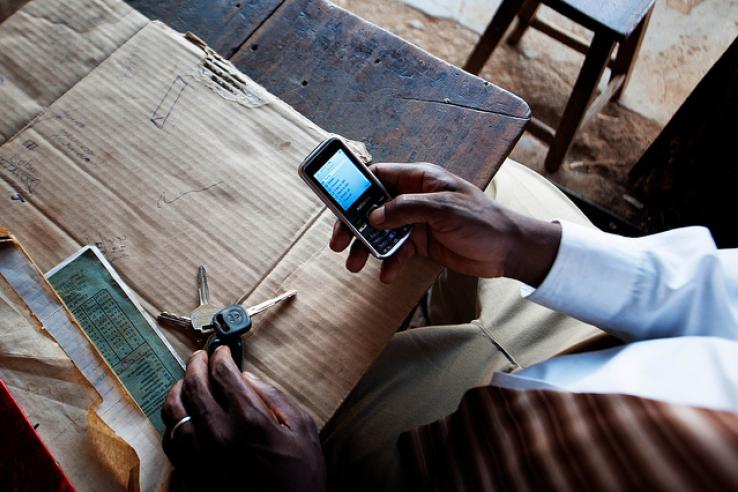
Man using a phone in Pakistan
Evaluation

Using a Technology-Based Solution to Reduce Public Health Worker Absenteeism in Pakistan

In developing countries, public worker absence is a key obstacle to delivering services to the poor. This problem may occur when politicians reward their supporters with public sector jobs, making it difficult for communities to hold public servants accountable. Researchers evaluated the effectiveness of a smartphone absence monitoring technology in reducing doctor absenteeism at clinics in Punjab, Pakistan. The application increased clinic inspections, but the increased monitoring and accompanying reduction in absenteeism was limited to constituencies where competition for political office was comparatively high.
Onions being weighed by scale
Evaluation

Agricultural Market Reforms and Technology Adoption in Senegal

Many smallholder farmers in sub-Saharan Africa do not use basic agricultural technologies to improve crop quality. In the Senegal River Valley, researchers tested whether receiving advance information on a market reform—introducing quality labels for onions and selling by weight—would lead to changes in farmers’ production habits. Onion farmers who received information about the reform were more likely to adopt practices to improve quality, leading to substantial revenue gains. Despite these gains, the reforms were abandoned in the following season, largely due to opposition from traders.
Sign in rice field reads: Swarna Sub1
Evaluation

Reducing Farmers' Risk through Flood-Tolerant Rice in India

Researchers partnered with CGIAR’s International Rice Research Institute (IRRI) to evaluate the impact of a flood-resistant rice variety on fertilizer use and crop yield in India. During floods, the flood tolerant seeds had a clear advantage over the traditional seeds. In non-flooded areas, there was no significant difference in yields between flood-resistant and traditional seeds, suggesting that there was no yield penalty in non-flood years to farmers who switched to the new seed technology.
Evaluation

Mobile Money Usage and Expectations of Violence in Afghanistan

Researchers evaluated the relationship between mobile money usage and violence in Afghanistan. Results suggest that access to a mobile salary payment system increased mobile money usage, but expectations of violence significantly decreased usage and increased cash savings instead.
woman and girl sitting on bench
Evaluation

Empowerment and Livelihood for Adolescents (ELA) in Sierra Leone

Researchers evaluated the impact of a program in Sierra Leone called Empowerment and Livelihood for Adolescents (ELA) that aims to address this problem by bundling health education, vocational skills training, and micro-credit. Researchers found that, while girls experienced higher teen pregnancy and lower school attendance post-Ebola, ELA clubs mitigated many of these negative effects.
Ethiopian farmer picking lettuce
Evaluation

Linking Weather Index Insurance and Credit to Improve Agricultural Productivity in Rural Ethiopia

Researchers combined subsidized weather index insurance with input loans for fertilizer and modern seed use for smallholder farmers in rural Ethiopia to investigate the impact of these products on demand for insurance and resulting shifts in agricultural technology use and crop yields. Results indicate that providing free insurance may not result in meaningful increases in investment in inputs like fertilizer.
Young boy pauses in thought while writing on the floor in chalk
Evaluation

Improving Learning Outcomes through the Government School System in India

Researchers evaluated the impact on student learning outcomes of two programs introduced by the Government of Haryana. While the Continuous and Comprehensive Evaluation (CCE) program did not have any effect on test scores, the Learning Enhancement Program (LEP), which focused on basic literacy and numeracy, significantly improved Hindi test scores, especially for students with initially low learning levels.
Livestock farmers received mobile-based information on AI and inoculation services.
Evaluation

The Effects of Crowdsourced Information Sharing on Farmers and Agricultural Markets in Pakistan

Buyers often have limited information on service quality in low- and middle-income countries. In the absence of information, buyers may receive low quality services or may choose not to seek out service at all, limiting potential benefits for households. Researchers evaluated a program in Pakistan that provided farmers with information on veterinarians’ artificial insemination (AI) success rates and average prices. This led to more successful inseminations without a rise in AI prices.

Pagination

  • First page « First
  • Previous page ‹
  • …
  • Page 118
  • Page 119
  • Current page 120
  • Page 121
  • Page 122
  • …
  • Next page ›
  • Last page Last »
J-PAL

J-PAL

400 Main Street

E19-201

Cambridge, MA 02142

USA

Contact

+1 617 324 6566

[email protected]


Press Room

Stay Informed

Receive our newsletters

Subscribe


Privacy Policy

Accessibility

MIT