J-PAL J-PAL
The Abdul Latif Jameel Poverty Action Lab
  • About
    • Overview
    • People
      • Affiliated Professors
      • Invited Researchers
      • J-PAL Scholars
      • Board
      • Leadership
      • Staff
    • Strengthening Our Work
    • Code of Conduct
    • Initiatives
    • Events
    • Blog
    • News
    • Press Room
  • Offices
    • Overview
    • Global
    • Africa
    • Europe
    • Latin America and the Caribbean
      • Growing Futures
    • Middle East and North Africa
    • North America
    • South Asia
    • Southeast Asia
  • Sectors
    • Overview
    • Agriculture
    • Crime, Violence, and Conflict
    • Education
    • Environment, Energy, and Climate Change
    • Finance
    • Firms
    • Gender
    • Health
    • Labor Markets
    • Political Economy and Governance
    • Social Protection
  • Evaluations
  • Research Resources
    • About Us
    • Our Work
    • Join ASPIRE
    • Newsroom
  • Policy Insights
  • Evidence to Policy
    • Pathways and Case Studies
    • The Evidence Effect
  • Blog
  • Careers
  • Courses
  • For Affiliates
  • Support J-PAL

Utility menu

  • Blog
  • Careers
  • Courses
  • For Affiliates
  • Support J-PAL

Quick links

  • Evaluations
  • Research Resources
  • Policy Insights
  • Evidence to Policy
    • Pathways and Case Studies
    • The Evidence Effect
  • About

    The Abdul Latif Jameel Poverty Action Lab (J-PAL) is a global research center working to reduce poverty by ensuring that policy is informed by scientific evidence. Anchored by a network of more than 1,100 researchers at universities around the world, J-PAL conducts randomized impact evaluations to answer critical questions in the fight against poverty.

    • Overview

      The Abdul Latif Jameel Poverty Action Lab (J-PAL) is a global research center working to reduce poverty by ensuring that policy is informed by scientific evidence. Anchored by a network of more than 1,100 researchers at universities around the world, J-PAL conducts randomized impact evaluations to answer critical questions in the fight against poverty.

      • Affiliated Professors

        Our affiliated professors are based at over 130 universities and conduct randomized evaluations around the world to design, evaluate, and improve programs and policies aimed at reducing poverty. They set their own research agendas, raise funds to support their evaluations, and work with J-PAL staff on research, policy outreach, and training.

      • Invited Researchers
      • J-PAL Scholars
      • Board
        Our Board of Directors, which is composed of J-PAL affiliated professors and senior management, provides overall strategic guidance to J-PAL, our sector programs, and regional offices.
      • Leadership
      • Staff
    • Strengthening Our Work

      Our research, policy, and training work is fundamentally better when it is informed by a broad range of perspectives.

    • Code of Conduct
    • Initiatives
      J-PAL initiatives concentrate funding and other resources around priority topics for which rigorous policy-relevant research is urgently needed.
    • Events
      We host events around the world and online to share results and policy lessons from randomized evaluations, to build new partnerships between researchers and practitioners, and to train organizations on how to design and conduct randomized evaluations, and use evidence from impact evaluations.
    • Blog
      News, ideas, and analysis from J-PAL staff and affiliated professors.
    • News
      Browse news articles about J-PAL and our affiliated professors, read our press releases and monthly global and research newsletters, and connect with us for media inquiries.
    • Press Room
      Based at leading universities around the world, our experts are economists who use randomized evaluations to answer critical questions in the fight against poverty. Connect with us for all media inquiries and we'll help you find the right person to shed insight on your story.
  • Offices
    J-PAL is based at MIT in Cambridge, MA and has seven regional offices at leading universities in Africa, Europe, Latin America and the Caribbean, Middle East and North Africa, North America, South Asia, and Southeast Asia.
    • Overview
      J-PAL is based at MIT in Cambridge, MA and has seven regional offices at leading universities in Africa, Europe, Latin America and the Caribbean, Middle East and North Africa, North America, South Asia, and Southeast Asia.
    • Global
      Our global office is based at the Department of Economics at the Massachusetts Institute of Technology. It serves as the head office for our network of seven independent regional offices.
    • Africa
    • Europe
    • Latin America and the Caribbean
    • Middle East and North Africa
    • North America
    • South Asia
    • Southeast Asia
  • Sectors
    Led by affiliated professors, J-PAL sectors guide our research and policy work by conducting literature reviews; by managing research initiatives that promote the rigorous evaluation of innovative interventions by affiliates; and by summarizing findings and lessons from randomized evaluations and producing cost-effectiveness analyses to help inform relevant policy debates.
    • Overview
      Led by affiliated professors, J-PAL sectors guide our research and policy work by conducting literature reviews; by managing research initiatives that promote the rigorous evaluation of innovative interventions by affiliates; and by summarizing findings and lessons from randomized evaluations and producing cost-effectiveness analyses to help inform relevant policy debates.
    • Agriculture
      How can we encourage small farmers to adopt proven agricultural practices and improve their yields and profitability?
    • Crime, Violence, and Conflict
      What are the causes and consequences of crime, violence, and conflict and how can policy responses improve outcomes for those affected?
    • Education
      How can students receive high-quality schooling that will help them, their families, and their communities truly realize the promise of education?
    • Environment, Energy, and Climate Change
      How can we increase access to energy, reduce pollution, and mitigate and build resilience to climate change?
    • Finance
      How can financial products and services be more affordable, appropriate, and accessible to underserved households and businesses?
    • Firms
      How do policies affecting private sector firms impact productivity gaps between higher-income and lower-income countries? How do firms’ own policies impact economic growth and worker welfare?
    • Gender
      How can we reduce gender inequality and ensure that social programs are sensitive to existing gender dynamics?
    • Health
      How can we increase access to and delivery of quality health care services and effectively promote healthy behaviors?
    • Labor Markets
      How can we help people find and keep work, particularly young people entering the workforce?
    • Political Economy and Governance
      What are the causes and consequences of poor governance and how can policy improve public service delivery?
    • Social Protection
      How can we identify effective policies and programs in low- and middle-income countries that provide financial assistance to low-income families, insuring against shocks and breaking poverty traps?
Displaying 1201 - 1215 of 7147
Cash transfers
Evaluation

Improving Economic Outcomes and Well-being through Unconditional Cash Transfers and Goal-Setting in Kenya

Research has shown that people living in poverty are more likely to experience a range of psychological barriers that might constrain economic success. These barriers may include lower aspirations and goals, a perception that their actions have limited impacts on their circumstances, time inconsistent preferences, as well as a lack of information about the potential for high-return investments. Unconditional cash transfers are an effective and increasingly popular approach to lifting households out of poverty, but households may benefit from additional support to maximize the impact of receiving cash.
Evaluation

The Effects of Performance Pay among Private School Teachers in Pakistan

Researchers worked with a large private school network in Pakistan to evaluate the effects of performance raises on outcomes such as teacher behavior, student learning, and student socioemotional development. They found that, compared to flat payments, performance pay attracted more high-quality teachers. In terms of types of performance pay, those based on objective and subjective measures (supervisor observations and student test scores, respectively) were equally effective at increasing student test scores, but objective performance pay negatively affected student socioemotional development, whereas subjective performance pay had a small positive effect.
Teacher with student in classroom
Evaluation

High Hopes: Saving for High School with a Mobile-Money Lock-Box in Kenya

In Kenya, researchers partnered with a telecom operator to evaluate the impact of a commitment savings account, called the “High Hopes” Lock-Savings Account, on account usage, savings and loans, and school enrollment. The study found that many parents used the accounts–usage rates increased by about 25 percentage points–and that among those who took up the account, total financial savings increased by three to four times. Parents who saved were also 18-24 percentage points more likely to enroll their children in high school. However, the results were nearly the same for a more conventional mobile savings account that did not offer the commitment bonus, suggesting that easy access to a means of saving, even absent behavioral incentives, was enough to affect parents’ decisions.
Buildings in King County, Washington
Evaluation

Preventing Homelessness Among Youth and Families with Children

Researchers evaluated the impact of case management and immediate financial assistance compared to only financial assistance on housing and health outcomes for youth and families with children.
Group of participants at CNM conference
Evaluation

Informing Policy with Research in Brazil

Researchers partnered with the National Confederation of Municipalities (CNM) in Brazil to evaluate the impact of access to research results on policymakers’ demand for research findings and interest in adopting evidence-informed policies. Policymakers were willing to pay for research findings and subsequently updated their beliefs. Those who were invited to an information session on a simple, evidence-informed policy to increase tax compliance were more likely to implement that policy within the next two years.
Participants working at the Ministry
Evaluation

The Effects of Working While in School in Uruguay

Researchers partnered with the government of Uruguay to evaluate the impact of a national youth employment program. The program increased participants’ earnings and school enrollment during and up to two years after the program, suggesting that work-study programs may ease students’ school-to-work transition.
Young girls walking from school
Evaluation

The Impact of a School-Based Management Program on Student Performance in Mexico

Researchers conducted a randomized evaluation to determine the effect of a school-based management program, Programa Escuelas de Calidad, on student performance in Mexico. The program combined a cash grant with state support to design and carry out school improvement plans. The intervention did not have any effect on school performance after one year.
People sit around a conference table.
Update
J-PAL Updates

Ready to learn: Generating and using evidence to reduce gender-based violence in Peru

To address the issue of gender-based violence, Peru’s Ministry of Women and Vulnerable Populations (MIMP), J-PAL’s Latin America and Caribbean (LAC) office, and Innovations for Poverty Action (IPA) Peru are partnering to develop a cycle of learning and institutionalization of evidence-informed...
Food market in Malawi
Evaluation

The Impact of Existing Account Usage on the Likelihood of Switching Accounts in Malawi

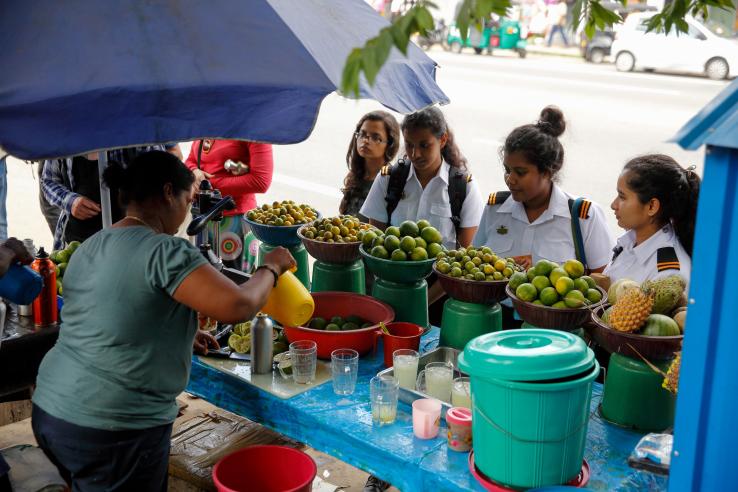
Researchers partnered with a local bank to learn how customers chose between two account types—an account that had been offered for many years, which carried high monthly fees but no individual transaction costs, or a new type of account that charged for each withdrawal but did not impose monthly maintenance fees. Customers without an existing account recognized the advantages of the new type of account and overwhelmingly chose to open one, while many customers with the existing account type did not switch to the new one. However, of the existing customers, those who used their account more due to receiving a financial transfer in the past did switch to the new account type, suggesting that more experience using financial products can improve financial decision-making.
Person

Victor Pouliquen

Victor Pouliquen joined J-PAL in 2008 and is currently working on three randomized evaluations focusing on education and health in Morocco, Ghana and Kenya.
Evaluation

Using Predictive Analytics to Track Students: Evidence from a 7 College Experiment

Evaluation

Candidate Debate Participation for Citizen Engagement and Electoral Outcomes in Liberia

Researchers evaluated a nationwide debate initiative in Liberia designed to solicit and rebroadcast policy promises from legislative candidates. Results indicated that when leading candidates participated in debates, citizens were more engaged and informed.
Girls in line to receive their scholarships in rural Niger
Evaluation

The Effects of Middle School Scholarships on Child Marriage in Niger

Government ministries introduced middle school scholarships to cover girls’ transportation, housing, and supplies; researchers evaluated how paying for out-of-pocket expenses affected schooling impacts and child marriage. The researchers found that the intervention reduced girls’ chance of leaving middle school by 53 percent and reduced their chance of getting married as children by 49 percent.
City view from above
Evaluation

Creating Moves to Opportunity in Seattle-King County

Students participate in a Big Word Club activity
Evaluation

Evaluating the Impact of a Tech-Based Early Childhood Vocabulary Program in the United States

Researchers evaluated the impact of a vocabulary improvement “edutainment” program for young children, Big Word Club, on children’s receptive vocabulary. Researchers found that the Big Word Club increased students’ knowledge and retention of words included in the program without detracting from other vocabulary development.

Pagination

  • First page « First
  • Previous page ‹
  • …
  • Page 79
  • Page 80
  • Current page 81
  • Page 82
  • Page 83
  • …
  • Next page ›
  • Last page Last »
J-PAL

J-PAL

400 Main Street

E19-201

Cambridge, MA 02142

USA

Contact

+1 617 324 6566

[email protected]


Press Room

Stay Informed

Receive our newsletters

Subscribe


Privacy Policy

Accessibility

MIT