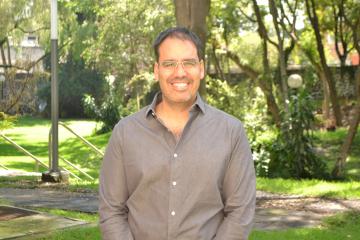

Affiliate Spotlight: Monica Martinez-Bravo on advancing evidence use in Spanish policymaking
Monica Martinez-Bravo is an associate professor at the Center for Monetary and Financial Studies (CEMFI) in Madrid, Spain. Her research interests lie at the intersection of political economy and economic development.
Raised by parents who grew up in rural Spain, Monica Martinez-Bravo came to understand the pervasive nature of poverty, even at a time when technology and industry were quickly advancing. “In the 1940s and 50s, a majority of the Spanish population was in dire poverty,” Monica says. “It’s unthinkable that, today, so many people around the world still live under those circumstances. That drew me to development economics.” Now an associate professor at CEMFI, Monica aims to uncover how political systems can impact the economic outcomes of the poor, largely focusing her research on the political economy of development.
For Monica, understanding both economics and politics is vital for making sense of the world today. Early in her career, while conducting research on village leadership in Indonesia, she noticed how failures in political systems could often contribute to economic failures. While much of her research on political economy continued to take place in Indonesia, during the pandemic Monica began to look toward her home country of Spain.
When the Covid-19 pandemic began, Monica was concerned with how uncertainty around the Spanish government’s policy responses to the pandemic could erode public trust in the political system. She hypothesized that if populations thought the government was mismanaging the crisis, they might be less willing to comply with safety regulations, like vaccination.
To test this, Monica and her team ran an online experiment in which they provided randomly selected study participants information on the number of contact tracers in their region. According to the study, people often overestimated the number of contact tracers—when they were informed of the real number, their perception of the government’s handling of the pandemic worsened.
Monica also discovered that the participants assigned blame for this perceived mismanagement depending on their political alignment. For example, if an individual’s preferred political party was at the helm of the regional government, they would be more likely to blame the central government for the inadequate number of contact tracers, and vice versa. This blame-shifting effect hinders the ability of citizens to keep their politicians accountable. In regions where regional and central governments were ruled by different parties, and hence blame-shifting was possible, the mismanagement of the pandemic did not translate into a reduction in electoral support for incumbent politicians.
This study is just one example of how Monica is using randomized evaluations to better understand policies that can improve social and economic conditions for people in Spain. A recent J-PAL Europe partnership with CEMFI and the Spanish Ministry of Inclusion, Social Security, and Migration (MISSM) has been pivotal to reaching this goal. After learning that MISSM was dedicating European Union funds toward conducting randomized evaluations, Monica approached the Spanish government and offered research support. The partnership has already helped guide and implement 34 RCTs that are in the process of being conducted.
“It’s very unprecedented in the Spanish setting to first, run randomized controlled trials (RCTs), and second, to run them with such a close partnership between researchers and the public sector,” Monica says. “While running RCTs in a new government setting isn’t without its challenges, I know the partnership is opening doors for future, high-level RCT work.”
To Monica, this partnership will have an impact beyond the individual studies. She sees it as the linchpin to the future of evidence use in Spanish policymaking, as well as a template for the types of dialogues that can exist between governments and academics, both in and outside of Spain. As the partnership continues Monica is already looking ahead to future collaborations, especially related to social inclusion policies, like lowering bureaucratic barriers in domestic violence cases and in the immigration process.
Throughout her career, Monica has become convinced of the potential for the field of economics to enable real change in people’s lives.
“I think there are lots of really interesting questions out there about how the world works, but sometimes you can get a little bit frustrated about the time we spend thinking about ideas and not having an impact in the world in the next five, ten years,” Monica says. Out of this frustration, she has chosen to center her research on policy changes that can have the potential to help people in the medium-run. Monica sees her recent selection as a J-PAL affiliated professor as a way to ramp up her work helping inform evidence-based policy. “I think it’s important to make our profession helpful to the world today, not just in a hypothetical or long-term way.”
Monica has been a J-PAL affiliate since 2022. For more information about Monica and her research, visit https://www.povertyactionlab.org/person/martinez-bravo.
Together with a team of Spanish and international researchers coordinated by the Centro de Estudios Monetarios y Financieros, J-PAL Europe is partnering with the Spanish Ministry of Inclusion, Social Security and Migration to launch a Policy Lab focused on bringing evidence to the core of social policymaking in Spain.
This blog was updated on May 16, 2023 to reflect the current status of J-PAL's partnership with the Spanish government.
Together with a team of Spanish and international researchers coordinated by the Centro de Estudios Monetarios y Financieros, J-PAL Europe is partnering with the Spanish Ministry of Inclusion, Social Security, and Migration to launch a Policy Lab focused on bringing evidence to the core of social policymaking in Spain.
Spain has targeted part of its €69.5 billion Covid-19 NextGenerationEU Recovery plan toward strengthening economic and social resilience. This includes a broad range of pilot social inclusion programmes for the country’s most vulnerable households—ranging from job search support to online tutoring to childcare to targeting beneficiaries of a national minimum income scheme rolled out in 2020.
To better understand the effectiveness of these policies, the government has committed to piloting and evaluating each of these programmes through a series of randomised evaluations run through the new Policy Lab, which will provide insights for social policy in Spain at both the national and regional level.
The emergence of a national minimum income scheme in Spain
At the heart of the Lab is an interest in generating lessons on how to complement or extend the effects of a new national minimum income scheme designed to promote social inclusion and employment for the country’s most vulnerable households. Prior to the pandemic, Spain was one of the only EU countries without a national minimum income scheme. Instead, it relied on regional government income schemes that varied in terms of size and scope but reached an average of only 8 percent of people living below the poverty line.
The impact of the economic shock linked to Covid-19 underscored the need for such a program: unemployment levels rose to 15.3 percent during the second quarter of 2020, and by the end of 2020, poverty had increased to its highest level since 2008. This ranked Spain as the country with the fifth highest poverty rates in the European Union (EU).
Launched in May 2020, the national minimum income (ingreso mínimo vital, or IMV) provides a cash transfer for individuals and households based on their income and size—roughly €500 for a single individual (in 2022) or €787 for a two-parent household with one child. Designed by the Ministry of Inclusion, Social Security, and Migration (MISSM), this transfer is meant to provide an equal foundation of support for vulnerable households across Spain.
Complementing a national income scheme with broader social protection programs
While minimum income schemes are an important tool in addressing poverty, they are not always sufficient in themselves to help households exit poverty or to promote broader social inclusion. Complementary interventions like those being tested in Spain can create a range of pathways (itinerarios) to social inclusion.
To date, MISSM has funded 34 educational, employment, and psychosocial interventions proposed by NGOs and regional or local governments across the country. They include providing IMV beneficiaries with job search support and apprenticeship training, tailored tutoring for their children, and assistance for families who do not yet claim the social benefits to which they are entitled.
A bold commitment towards rigorous impact evaluation
The boldness of this social policy endeavour comes from its commitment to employing rigorous impact evaluations to inform social policy decisions. In order to receive funding from the Ministry, all proposals commit to running a randomised evaluation. The results from these evaluations will allow the government and implementing partners to determine whether these complementary programmes are indeed effective (and why) prior to scaling up the most effective solutions.
This large-scale effort across all levels of government to generate and use evidence in the policy making process could set a valuable example for how social policy is designed in the future, not only in Spain but also more broadly in Europe. The European Commission has expressed interest in using the learnings from these evaluations as inputs in future funding decisions for social protection programmes in the region.
This extensive effort involves working across multiple implementing partners and many local contexts, the majority of whom do not have previous exposure to randomised evaluation methods. Ensuring these partners and programs are following best practices for conducting high-quality evaluations—and are understanding and applying the results to decision-making—necessitates hands-on support from researchers who are deeply embedded in the local context.
To support this work, the Ministry has partnered with J-PAL Europe and a group of around eighteen researchers from leading universities under the coordination of the Centro de Estudios Monetarios y Financieros (CEMFI) in Madrid. J-PAL Europe works together with the Ministry and CEMFI to generate rigorous insights from these randomised evaluations, not only to inform each partners’ own programming, but also to contribute to a growing evidence base on designing more effective social programs across Europe.
A unique opportunity to generate insights on evidence-based government partnerships
At J-PAL, our mission is to ensure policy is backed by scientific evidence. We have learned that efforts to promote the use of evidence in policymaking are generally most successful when they start with specific demand from policymakers for evidence on certain questions.
This collaboration with the Spanish government, recently formalised through a Memorandum of Understanding, presents a considerable investment in learning from evaluations from the outset, and offers an opportunity to build on our previous lessons from government partnerships, including by supporting the Ministry in obtaining buy-in for drawing on research findings across different levels of government and various types of implementing stakeholders; as well as working to create a culture of evidence use that will outlast the tenure of any single administration.
J-PAL Europe has embedded a staff member at the Ministry to provide technical assistance in the design of the evaluations, develop a system to transform the evidence generated into actionable and scalable policies, and to develop a learning agenda to inform future policymaking. Furthermore, by participating in the Steering Committee that oversees the project, J-PAL Europe contributes to the strategic vision of the Policy Lab and its long-term trajectory.
We look forward to sharing the results from the ongoing evaluations and lessons and to continue supporting the Spanish government in their ambitious efforts.
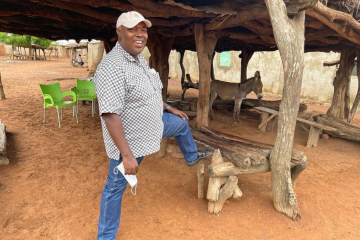
Robert Darko Osei is an associate professor at the Institute of Statistical, Social and Economic Research and Dean for the School of Graduate Studies at the University of Ghana. Robert also serves as co-chair of the Digital Agricultural Innovations and Services Initiative (DAISI), which funds research to identify solutions to challenges faced by smallholder farmers around the world.
Robert Darko Osei is an associate professor at the Institute of Statistical, Social and Economic Research and Dean for the School of Graduate Studies at the University of Ghana. Robert also serves as co-chair of the Digital Agricultural Innovations and Services Initiative (DAISI), a joint initiative between J-PAL and the Center for Effective Global Action (CEGA), which funds research to identify solutions to challenges faced by smallholder farmers around the world.
While Robert Darko Osei was initially interested in science, he joined his brother in studying economics after he saw how he could draw parallels between his life in Ghana and what he was learning in the classroom. Robert said it felt good to follow in the footsteps of his brother, whom he looked up to—and as he excelled in the subject, he was thrilled by how much there was to learn.
When Robert returned to Ghana after completing his PhD in economics at the University of Nottingham in the United Kingdom, he became increasingly interested in applying what he had learned to issues related to poverty and the effectiveness of development assistance. In particular, Robert identified a key contradiction: while there was “plenty of development investment in agriculture,” the productivity of small scale farmers in sub-saharan African countries, relative to other regions, remained low. According to Robert, “agriculture is at the heart of poverty.”
Robert became a J-PAL affiliate in 2018. He was immediately drawn to the mission of J-PAL’s Digital Agriculture Innovations and Services Initiative (DAISI). “Technology is not going anywhere, so it is critical that we understand how to leverage it in agriculture, especially the impact of technology on smallholder farmers,” Robert explained. “And in sub-Saharan Africa, it is even more timely.”
Outside of DAISI, Robert enjoys tackling other policy questions related to agriculture. With coauthors, he recently conducted a randomized evaluation in Mali on the use of mobile phone voice message reminders for farmers trained in grain-management practices. They found that farmers who received the additional reminders adopted timely harvesting practices and improved grain storage technology, leading to less grain loss on their farms. However, they did not find any effect on yields or revenues, which is partially due to the timing of the survey, as most of the grains were still in storage. For Robert, this evaluation represented just one of the many important lessons to be learned about the role of technology in improving access to information for farmers.
Robert continues to be motivated by his interest in better understanding the effectiveness of development assistance and in influencing policy decisions. In a randomized evaluation funded by J-PAL, he and his coauthors tested the impact of a two-year program that combines training, cash transfers, savings accounts, and more on the lives of those living in extreme poverty in northern Ghana. Robert noted that the results of this study helped inform the Government of Ghana’s decision to continue the program and build out their payment delivery system more efficiently.
When considering the most pivotal and influential moments of his research career, Robert recalls his time speaking with farmers. According to him, “No development economist should write a paper without going to the field.” Robert explained that one “needs to understand the psyche of poor households to design good policy. You can’t understand smallholder farmers just by reading the literature and staying at home.”
Robert also emphasized the need to fund more randomized evaluations led by African economists. To Robert, empowering African researchers will lead to “a richer and more locally-grounded evidence base that can be used by policymakers.” To that end, with DAISI co-chair Tavneet Suri, Robert helped establish the Regional Scholars Program, which sets aside funding exclusively for researchers from Africa.
Robert has been a J-PAL affiliate since 2018. For more information about J-PAL and to read about his research, visit https://www.povertyactionlab.org/person/osei. To hear more from Robert and other researchers based in Africa, watch the following video:
Research to Policy: Graduating from Extreme Poverty in Ghana
The challenge: More than one-fifth of the world’s population lives on less than US$1.25 per day. Support for livelihoods programs has spurred interest in evaluating whether a combination of direct cash assistance and indirect support, like technical skills training or health education, may create a higher standard of living that would “graduate” the poorest members of the population. Researchers conducted six randomized evaluations of this program, known as the Graduation Approach, in Ethiopia, Ghana, Honduras, India, Pakistan, and Peru.
The research: In Ghana, from 2011 to 2013, Robert and his coauthors considered how a multifaceted approach to poverty reduction would fare long-term when compared to singular, one-off interventions. The program offered productive asset transfers, such as goats or hens, technical skills training, health and nutrition education, creation of savings accounts, and household visits to ensure accountability. Participants could receive all of these interventions or a combination of a few. This represented a clear divergence from the government’s prior single-component approach.
The results: After one year, average total monthly consumption among households in the intervention group increased by 11 percent, alongside a 91 percent increase in non-farm income and a 50 percent increase in livestock revenue compared to the comparison group. Overall, the results of the project demonstrated that the multifaceted graduation program had meaningful and sustainable economic impacts in the region, especially for the poorest households.
Research to action: Insights from the evaluation of this program helped to reshape the rollout of Ghana’s national payment delivery system for beneficiaries, reaching over 80,000 households nationwide. This evaluation represents one of the early evaluations of the Graduation Approach to poverty alleviation, and, over several years, governments and development agencies launched initiatives to expand this program. There are also new initiative plans to scale-up the Graduation Approach to reach half a million refugee and host-community households in 35 countries over five years, from 2020 to 2025. Read the evaluation.
Enrique Seira is a professor of economics at Michigan State University and founder of Qué Funciona para el Desarollo. He utilizes his research on courts, democracy, corruption, and credit markets to help steer the policy space in Mexico toward more rigorous evidence use.
Enrique has been fascinated with the challenges of development and inclusion from an early age. He grew up in the small town of Chihuahua, Mexico, close to the border with Texas. Crossing the border to El Paso meant visiting another world, with networked highways where his parents strictly adhered to driving speeds and stop signs.
Enrique was always intellectually curious, and when he heard about ITAM, a small university in Mexico City, and its renowned economics program, he made it his goal to study there. Although his high school counselor was skeptical of his chances, Enrique was accepted and successfully completed his undergraduate degree.
ITAM was intellectually challenging, but it also had something else: it was an influential center for policy ideas. Conducting policy with rigor became Enrique’s goal, and ITAM’s high-quality research and integration in policy circles made it an ideal place to start a policy-oriented research career.
Following his PhD at Stanford, Enrique worked at the World Bank’s International Finance Corporation and the Mexican Treasury. “I highly recommend working in government and policymaking to any economist,” Enrique said. “There is no better way to grasp the complexities of doing policy, the frustrations that come with facing entrenched interests…it’s how I understood that the battle of good policymaking is a constant and long-term one.”
Enrique’s experience in the office of Mexico’s Secretary of the Treasury early in his career was formative in shaping his research interests. Working on consumer protection efforts in credit markets and programs like Oportunidades-Prospera (a conditional cash transfer for low-income households) helped launch his research agenda. Enrique’s time in government also underscored the importance of evidence over ideology in making effective policy decisions. Enrique witnessed bureaucrats opposing impact evaluations of government programs out of fear that the outcome of an evaluation could cost them their job, and saw politicians overturning a promising solution because of their personal interests. Through this experience, he came to understand that “development is often not a technical problem, but a political one… During this time it also became clear that what I really liked were ideas and evidence, the rigor and the time to think through problems, and the staying power of potential solutions.”
Armed with this insider experience, in his current role as an academic researcher, Enrique (along with his coauthors Joyce Sadka and J-PAL affiliate Christopher Woodruff) has been successful in measuring problems in Mexican courts and in helping align Mexican labor law with findings from rigorous research.
Enrique received funding from J-PAL’s Governance Initiative to work with the Mexico City Labor Court to identify solutions to low case settlement rates and backlogs that caused extensive delays for citizens seeking to access justice. He and his team studied the impact of two approaches: providing information to citizens about the likelihood of successful case outcomes, and providing mediation services to increase settlement rates outside of the courtroom. Both approaches nearly doubled the immediate settlement rate when a plaintiff was there to personally receive the information. Using these insights, the Mexican government passed a labor law reform which requires workers to have an in-person mediation meeting before filing a severance case, and to provide statistical information to parties on the likelihood of successful settlement before they sue.
Enrique stressed the importance of relationship-building to the success of this evaluation, citing his coauthor Joyce Sadka's regular meetings with the Mexico City Labor Court and Ministry of Labor and her involvement in drafting the reform itself. Enrique and his team are now building on this evaluation by creating a Lawyer Bureau to help clients find lawyers based on their qualifications. In this way, Enrique said, “Policy influence can be achieved. It requires not only evidence, but also direct and intense contact with policymakers.” Financial support from the Governance Initiative played an important role in getting this and Enrique’s other research off the ground. “J-PAL was transformational in helping kick-start my career,” he said.
Enrique’s dedication to evidence-informed policy led him to found and direct Qué Funciona para el Desarollo (QFD), a nonprofit organization that provides low-cost services to help researchers conduct policy-relevant research in Mexico. “Middle-income countries are often in a conundrum when it comes to receiving research funding for development,” he said. While they frequently lack the resources to finance research, they may struggle to attract funding from donors who may be more focused on lower-income contexts. QFD has helped researchers from several universities conduct field work in Mexico, ranging from studies on maternal and child health outcomes to financial access.
Reflecting on his career path, Enrique attributes his success as a researcher to having a profound passion for the topics you work on, good relationships with coauthors and advisors, and perseverance. “Being resilient and seeking input from mentors will help get your project across the finish line.”
Enrique has been a J-PAL affiliate since 2010. For more information about J-PAL and to read about his research, visit https://www.povertyactionlab.org/person/seira.
Research to Policy: Improving court backlogs in mexico
Challenge: In Mexico, labor courts have a large case backlog leading to slow case decisions for dismissed workers seeking severance pay, and low access to justice. Workers can be both misinformed and overconfident about winning their case, leading to low settlement rates, and making them easy prey for low quality lawyers with misaligned incentives.
Research: Enrique and his coauthors evaluated the impact of providing information about predicted case outcomes on settlement rates. The team worked closely with the Mexico City Labor Court (MCLC) in 2016 to randomly assign certain defendants to receive customized information about their case’s predicted outcomes or stay in the business as usual.
Results: Information decreased overconfidence and almost doubled the immediate settlement rate, switching cases that would lose at trial to settlements. Workers got higher payments on average and got them faster.
Scaling: Informed by the research, the Government of Mexico passed a labor law reform which requires workers to meet in-person with a conciliator before filing a severance case and providing statistical information. Enrique’s coauthor Joyce Sadka advises states on the implementation of this labor law. Their utilization of IT programming for this reform will allow scale-up across Mexico; creating a web-based lawyer bureau, case tracking, and online suing systems is the next step.